


The sea has a mouth.
My grandmother taught me this before she taught me the names of the stars.
Not a mouth like ours.
No lips. No teeth.
A wider mouth.
The kind that can swallow a boat
without closing.
She said the sea never keeps anything forever.
I believed her.
Children will believe almost anything
if an old woman says it quietly enough.
So, when the men left the island,
I imagined the sea opening its mouth for them
and carrying them carefully
toward another country.
I imagined it would return them.
It did not.
Not at first.
The morning after my uncle left,
my mother swept the yard twice.
There was hardly any dust.
The harmattan had already done its work.
It had laid a thin skin of earth
over everything—
the doorstep, the stones, the leaves
of the stubborn plant beside the kitchen.
My mother swept anyway.
She swept toward the sea.
She never admitted she was waiting.
None of us did.
On islands, waiting can become a family profession.
We learned to recognize ships
before we learned their names.
We learned that a small shape on the horizon
could turn a whole house toward the window.
We learned that the sea could make good news
look like a speck of white.
And bad news too.
Years later, I understood
why my grandmother called it a mouth.
A mouth does not only swallow.
A mouth speaks.
At night, the waves speak against the rocks
in a language older than our houses.
Sometimes they sound like drums.
Sometimes like breathing.
Sometimes like someone knocking
from the other side of a locked door.
When I was little,
I pressed my ear to the wall
and imagined the sea was telling me
where my uncle had gone.
Portugal.
America.
Somewhere whose name
was too far away to fit inside a child’s mouth.
I pictured him walking beneath a different sky.
I pictured him eating bread
that tasted of another country.
I pictured him forgetting
the smell of our rain.
That was the part that frightened me.
Not that he had left.
That he might become someone
the island could no longer recognize.
Years passed.
The island remained.
The hills kept their brown shoulders.
The houses kept facing the water.
Women still stood at doors
with their hands resting on their hips
as if they could hold the horizon in place.
And the sea kept arriving.
Always arriving.
This is what nobody tells you about leaving:
the sea does not move with you.
You carry it.
You carry it in the salt left on your skin.
In the sound of a kettle boiling.
In the way your mother calls your name
from another room.
In the taste of food
you once thought ordinary
until you ate it somewhere else.
You carry it when you hear music
through a wall in a foreign city
and suddenly your body remembers
a road you have not walked in years.
Perhaps this is how the sea keeps its promises.
Not by bringing people back,
but by making home impossible to lose.
My uncle returned after seventeen years.
I was no longer a child.
He stood at the gate
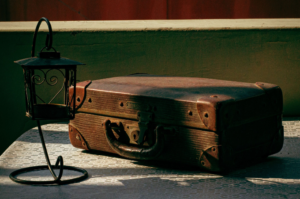
with one suitcase
and hair the colour of ash.
For a moment,
I did not recognize him.
He laughed.
I hated myself for hesitating.
Then my mother touched his face.
Just once.
As if checking whether he was real.
That night, nobody asked him
how many times he had wanted to return.
Nobody asked how many times
he had almost stayed away.
We ate.
We talked.
We interrupted each other.
Someone opened the window.
From outside came the sea.
My uncle stopped speaking.
He listened.
Then he smiled.
Not because the sea sounded beautiful.
Because it sounded the same.
I understood something then.
The sea does not return us unchanged.
It returns us carrying other streets,
other winters,
other languages,
other versions of ourselves.
But underneath them,
something survives.
A small island of the heart.
A dry stone.
A mother’s voice.
The smell of dust before rain.
The blue line where the world appears
to end and begin at once.
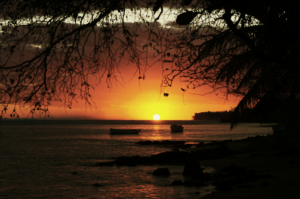
Now I stand at the shore
and watch the morning open.
The sea is bright,
almost harmless.
It shines so beautifully
that I understand why generations
have trusted it.
I also understand why they shouldn’t.
There are promises that require courage.
There are roads that can drown you.
There are horizons that ask for everything
before they give anything back.
Still—
I step closer.
The water reaches for my feet
and retreats.
Reaches.
Retreats.
As if learning my name.
Behind me, the island is waking.
A door opens.
A voice calls from a house.
Somewhere, bread is being cut.
Somewhere, a mother is telling a child
not to go too near the water.
I smile.
The sea has a mouth.
I know this now.
I know what it can swallow.
I know what it can carry away.
But I also know
what my grandmother knew before me:
the sea does not keep everything.
Some things it returns as memory.
Some as longing.
Some as music.
And some mornings,
when the light is generous,
it returns them as courage—
Bright enough
to make us step into the water
without believing
the water will be kind.
Photo by Krisztian Tabori on Unsplash






COMMENTS -
Reader Interactions