

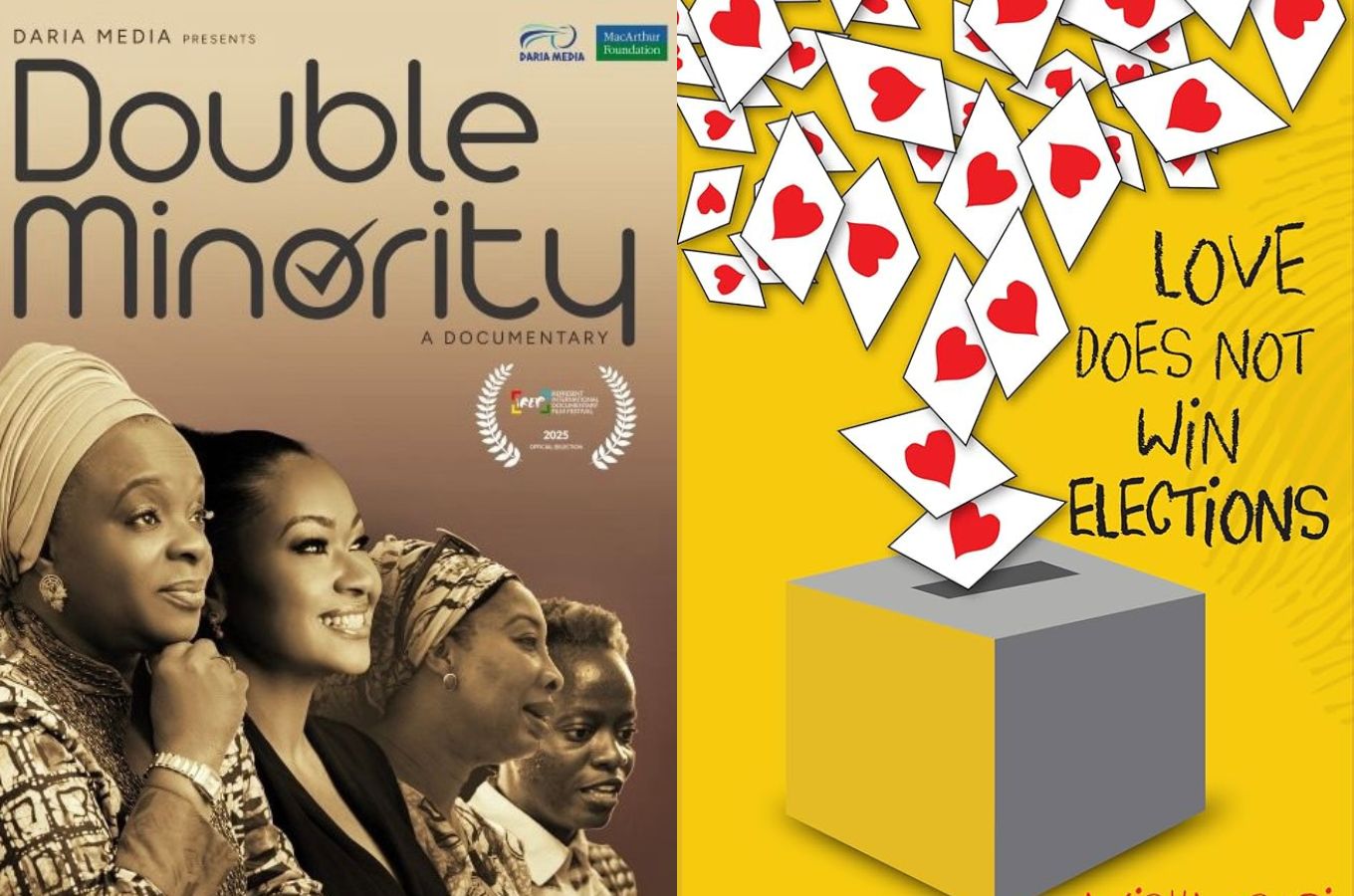
Sometimes two works, separated by years, begin to speak to each other. When I came across Double Minority in Molara Wood’s Instagram post, I was immediately reminded of Ayisha Osori’s 2017 memoir Love Does Not Win Elections. One is a 2025 film about nine women in the 2023 elections; the other is a literary account of a single woman’s 2014 bid for a National Assembly seat. Together, they create a conversation across time—a record of ambition, struggle, and the stubbornness of structural exclusion.
Double Minority follows Senator Natasha Akpoti‑Uduaghan, Senator Ireti Kingibe, Adeola Azeez, Hon Nnenna Elendu‑Ukeje, Simi Olusola, Hauwa Gambo, Khadijah Abdullahi Iya, Hon Munira Suleiman Tanimu, and Joyce Daniels as they navigate cultural bias, scarce funding, and the threat of violence. According to TechCabal, Executive Producer Kadaria Ahmed calls the exclusion of women from office “bad for women and bad for the country,” a sentiment echoed by MacArthur Foundation’s Kole Shettima, who describes this “minoritisation” as a national embarrassment. You can read Ramatu Ada Ochekliye’s brilliant coverage of the film’s premiere here.
This film belongs in conversation with Ayisha Osori’s memoir Love Does Not Win Elections. In 2014, Osori ran for a National Assembly seat, and her memoir is both a tell‑all and a razor‑sharp analysis of the barriers that make electoral success so difficult for women. She examines the cultural and ideological forces that discourage women from running and shape electorates that are often reluctant to vote for them. She also takes on the electoral process itself, meticulously tracing her own experience—from the decision to run and the doubts she had to navigate, to the complex transactional rituals that define Nigerian party politics. Her storytelling makes you laugh, sigh, and shake your head in disbelief, while leaving you with a clear sense of how the system works to keep unequal access to political power firmly in place.
I have not seen the full documentary beyond the clips available online, so I do not know if Ayisha Osori herself appears in it. But bringing these two works into conversation feels natural for the way they contribute to an archive of women’s political experience in Nigeria. I hope more people get to see Double Minority and read Osori’s Love Does Not Win Elections. We need more stories that record the political lives of African women.







COMMENTS -
Reader Interactions