

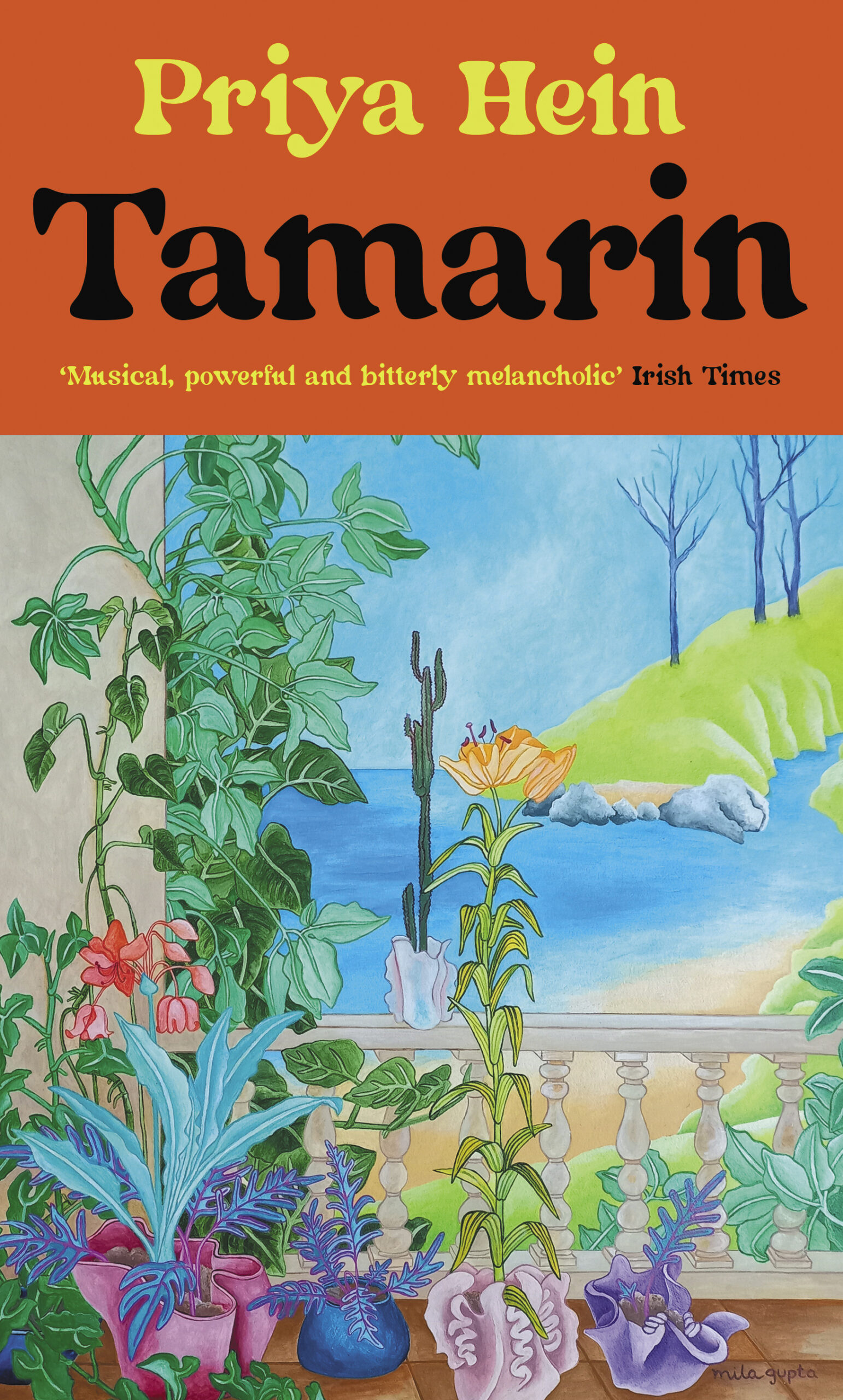
The first time Anita had ever set foot on a plane was the day she had left Mauritius all those years ago. A teenager barely out of school, doted on by a devout mother, there was no way she could have been prepared for the next episode of her life. Ma accompanied her to the airport on that rainy day in July. ‘Promise me you’ll write every week, beti.’
Anita avoided looking at her mother’s pinched lips and her creased sari, draped too short. She put on a brave face for her mother’s sake. ‘Don’t worry about me. I’ll be fine.’
Soon she would be unpacking her few things in a cold, sterile room on the other side of the world. A couple of her favourite books. A pair of jeans and two jumpers bought cheaply from a factory seconds shop in Floréal. A denim skirt, a long cardigan, a silky Indian blouse and a pashmina impregnated with the scent of sandalwood. Ma had provided her with a supply of vanilla tea, some dry manioc biscuits and a few packets of Kraft cheddar for emergencies. In her thick jumper, she had carefully wrapped a small mason jar filled with pure white sand and some cowrie shells. She desperately needed to carry a little bit of her island with her. A portable home. Cowrie shells were supposed to bring good luck, and she needed all the luck possible for her new life ahead.
Taking a deep breath, Anita walked through the departures gate of Sir Seewoosagur Ramgoolam International Airport, clutching her satchel tightly for fear of losing her precious travel documents. The few neatly folded fifty-pound notes, hidden at the bottom of the bag, felt like a fortune to her. A distant quote swam up in her mind: ‘If adventures will not befall a young lady in her own village, she must seek them abroad.’ Never had the words of Jane Austen caused her so much distress.
As soon as Ma’s receding figure disappeared, the tears finally flowed down Anita’s face. She kept mopping them, but they wouldn’t stop. From the plane window, she noticed the observation deck, where she imagined Ma assembled with other relatives waving goodbye to their loved ones. Her mother would stand there, watching the aircraft until it drifted out of sight into the sky. On the journey back home, Ma would sit silently, staring at the clouds above and worrying about her youngest daughter leaving the nest, wondering how she would fare out in the big world.
The machine picked up speed and Anita watched as Mauritius shrank further and further into the distance until it was nothing but a speck of dust floating in the middle of the Indian Ocean. Anita wondered when she would see it again. Having never left her small island before, she was not sure what awaited her in England.
She sat rigid in her allocated plane seat. Her feet hurt in the new closed shoes. She kicked them off, but then her temples started to throb. She tried to massage them with her eyes shut, but it made no difference. Suffering from the assault of the air conditioning, she pulled her new cardigan tightly around her, but the woolly material was itchy against her dry skin.
Unable to fight the nausea overcoming her, Anita grabbed the brown airsickness bag and retched into it. Was this some kind of premonition? After wiping her mouth with a paper napkin, she absent-mindedly flicked through the in-flight magazine. Trolleys of miniature food and drink came and went. She took a cold metal tray, but then returned the bland vegetables almost untouched. The potato dish she had toyed with tasted nothing like Ma’s potatoes sautéed in her special blend of spices and a handful of sweet peas from the garden. Halfway through a Bollywood movie, she eventually managed to snatch some sleep, but not much.
Anita had a strange dream in which her Indian ancestors who had bravely crossed the treacherous Kala Pani seemed to be warning her of something lurking around the corner. If they had been able to leave their homeland more than a hundred years ago, she told herself, then why couldn’t she do the same? It was a comforting thought.
Twelve hours after leaving Mauritius, Anita was awakened by the cabin crew’s announcement for all passengers to remain seated and fasten their seat belts. They were about to start their descent. She sat up in her tiny seat, hair dishevelled, and stretched her numb legs as far as she could in the confined space. She took a deep breath and closed her eyes in anticipation.
The plane lurched forward as it hit the tarmac at Heathrow, finally making contact with English soil. It was hard to believe. She had made it. Great Britain. The Thames. Buckingham Palace. Big Ben. The Tower of London. Trafalgar Square. Hyde Park. Westminster Abbey. St Paul’s. Shakespeare. The Brontë sisters. Virginia Woolf. Jane Austen.
Peering out of the small window, dotted with tiny drops of rain that slowly slid down the pane, she caught a blurry first glimpse of her new life. Everything seemed to have taken a grey, foggy hue: the tarmac, the sky, the planes, the buildings, even the people.
Having left the aircraft, she dutifully followed the signs leading towards Immigration. Walking down the corridors, she crossed paths with an older woman sweeping the floor and immediately smiled at her familiar, Indian face. In return, the woman looked right through her and resumed her tedious task, lost in her own world. There was something haunting about the old woman’s demeanour as she mechanically performed her duty, eyes devoid of any expression.
Anita had never felt so out of place. She waited patiently in line at the immigration desk, apprehensively clutching her brand-new passport, student visa and university papers. The other passengers looked bored. When she finally reached the counter, the immigration officer began to interrogate her.
‘Where are you travelling from?’ ‘Mauritius.’ She handed him the passport with the Mauritian coat of arms emblazoned on the glossy front cover.
‘Can I see your visa?’ he demanded without looking up. Nervous, she dropped the pile of papers. The officer sighed impatiently as Anita bent down to gather the scattered documents from the carpet. Her hands started to shake when she picked them up one by one.
Someone suddenly towered above her. ‘Would you please step aside to be interviewed?’ As if she had a choice. ‘This way.’
Quietly, she followed the officer who had materialized out of nowhere. The white people looked away; the coloured ones had pity in their eyes.
Anita was taken to a small, windowless room with a plain table and three plastic chairs and asked to sit down. With a feeling of dread, she wondered if she would be deported before even setting foot outside the airport.
A few minutes later, two immigration officers entered the cabin and started firing questions at her. Why was she travelling to London? What was the purpose of her visit? What was she going to study? Which university? How much cash was she travelling with? What was her financial situation? Where exactly would she live? Did she have relatives in England? What did they do for a living?
Suspiciously, they examined her papers one by one before asking her to open her hand luggage. She watched as one of the men painstakingly put on gloves before going through her belongings, including her underwear. Anita could not understand what was happening. She had a perfectly valid student visa and all the right paperwork from the university. She was a bright, eighteen-year-old laureate from a ‘good’ family in Mauritius. Back home, she was used to the respect that her background, her family name, her neighbourhood, her education and her accent bestowed. But in England she was immediately singled out and judged according to social norms she was completely unaware of.
After what felt like an eternity spent under their scrutiny, the officers finally told Anita she could go. In a small voice devoid of any sarcasm, she thanked them, picked up her bag and left the room quietly, feeling soiled.
Excerpted from Tamarin by Priya Hein. Copyright © 2024. Used with permission of the publisher, The Indigo Press Ltd. All rights reserved.
Preorder here!





COMMENTS -
Reader Interactions