
What does it mean that I am here, arranging words about kisses and tenderness and the ache of wanting someone who is not in the room, while the world outside refuses to stop burning?
What does it mean that my feed fills up with footage of bombed hospitals, flooded villages, dying children, displaced people while I sit here, hunched over a notebook, trying to trap the rhythm of a voice note, the warmth of a hand, the hunger that stretches over distance.
I have asked myself this more times than I can count. And every time I come back to the same place, the question with no clear answers.
Palestine, Congo, Sudan, Haiti, Iran, South Africa, Nigeria. Names of places that should not always mean grief, but for now, do.
Coming across these names, I feel a tedious shame inside me. A smallness so complete it hollows and stills me. Writing love, in times like these, makes me feel like a fool and a coward. Like I have betrayed my people. Like I have betrayed my craft. Because they always tell us, don’t they? That it is our duty to bear witness, to document what is happening, to turn our pens toward the wound. And here I am, turning mine toward a kiss, arranging sentences around longing as if longing has not already been dwarfed by larger griefs.
But in the middle of my self-imposed questioning, I come across a video that put things into perspective. It’s a small, unlikely thing. Clips from a wedding happening in Gaza.
A wedding.
Think of it. An actual wedding ceremony, albeit modest and makeshift, but a happy, living, breathing thing unfolding on my screen. The couple dressed in what I can only describe as plain clothes, but pressed and chosen for the occasion, walking through dust and debris to meet each other and share that first hug. That first hug after the nikkah. Alhamdulillah, the caption reads.
But as expected, the comments underneath this seemingly joyful post are something else entirely. They fill quickly with ignorant, crass, even cruel responses.
Why would anyone hold a wedding in a warzone?
I thought Gaza was being bombed?
And then, buried beneath dozens of comments, I find the one that grounds me: Because they are still people and they choose to keep living. Which is the only answer worth giving to people who would rather see them dead.
And just like that, I found the answer that had eluded me for so long.
We — that is, I — keep writing love because I must. Because love is the only answer worth giving to a world that keeps trying to consume us. Love is the greatest threat to violence. It always has been.
I keep writing love because the machinery of oppression depends on our exhaustion. On reducing us to bodies and numbers. On flattening our grief into statistics, stripping our names from our stories, making us believe that caring has no use anymore.
War survives on our collective surrender — on us forgetting, even briefly, that we are people of feeling and depth and longing. I will not forget. I refuse.
To write about the way someone cups another’s face, about the way someone waits for a message, about the way someone risks everything for a touch, is to restore the human where violence has tried to erase it. Love is how we say: you will not take everything from us.
When I write a love poem, I am not looking away from the world. I am, instead, defiantly looking right at it, whilst refusing to let the world narrow us into victims and corpses. Love reminds us: before war, during war, after war, people still ache, still flirt, still long, still fight with each other over silly things, still make promises in the dark. Is love not just as important for us to document? Is it not part of the record too — that we lived, that we cherished, that we held, that we kissed, that we wrote? If the archives of war show only destruction, the archives of love show what we refused to lose.
I come to the conclusion that when I write love in these times, what I am truly saying is that we are here. Still alive enough to feel this, alive enough to long for this, alive enough to reach for this again. That bombs fall and borders close and names are taken from bodies before their time. That the world keeps burning and I keep writing love anyway.
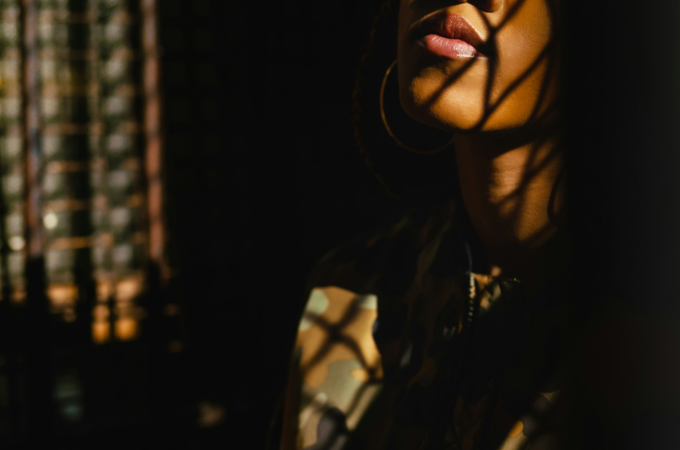
Photo by Erik Torres on Unsplash


COMMENTS -
Reader Interactions