

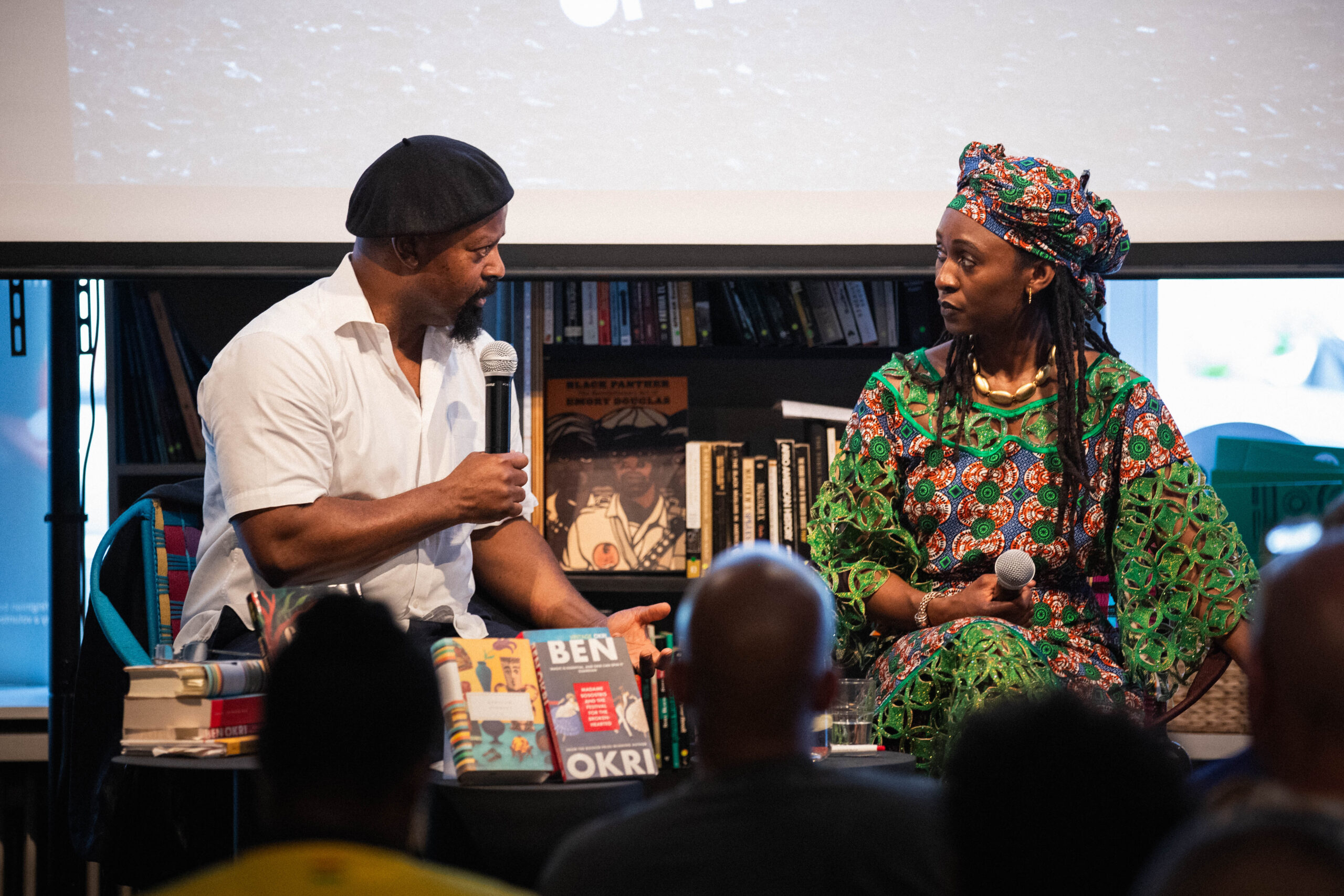
One of the highlights of my time in Berlin was sharing the stage with Ben Okri for a conversation that turned into a reading list.
The event was part of Afrolution, a festival of ideas hosted by Each One Teach One, an organization service black communities in Berlin. For the last three years, the festival has been curated around landmark moments in African diaspora history. This year’s edition was anchored on the 1969 Algiers Pan-African Cultural Congress, following earlier festivals focuses on FESTAC ’77 and Zaire ’74, with Dakar ’66 set for June 2027. From June 25 to 28, artists, activists, writers, and scholars gathered to think about Black geographies, migration, ecology, capitalism, liberation, and the many worlds that African and diasporic communities have created the world over.
Ben and I decided that our session would take a slightly different path.
The timing was perfect. We both had new books to celebrate. My book, Forest Imaginaries: How African Novels Think, explores how African writers have used forests to imagine new forms of storytelling. Ben had just published his new novel, Madame Sosostris and the Festival for the Brokenhearted, along with African Stories, a magnificent anthology that brings together thirty-six writers. Okri’s work has been part of my intellectual life for many years. The Famished Road is featured in Forest Imaginaries, and Ben wrote one of the blurbs for the book. Sharing a stage with someone whose work I have admired for so long is a gift, truly.
The day before the event, while waiting for Aja Monet’s performance, we started talking about what we wanted to do. Neither of us was particularly interested in another author conversation where we answered questions about our latest books. By the next afternoon, we had settled on a different idea. We would build the evening around the joy of reading and center the imagination as a necessity in any kind of re-conceptualization of the black experience.
The day of the event, we spent about an hour sitting together with a stack of books, deciding which passages to include. We settled on a simple format: we will read brief passages from a selection of texts and stop after each one to share our thoughts before moving on.
Sharing a stage with Ben was an enriching experience, and I thank everyone who attended and shared in our honoring of African imaginative archives. Thanks to the Afrolution Festival team for making such a special space for African ideas.
The conversation eventually opened up to the audience, and the questions were all great. I have been coming back to a question by the American poet Aja Monet. She asked about the relationship between anger and the imaginative. Ben’s sense was that that anger is powerful, but imagination is an essential part of the conversion of anger into creative possibilities.
Here are some the texts we read and a few notes on our reflection on the passages.
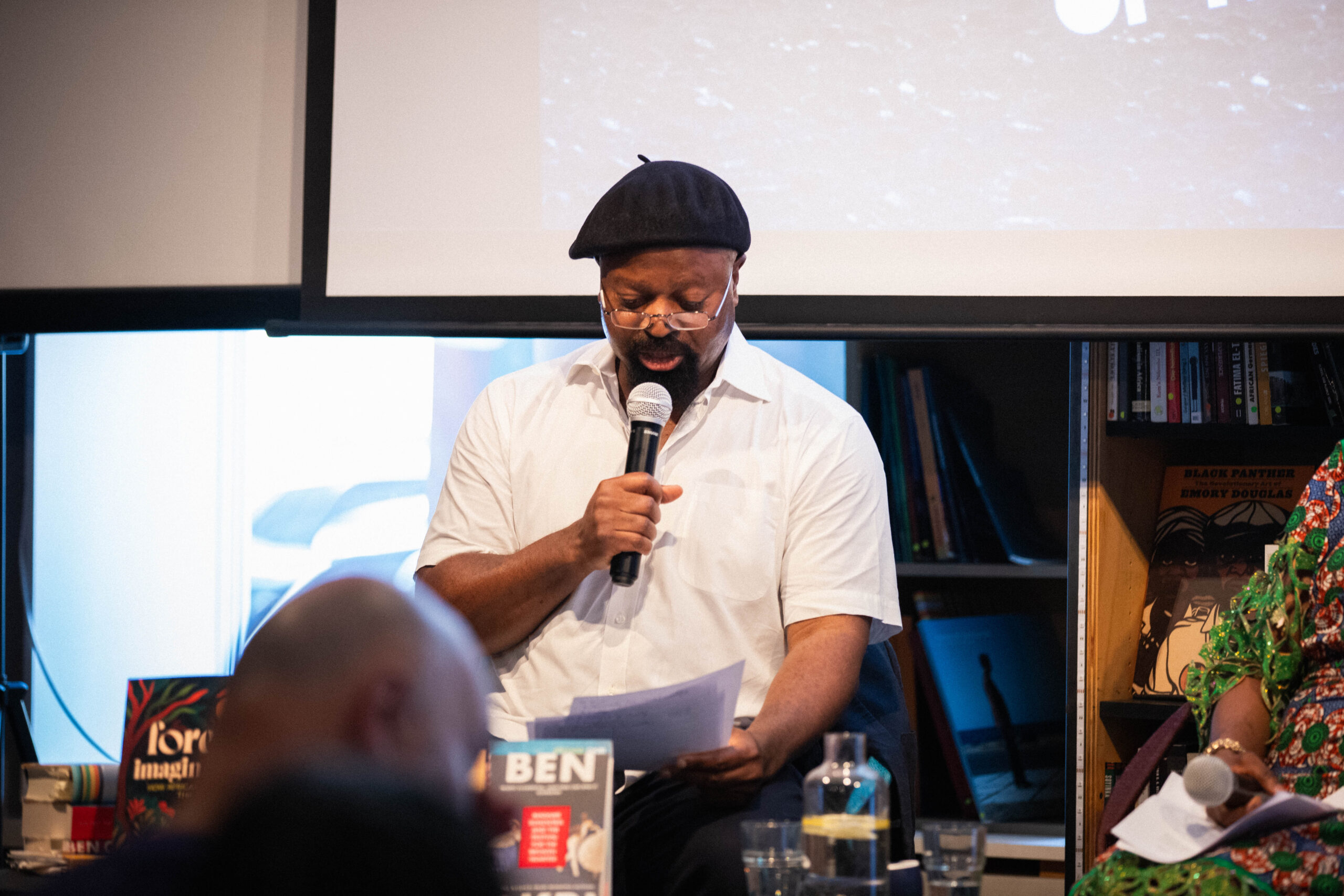
Amos Tutuola, The Palm-Wine Drinkard
We settled on the episode of the Complete Gentleman, the forest creature who dismembers himself in order to return borrowed body parts. It is one of the most unforgettable scenes in African literature.
Ben read the passage aloud. We followed the reading with a discussion of the image of breaking, tearing part, as a recreative gesture. I connected the episode to one of the central arguments of Forest Imaginaries. In Yoruba storytelling, the forest is often the place where existing forms break down so that the things can take form. I talked about Ògún’s journey through the forest, and lore in which the primordial being is shattered into many parts, giving rise to the òrìṣà pantheon. In these traditions, fragmentation can be the beginning of another way of seeing and being. Okri highlighted fragmentation in Egyptian and Greek narratives, which he then ties to Toni Morrison’s idea of re-membering.
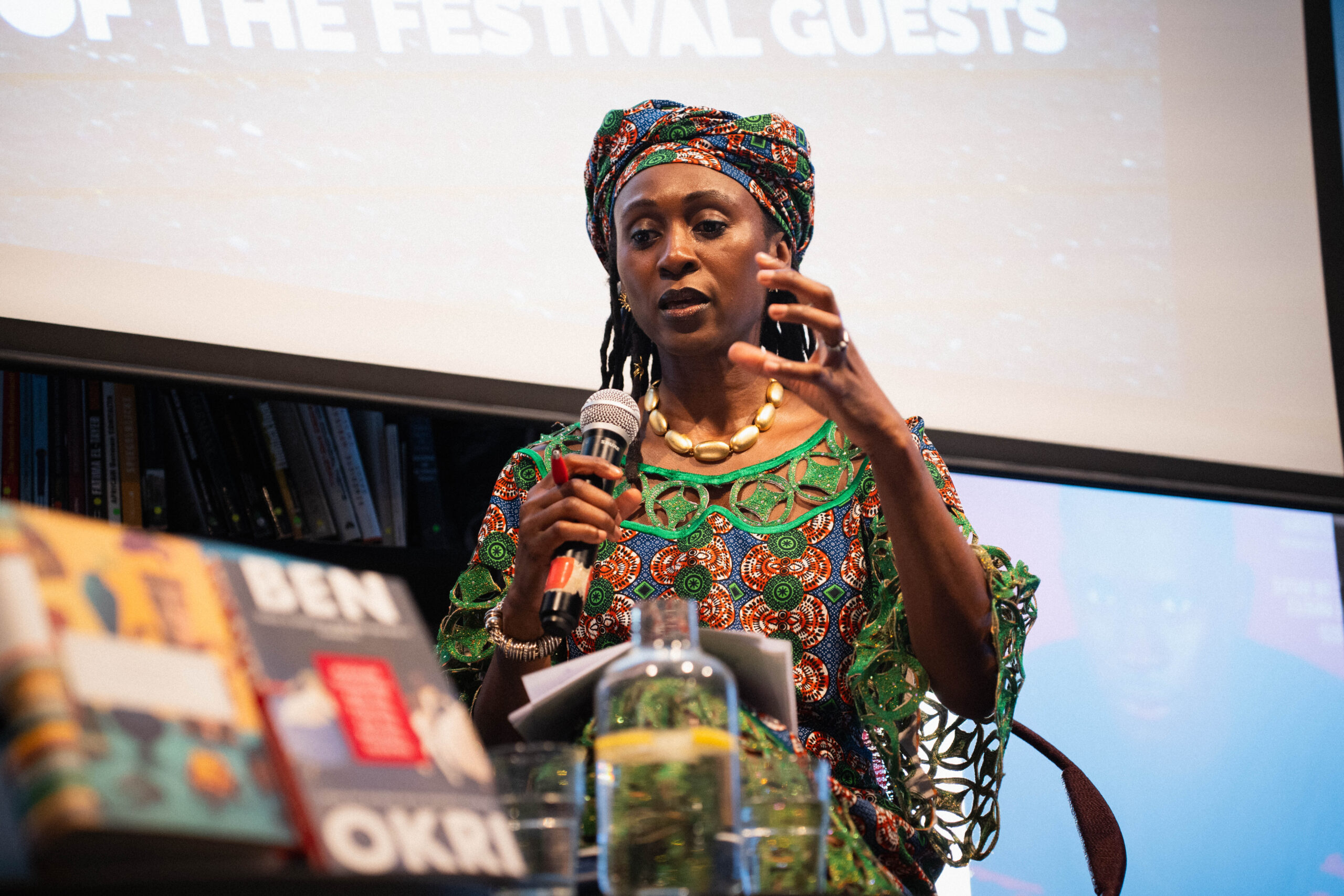
Chinua Achebe, Things Fall Apart
I read the scene during the New Yam Festival, that wonderful moment when the mound of pounded yam grows so high that people sitting on opposite sides cannot even see one another to exchange greetings until hours into the meal, one of those passages that reminds you that Achebe had a healthy sense of humor.
Ben used the passage to talk about proverbs, returning to Achebe’s famous observation that among the Igbo, “proverbs are the palm oil with which words are eaten.” He spoke about proverbs as a way of preserving ideas. Proverbs, in their aphoristic forms, are memorable. There is pleasure in citing them, but they are also useful for transmitting wisdom across generations. They are compact archives, beautiful forms that make thought memorable enough to survive.
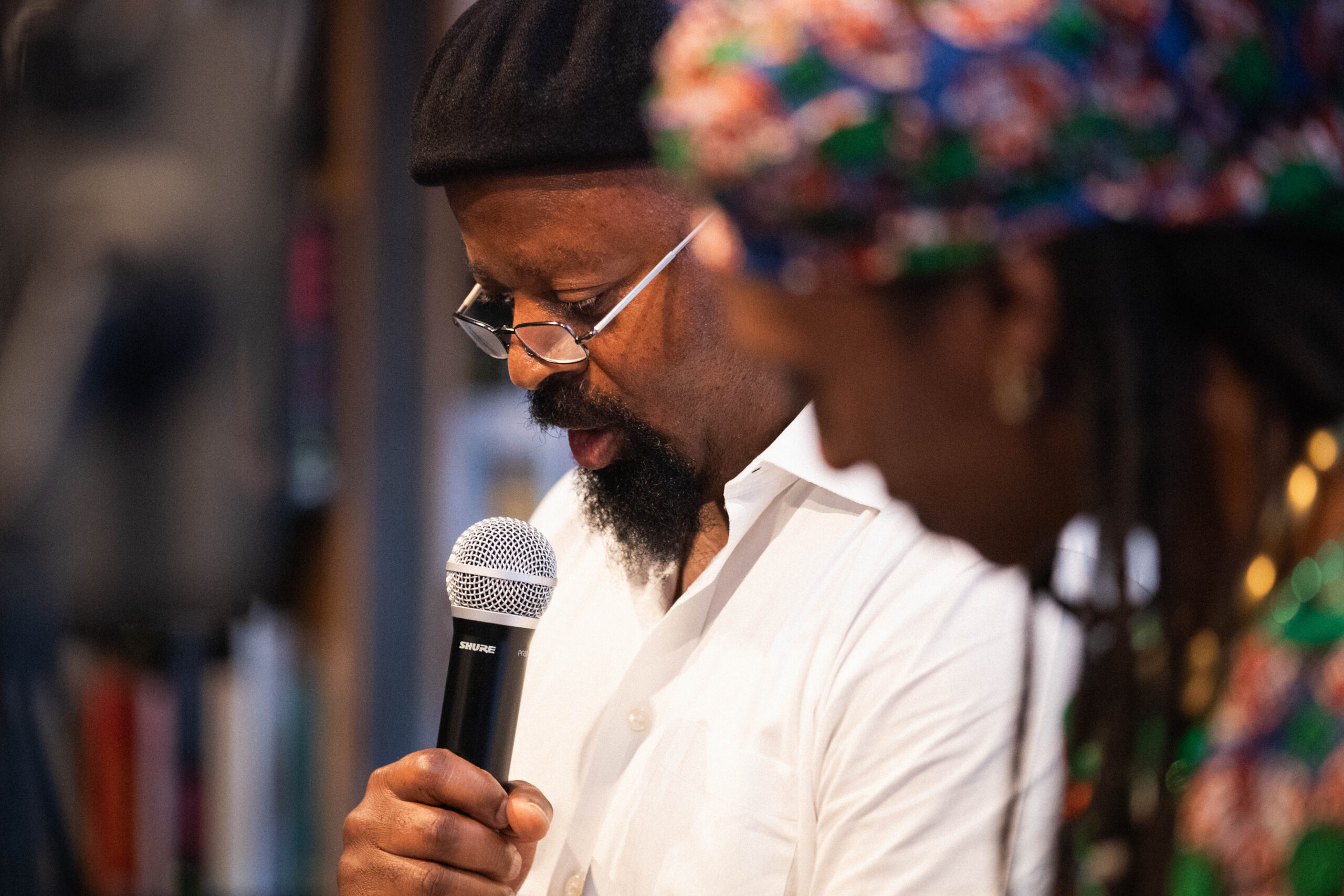
Dambudzo Marechera, “Protista”
We were deciding who to read next. I had suggested Jomo Kenyatta’s satirical story, The Gentlemen of the Jungle, but Ben paused and said, “Let’s do Marechera.” From somewhere in the audience, I could hear Tsitsi Dangarembga respond, “Oh yes.”
The story he chose was “Protista,” from the recent African short story collection, which he edited and which was published by Penguin’s Everyman’s Library Pocket Classics.
Before he began reading, Ben shared that he had known Marechera personally during their years together in London.
After the reading, Ben reflected on Marechera’s extraordinary imaginative power. He drew out the story’s imagery of apartheid and used it to explain what he saw as Marechera’s indirect, metaphorical mode of writing:
“Marechera is one of those writers who did not like writing directly about a trauma that was affecting his people. There are two kinds of writers. There are writers who write directly about something… and there is another kind of writer that also writes about that but says, ‘Well, I woke up one morning and my whole wall was covered in black insects.’ The direct writers and the metaphorical writers… A lot of African writing is writing about a trauma that we often can’t write about directly.”
Ainehi Edoro, Forest Imaginaries
Towards the end of the evening, I read from my Forest Imaginaries.
I chose the opening of the prologue, “How I Found the Forest,” where I write about growing up in southern Nigeria. Although forests surrounded the world I inhabited, I some of my most memorable encounters with the was first in stories.




COMMENTS -
Reader Interactions