

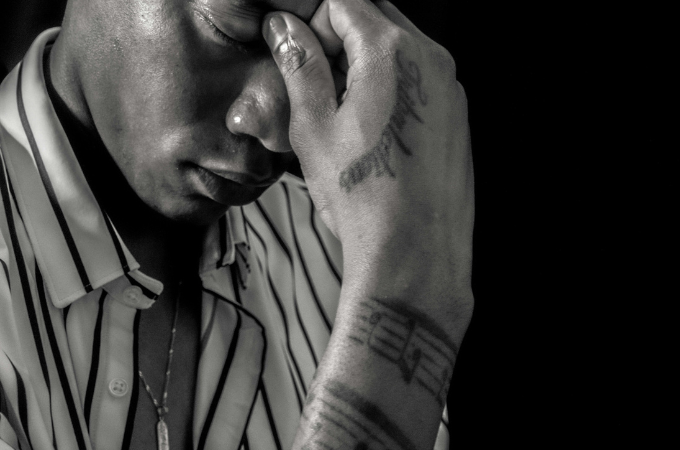
The room smelled of Raid.
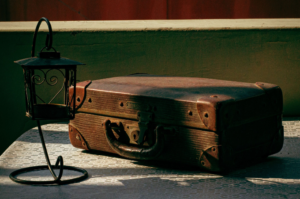
Okwy had sprayed too much in his bedroom, and the smell had taken over the room, so he picked up his phone and his water bottle and came to the parlour. NEPA had been gone since four in the afternoon. The rechargeable lamp on the centre table threw light as far as the couch, then stopped there.
The evening was cool. It had rained in the afternoon, a slow, soaking rain that turned the compound earth to mud for an hour and stopped, and now the air smelled of wet ground, and somewhere down the street the neighbour’s generator was running. It wasn’t theirs; no, theirs hadn’t been turned on in a week now.
Mama was in the chair by the curtain with her legs tucked under her. Udoka was on the couch with a wrapper around her shoulders, in the middle of a story about Mrs Okonkwo’s daughter and a boy whose family, apparently, had not done their findings before coming to marry her. Okwy settled into the armchair by the window and opened Twitter. He had been on his phone since six in the evening, scrolling without a particular purpose, and the afternoon had left him nothing concrete to do with himself.
He didn’t announce himself. They didn’t pause.
***
The Oyo story was near the top. He had been following it since morning, when the reports came in from Oriire. Three schools. Children at morning assembly, standing in lines waiting for the bell, when the gunmen came out of the bush on motorcycles. Twelve of them, dressed in military camouflage, shooting into the crowds. The numbers shifted through the day: the vice principal dragged away, a teacher killed, another teacher, a mathematics man named Michael Oyedokun, beheaded, and the video circulating by afternoon before anyone could stop it. Forty-six in captivity by evening. Still in the forest.
Okwy had posted the story at ten o’clock that morning: Oyo now. Nowhere is safe. He hadn’t looked at it since. He tapped through to confirm the count. Still forty-six. He turned the phone toward his mother.
“Mama. Have you seen this?”
She leaned toward his screen. Her eyes moved across the text, not all at once, reading perhaps half of it before she straightened.
“God forbid,” she said.
“Schoolchildren, mama. They took them during the morning assembly.”
“God forbid it for our family.”
He looked at his mother. He thought about saying that the children in Oriire also had families who prayed over them before they left that morning. He did not say it. He set his phone on his knee and looked at the ceiling.
The neighbour’s generator hummed. Somewhere inside its constancy, he could hear the specific inadequacy of the phrase — God forbid — as a response to forty-six people in a forest. As if the utterance were a gate. As if the gate had ever worked.
***
“You know the Presidential election is January 16th.”
Udoka looked up from her own phone.
“Yes. January 16th. The date falls badly. Most voters will be traveling for Christmas. If they’re not at their polling units when the time comes—”
“Okwy,” his mother’s voice was patient. She had already spent her energy on this statement and was not going to spend more. “Leave that thing. They already know who will win.”
“Who knows?”
She made the small gesture with her wrist he had watched his whole life, indicating something already present in the room, something too obvious to need pointing at. “These people. It is already settled.”
“So, we just accept it.”
“I didn’t say accept. I said, it is what it is.”
It is what it is. He had heard it in different rooms and from different mouths all his life.
“Mama. We’ve been saying that since I was born. It is what it is. God forbid. Move on. And every year, more people are killed, and more people are kidnapped, and more of the country becomes unliveable, and we are still here saying it is what it is.”
He stopped. He heard his own voice climbing and brought it down.
“Kwara in February, one hundred and sixty people in a single night, going door to door. Palm Sunday in Jos. Now Oyo. Forty-six children are still in that bush right now. This is not staying in one place. It is moving. It will reach us.”
“We know it is coming,” mama said quietly. “That is why we pray.”
“The families in Oriire prayed.”
Mama was quiet for a moment, her eyes on the dark window.
“God will judge these people. Their punishment will come.”
“When? Because right now they are in the forest, alive. The government has not come for them. No army. These people will grow old. They will die as old men. Tell me, what stops any man from becoming what they are, if that is what becoming evil costs him?”
Udoka had pulled her wrapper tighter. She was watching him, her full cheeks still, except for the left one, which twitched slightly.
“What do you want me to do?” mama’s voice was still level. She was genuinely asking. “Go to the streets so they can kill me?”
“Yes. If we all go out at the same time—”
“God forbid,” Udoka said. She had already turned back to her phone. “That will never be my portion.”
He looked at his sister. Twenty-eight years old. Phone in her lap. She loved him. His certainty was also frightening her. She had said it without thinking.
He thought about his father.
***
The year before he died, his father had stopped going to watch football at night. The men who gathered at Danladi’s compound for EPL evenings and Champions League nights had started going home before dark. In Benue in those years, the attacks on communities had become regular enough that people adjusted their lives around them without quite admitting it.
His father was a Manchester United man, completely and without apology. He had lived through the Fergie dynasty and intended to outlast the bad years. Okwy had spent the better part of his twenties provoking him about the decline. Papa, they are finished. Accept it. And his father would look at him with the patient expression he used for people who mistook the short view for the full one. A club like that always bounces back. Give them time.
He stopped going to Danladi’s. He stopped the late nights. He started watching the matches on TV at home, keeping the volume low so as not to disturb, shouting quietly at the screen alone or with whoever was around. He still argued about United. But he came home before six. He did the things a careful man does in a place that is becoming dangerous, without anyone admitting it.
It was a Tuesday in April, seven in the evening, the sun still visible in the sky, when he was coming back from the civil service office along the road he always took. The area was attacked while he was in it. They told Okwy afterwards that it was quick. Okwy accepted the word and did not ask what it meant, because asking would have required him to build a picture he could not take apart afterwards.
They buried him on a Thursday.
Okwy had watched his mother’s face throughout the burial and had never been able to name what he saw there. He had prepared himself for grief. He had seen grief on her face before, at his uncle’s burial, at a neighbour woman’s funeral three years before the move, he knew what it looked like on her. At his father’s burial, her face was different. More settled. A woman finishing an arithmetic she had been running in her head for months without knowing it. The final number was in. It matched what she feared.
She did not collapse. She organised things. She made sure there was enough food. She thanked people as they came and kept their cups full. Six months later, she moved them to Owerri, and she had not spoken of Benue since, except twice by accident, and each time she caught herself and went quiet quickly, as if the word itself was still hot to touch.
Now she sat across from him in Owerri, saying, It is what it is. And he wanted to say, Mama, your husband stopped going out at night. He came home before six. He was on the same road he always took, and they still killed him. He did everything right. So, when you say ‘God forbid,’ what exactly are you forbidding? The thing you’re forbidding has already happened. It happened to you. It happened in your own house, to your own husband, and you still say it, and I don’t know if that makes you foolish or if it makes you the only honest person in this room.
He said none of it.
***
He sat back in the armchair. Mama looked at him for a moment — she had always been able to read him — and then turned to Udoka. Something passed between them in the shift of her eyes. Then she picked up the conversation from wherever he had interrupted it.
“Don’t mind your brother,” she said. She didn’t lower her voice. “He’ll calm down.”
“He always does,” Udoka said. She turned back to her phone.
He put his AirPods in for the sealed feeling they gave him, the wall between his ears and the room. He had nothing he wanted to hear. Through the seal, their voices came to him as low, rounded frequencies he couldn’t quite make out, rising occasionally when something landed. Udoka laughed at something. Mama’s shorter response, and then mama laughed too, a full unguarded laugh, and through the AirPods it arrived muffled, the edges gone. He could tell what it was. A joke about him. Gentle. We are not angry with you. We love you. Just breathe.
He looked at his phone. His ten o’clock post was still there. The screenshot of the headline, the caption: Oyo now. Nowhere is safe. Sixty-seven retweets. A hundred and sixty-three likes.
He scrolled past it.
A thread about the 2027 elections. Two tweets, then he moved on. A video from somewhere he didn’t register.
He scrolled.
A post from a man whose brother was among the forty-six still in the Oriire bush. The post had gone up three hours ago. Short sentences. The man said that he had not slept. He was asking if anyone knew anything. He was asking for prayers. Forty-two retweets. Okwy read it to the end. His thumb rested on the screen.
He scrolled.
His life had been going nowhere for the better part of a decade. The country had taken his father and given him outrage in return. He had been spending it carefully, posting captions and retweets, posts that trended for a day and died, so that it never ran out and never required him to do anything with it. He had been thirty for four months now and had achieved nothing he could point to. That failure, too, he had been managing the same way.
He knew this. It hadn’t arrived as a discovery. It had been there all along, sitting behind every caption he typed, every post he shared, every fifteen seconds of indignation that came to nothing. He had run out of other people’s disasters to point at.
The rechargeable lamp on the centre table flickered. His mother reached over without pausing, without looking at it, by feel alone, the reflex of a woman who had long ago decided which things were hers to fix, and adjusted the base.
The lamp stayed on.
Photo by Michael Starkie on Unsplash




COMMENTS -
Reader Interactions