

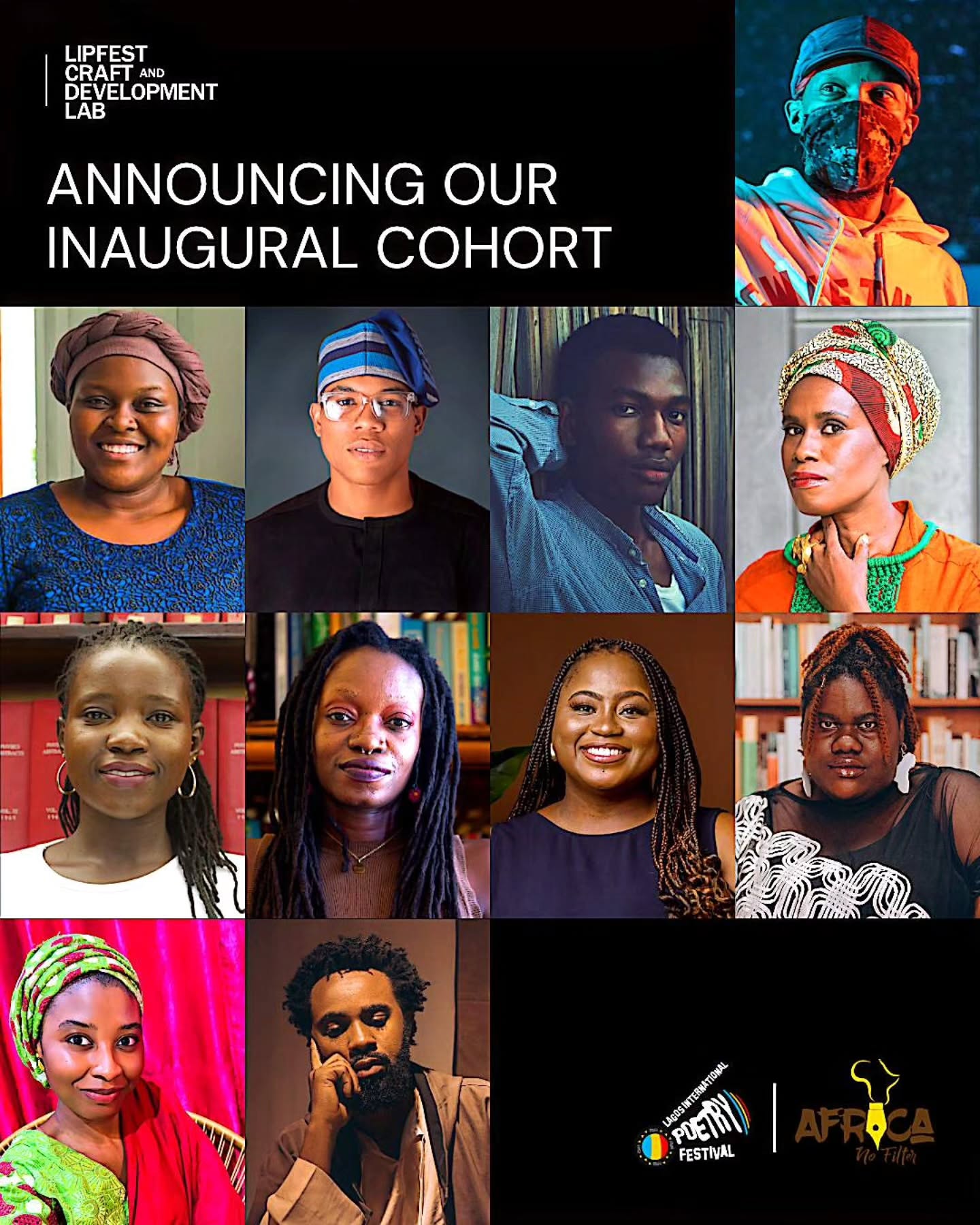
The Lagos International Poetry Festival has named the ten writers who make up the inaugural cohort of its Craft and Development Lab, the free four-month mentorship program the festival opened applications for back in June. That open call promised craft training, mentorship, and professional development to poets, spoken word artists, and writers from Nigeria, Africa, and the diaspora, with ten participants to be selected. The response was significant: over three hundred poets and writers from across Africa and the diaspora applied, submitting work spanning documentary poetry, spoken word projects, performance pieces, myth, history, ecology, faith, family, and political life.
The selected cohort brings together an intercontinental mix of emerging and established voices: Ayinde Jean-Baptiste (Haiti/Trinidad and Tobago), Edinam Denoo (Ghana), Felix Eshiet (Nigeria), Joemario Umana (Nigeria), Karen Lee (Jamaica/Canada), Lillian Akampurira Aujo (Uganda), Lydia Nyachiro Kasese (Tanzania), Phodiso Modirwa (Botswana), Roseline Mgbodichinma (Nigeria), and Oloruntobiloba Abiodun (Nigeria). Several of the participants are already familiar names in African literary spaces, having placed in prizes like the Jalada Prize for Literature, the Gbemisola Adeoti Prize for Poetry, and the Adinkra Poetry Prize, or published chapbooks through the African Poetry Book Fund’s New-Generation African Poets series. Others are earlier in their careers but were selected, LIPFest says, for their clarity of purpose and willingness to engage seriously with critique.
Over the next four months, the cohort will work closely with the three facilitators announced when applications opened: Romeo Oriogun, winner of the NLNG Literature Prize and the National Book Critics Circle Award, who teaches creative writing at Florida Atlantic University; Titilope Sonuga, the Nigerian-Canadian poet and former Poet Laureate of Edmonton; and Nick Makoha, the Ugandan poet behind Kingdom of Gravity and The New Carthaginians, and founder of the Obsidian Foundation. The program itself will combine workshops, mentorship, peer critique, and professional development sessions built to support both the participants’ creative practice and their long-term careers.
The Lab’s participants arrive with a wide spread of projects already underway (poetry collections, chapbooks, spoken word albums, documentary poetry, and interdisciplinary work). It’s a fitting continuation of the festival’s broader investment in developing African poetic talent beyond the stage, extending the community built at LIPFest’s live events into a sustained, structured space for craft.
The Lab’s organizers say the difficulty of choosing was a sign of how much appetite exists for this kind of sustained, mentorship-driven support in African poetry. LIPFest has signaled this is meant to be the first of many cohorts, suggesting the Lab could become a recurring fixture alongside the festival’s annual programming, one more avenue, alongside the festival stage and its Márọkọ́ magazine, for shaping where African poetry goes next.
Congratulations to the inaugural cohort!

COMMENTS -
Reader Interactions