

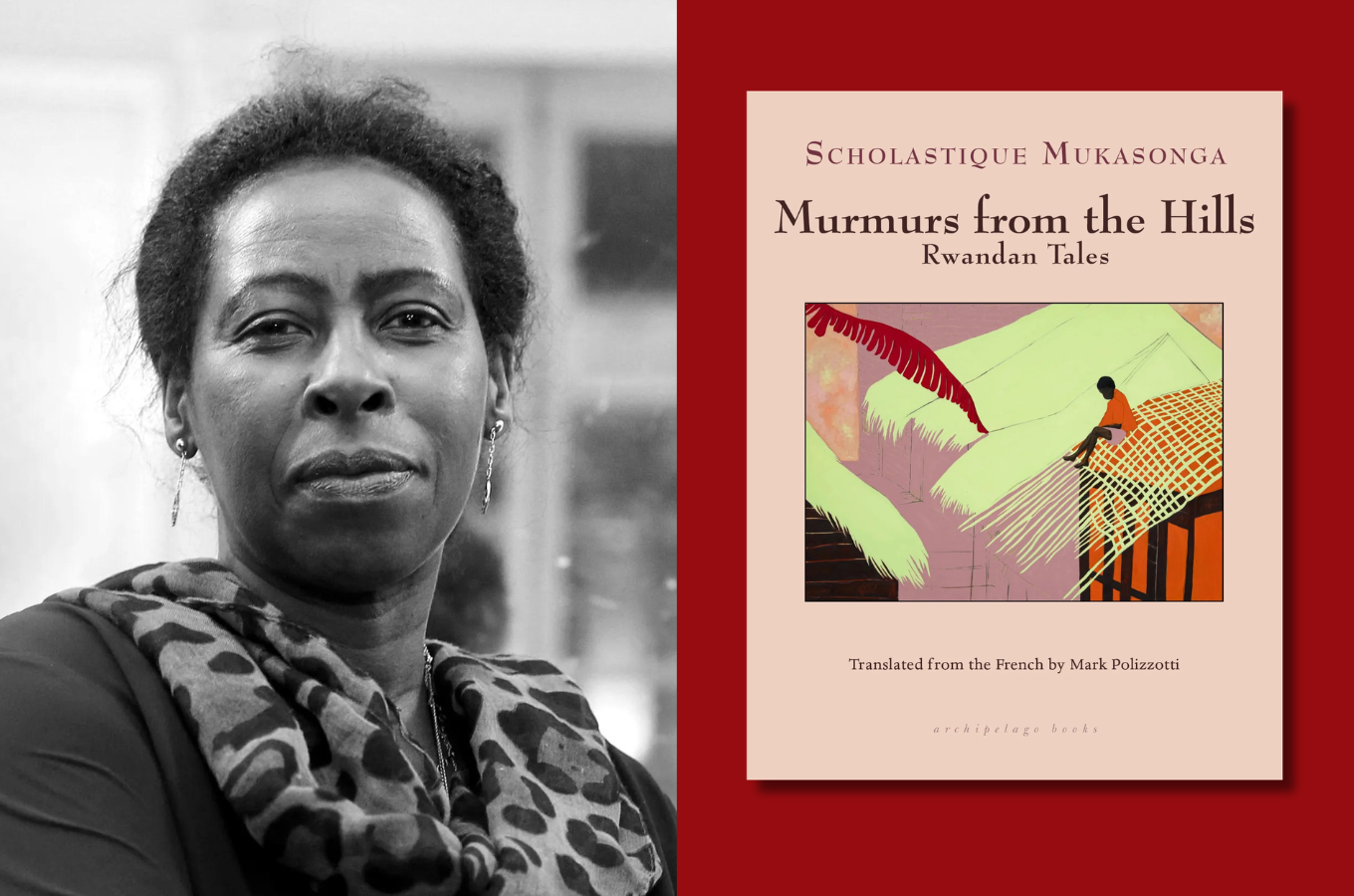
Scholastique Mukasonga, the Rwandan writer whose work has spent two decades bearing witness to the genocide against the Tutsi, is returning this November with a book that marks a departure. Murmurs from the Hills: Rwandan Tales, translated from the French by Mark Polizzotti, arrives from Archipelago Books on November 10, 2026.
Where Mukasonga’s earlier work — Cockroaches, The Barefoot Woman, Our Lady of the Nile — has circled the trauma of 1994 and its long aftermath, Murmurs from the Hills looks further back, toward a pre-genocide, almost mythic Rwanda, as a way of imagining what renewal might look like once the weight of that history is set down. According to Archipelago Books, the stories in the collection read like oral histories, full of overlapping voices. A wooden amulet on a woman’s hip opens into girlhood memories of catechism; a vision of the river Rukarara sits beside the diary of a European explorer trying, and failing, to claim a land that resisted him. Throughout, Rwandan mythology, both remembered and reimagined, threads together with glimpses of Mukasonga’s own earlier novels and the hills and elders who shaped her childhood, as she draws from what Archipelago describes as her mother’s own trunk of stories.
Publishers Weekly named the collection among its editors’ picks for the season, noting that it blends autofiction and folklore into a striking portrait of colonial and post-colonial Rwanda, opening with a story titled “The Rukarara.” Novelist J.M. Coetzee has also praised the collection, describing Mukasonga’s gift for conjuring a vanished world in all its richness.
Mukasonga was born in Gikongoro Province, Rwanda, in 1956, and her family was displaced to the Bugesera district in 1960 amid the ethnic violence that shaped her early life. She was later forced to abandon her studies at a school of social work in Butare and flee to Burundi, eventually settling in France in 1992, two years before the genocide claimed the lives of 37 members of her family, including her mother. Her literary career began in earnest with Inyenzi ou les Cafards (published in English as Cockroaches), followed by The Barefoot Woman and Igifu. Her debut novel, Our Lady of the Nile, won the Ahmadou Kourouma Prize and the Renaudot Prize in 2012, the Océans France Ô Prize in 2013, and the French Voices Award in 2014, later earning a shortlisting for the International Dublin Literary Award and, with The Barefoot Woman, a finalist spot for the National Book Award for Translated Literature. In 2020, Our Lady of the Nile was adapted into a film by Atiq Rahimi, which won the Crystal Bear at the Berlinale and screened in TIFF’s Official Selection.
With Murmurs from the Hills, Archipelago Books, which has published the bulk of Mukasonga’s work in English, including Sister Deborah, adds another chapter to one of the most vital ongoing translation projects in contemporary letters, one that continues to insist, in Mukasonga’s own words, that Rwanda’s painful history need not hold its people hostage.
Preorder a copy here.


COMMENTS -
Reader Interactions