


Sickle cell disease is one of the health conditions most deeply associated with people of African descent, and its burden is particularly heavy in sub-Saharan Africa. The World Health Organization estimates that 7.74 million people were living with sickle cell disease globally in 2021, with nearly 80 percent of cases occurring in sub-Saharan Africa. On the continent, about 240,000 children are born with the condition every year. In Nigeria, where the prevalence of the sickle-cell trait is estimated at between 20 and 30 percent, the condition is not an abstract medical statistic. It is part of the everyday reality of many families.
For Anjola Oladimeji, that reality has been personal since childhood. Her father lived with sickle cell and died in 2014, leaving Oladimeji with questions about a condition she had grown up around but did not fully understand. Years later, that curiosity became part of her work. In 2020, she founded the Ntetee Foundation, through which she has worked with people living with sickle cell and their families, supporting advocacy, direct assistance, storytelling and community initiatives.
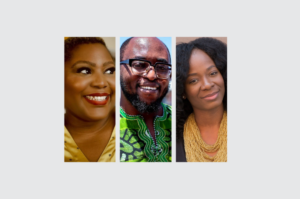
That journey has now found its way into a children’s book. Little Rivers and Special Boats, co-authored by Oladimeji and sickle cell advocate Olapeju Ajala and illustrated by Uzoma Nduka, follows Bamitale, a six-year-old girl who loves drawing, painting and playing with her dog but sometimes becomes too ill to go to school. When her classmates call her a name she does not understand, her teacher, Miss Anya, introduces them to the idea of “little rivers and special boats” as a way of helping them understand sickle cell. The book is written for children aged 4–8 and uses the metaphor of rivers and boats to make a complicated medical reality more accessible without reducing the experience of living with the condition.
We spoke with Oladimeji about Little Rivers and Special Boats, the decision to introduce sickle cell to children through imagination instead of just the medical terminology, and how her experience with her father and her work at Ntetee Foundation shaped the story.
Brittle Paper
What first inspired Little Rivers and Special Boats, and how did the idea of telling a story about sickle cell through a children’s picture book take shape?
Anjola Oladimeji
Little Rivers and Special Boats grew out of something very personal for me. My father lived with sickle cell and passed away in 2014, so sickle cell has always been more than an advocacy issue to me. It is something I experienced within my own family and have carried with me for a long time.
When I founded Ntetee Foundation in 2020, I began engaging much more closely with people living with sickle cell and their families. Through that work, I kept thinking about how early we could begin changing the way people understand the condition. There is so much fear, misinformation and misunderstanding around sickle cell, and I wondered what it would look like to introduce the subject to children in a way that was honest but not frightening.
That was really where the idea began. I didn’t want a book that felt like a medical textbook disguised as a children’s story. I wanted to create a world that children could enter through imagination and then use that world to help them understand something real. The idea of the Little Rivers and Special Boats gave us a way to translate a complex medical reality into something a child could easily understand. Instead of beginning with medical terminology, we begin with a story about characters, difference and how we navigate the world.
Ultimately, the book became a way of asking: What if a child could encounter sickle cell first through a story, rather than through fear?
Brittle Paper
Sickle cell can be a difficult and complex subject to explain to children. How did you approach making the realities of living with sickle cell accessible without making the story frightening or overly clinical?
Anjola Oladimeji
I think the key was recognising that we didn’t have to simplify the reality of sickle cell; we had to simplify the way we introduced it. Children don’t necessarily need medical terminology to understand what it means to experience pain, to be different from their friends, to need extra care, or to sometimes be unable to do the things they want to do. Those are emotional experiences they can already understand.
So rather than making the book about the mechanics of sickle cell, we focused on the child’s experience of difference and the people around them. The metaphor of the rivers and boats gave us a way to talk about what is happening without making the story feel like a lesson in biology.
At the same time, we didn’t want to make sickle cell seem less serious simply because children are our primary audience. There are difficult realities that children living with sickle cell experience, and they deserve honesty. The challenge was finding a language that acknowledges those realities while still leaving room for warmth, wonder and hope.
Brittle Paper
The book is rooted in sickle cell, but it also speaks broadly about empathy, kindness and difference. Why was it important to make the story one that every child could see themselves in, rather than a book only for children living with sickle cell?
Anjola Oladimeji
Personally, I don’t think understanding sickle cell should be the responsibility of people who live with it alone. A child living with sickle cell deserves to see their experience reflected in a story and know that their reality is worthy of being talked about. But the child sitting next to them in school also needs to understand why their friend might sometimes be absent, experience pain, take medication, or be unable to participate in something they are doing together.
That is where empathy becomes important. If the book were only about sickle cell, a child without the condition might read it and think, “This is a story about people who are different from me.” We wanted them instead to find pieces of themselves in it.
Every child knows what it feels like to be different in some way. Sickle cell is the particular experience through which we enter the story, but the larger question belongs to all of us: How do we treat people whose experiences are different from ours? While we wanted a child living with sickle cell to feel seen, we also wanted a child who doesn’t have sickle cell to leave the story with a little more understanding of someone who does.
Brittle Paper
What does representation mean to you when writing for children, particularly for children who may rarely see their experiences reflected in the books they read?
Anjola Oladimeji
For me, representation is partly about being able to say, “I can see myself in this; therefore, my experience belongs here too.” Children are constantly learning what is considered normal, what is worthy of attention, and whose experiences are important enough to be told. When a child rarely sees their reality reflected in the books they read, it can quietly communicate that their experience is unusual, invisible or outside the world of stories. And I think that matters.
Representation is a lot more than simply putting a particular condition, identity or experience on a page. It is also about how that experience is portrayed. We didn’t want a child with sickle cell to encounter a character whose entire identity is reduced to being sick. We wanted them to see a child who has a full inner world, relationships, dreams and a place in the story. And I think representation also benefits the children who don’t share that experience. When we introduce children to different realities early, difference becomes something they can approach with curiosity rather than fear or otherness.
For me, that is one of the most powerful things a children’s book can do: tell a child, “You belong in this story,” while also teaching another child to make room for you in theirs.
Brittle Paper
How did your work with the Ntetee Foundation shape the story, and what did you learn from engaging with the realities and experiences of people living with sickle cell?
Anjola Oladimeji
Ntetee shaped the story enormously because I wasn’t approaching sickle cell purely as a writer or from a distance. Over time, my work with the Foundation has allowed me to interact with warriors and families and see the many ways sickle cell affects people’s lives beyond what we often hear about medically. Those experiences naturally became part of the conversations around the story, and Olapeju’s experience as a sickle cell warrior also brought another layer of realism, helping us ground the story in lived experience.
One of the biggest things I have learnt over time is that there is no single sickle cell experience. There are people who are able to manage their condition relatively well and others who experience severe complications. There are people with strong support systems and people who have had to navigate the condition with very little support. There are also the quieter realities—the anxiety around pain crisis, the financial burden of medication, missed school or work, misconceptions from people who don’t understand the condition, and the exhaustion that can come from constantly having to explain yourself.
Supporting someone with sickle cell is about more than meeting their medical needs. Sometimes it begins with understanding, knowing why someone needs what they need and responding with compassion rather than judgement.
Brittle Paper
The book uses gentle storytelling to introduce children to difference and empathy. What do you think adults sometimes underestimate about what children are capable of understanding when difficult subjects are presented to them honestly and thoughtfully?
Anjola Oladimeji
I think we sometimes underestimate children because we often confuse protecting them with shielding them from difficult realities. Children are much more perceptive than we give them credit for. They notice when someone is different. They notice when an adult is worried. They ask questions about illness, death, disability, fairness and things they don’t understand. If we don’t give them language for those things, they don’t stop wondering; they simply create their own explanations.
I don’t think children need every difficult subject explained to them in its most complicated form. But I do think they deserve honesty that is appropriate for their age. A thoughtful story gives them space to encounter something unfamiliar without immediately feeling threatened by it. It gives them language for asking questions and, perhaps most importantly, gives them permission to care.
I also think children are naturally capable of empathy. Sometimes adults are the ones who introduce the idea that difference should be uncomfortable or frightening. With Little Rivers and Special Boats, we wanted to trust children enough to say: Here is something you may not understand yet.’ Let’s try to understand it together.
Brittle Paper
When a child finishes Little Rivers and Special Boats, what is the one feeling question or idea you hope stays with them?
Anjola Oladimeji
I hope they leave with empathy. More specifically, I hope they become a little more curious about people whose experiences are different from their own. For a child living with sickle cell, I hope the book says, in some small way, “We see you. Your experience matters. You belong in this story.” And for a child who doesn’t live with sickle cell, I hope they leave thinking, “Maybe I should ask more questions before I assume I understand what someone else is going through.”
If a child finishes the book and becomes a little more willing to notice someone else’s experience, include them, ask instead of assume, or simply be kinder, then I think the story has done what we hoped it would do.
Ultimately, we don’t want children to remember Little Rivers and Special Boats only as the book that taught them about sickle cell. We want them to remember it as a story that taught them that being different doesn’t make someone less deserving of understanding, friendship or kindness.
Brittle Paper
This was such an enlightening conversation. Thanks for speaking with us.
Anjola Oladimeji
Thanks for having me.

COMMENTS -
Reader Interactions