

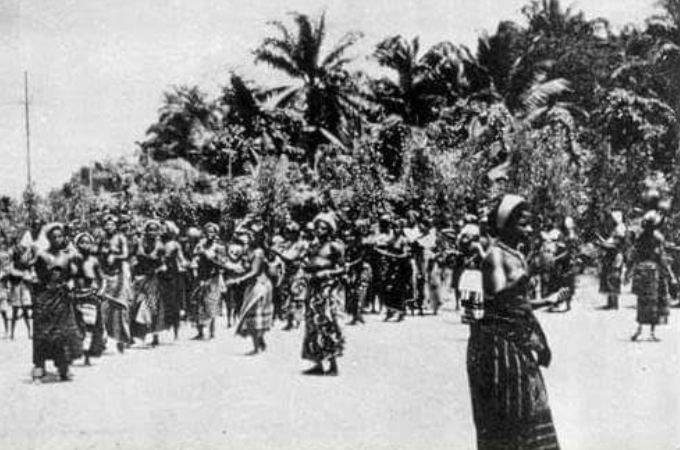
Inspired by the Aba Women’s War of 1929
From Odelia to Nnenna
4th November, 1929
Ogbor Hill, Aba Province
Nnenna,
They came this morning. Four white men and one of our own, sweating in a khaki uniform too tight for his foolish chest. They brought the measuring pole, the paper, and that cursed ink they carry like a weapon. I was frying akara at the back of the house when I heard my youngest, Ejike, shout, “Mama, oyibo dey come.” His voice had that fear-sweet sharpness children use when they are not sure whether to laugh or run. I dropped my spoon and wiped my hand on my wrapper. My belly knew before my eyes did.
They said they were here to count the women. Nnenna, I ask you: who counts a woman like livestock? They said it was “census,” and that soon we would begin to pay tax like the men. I asked the tallest one if his own mother paid tax in their land. He blinked at me like a goat staring at a lantern, and the interpreter, our own kin, mind you, whispered that I should not raise my voice.
But I did. I told them if they liked, they could count the goats, the baskets of pepper, the grains of rice in my mortar, but no one, no man, white or brown, would count Odelia Nwokorie and write her worth on paper.
The women gathered later, by the shrine of Ani, under the orange tree where the spirits listen. Mama Nwaka had already heard the same thing happened in Itungwa. She said they want to tax our wombs, our sweat, our market stalls, and our silence. But we are not silent, are we, Nnenna?
I remember your words the last time we walked from Ariaria to town, barefoot, our headscarves damp with heat. You said they would learn that a woman’s voice is not a whisper. That it is a war drum. So let it begin.
Send word. Call the women in Owerrinta. Tie your wrappers tight and soak bitterleaf tonight. We will not lie down for these thieves with papers. Let your pen be sharp. Let your reply come fast.
Your sister in fight,
Odelia
From Nnenna to Odelia
7th November, 1929
Owerrinta, Eastern Provinces
Odelia, my heart,
I felt your letter before I read it. My chest was already burning. My body knew your words were coming like a storm.
They came here too, two days ago. They knocked on Adaku’s stall while she was still arranging her kola nuts. When she asked them why they needed her name, they told her, “Government Order.” I spat. Government Order, yet it is our hands that feed this land. Our backs that carry its weight. I told them to go and ask their mothers if tax makes water boil faster. They laughed. You know the laugh I mean. That thin, flat sound that only men with power and small minds can make.
So now, the fire is lit. The Umuada have begun gathering. We met under the moon, behind the Anglican school, and we have agreed to start the watch. Every town, every woman, every eye wide open. Adamma will go to Mbawsi tomorrow, and from there, we send message to Isiala Ngwa. This will not stay in Aba. It will not end until they kneel. I can already hear the chant in my blood:
Anyị ga-egosi ha na nwanyị abụghị nwa.
We will show them that a woman is not a child.
Odelia, I still remember when we first met, your voice louder than a whistle, your fists full of dry pepper. You said, “Let them dare.” Now, they have dared. And we will answer.
Hold strong. Hide the children’s names. Burn any paper they bring. I will send you palm oil, dried okazi, and the song we will sing when we march. I have begun sewing red wrappers. May your rage stay hot. May your feet not stumble.
With clenched fists,
Nnenna
From Odelia to Nnenna
13th November, 1929
Aba Province
Nnenna,
They tried to scare us. They sent a patrol to the market this morning. Horses and their hooves raising red dust, policemen carrying sticks that shone in the sun. They said we were gathering illegally, that women had no right to block the District Officer from entering his own house. But what do they know? That house was not built with his father’s hands. It was built with ours. The women from Ngwa threw sand on his steps. Mama Agbonma slapped his windows with palm fronds. We sang until his ears rang with our names.
The song is growing louder now.
They came again to arrest Mama Nkechi. You remember her? The one who sells yam wrapped in banana leaves? Her daughters stood in front of her, arms crossed. The youngest, maybe nine, shouted, “Touch her and see!” That is how I know the fire has caught.
Your red wrapper has reached me. I tied it to my waist today and danced in front of the court building. They said I was mad. Maybe I am. Mad with memory. Mad with rage. Mad with the knowing that this land will one day speak of us as the women who lit the sky.
Nnenna, my feet are blistered. My voice is hoarse. But I feel alive. When we march, I feel the pulse of our foremothers beneath the soil. Ani is watching. I heard your husband was arrested last week. May your heart not break. I am sending dried bitter kola and a gourd of shea oil. Rub it on your chest and breathe slowly. You must stay strong. You are our firekeeper.
We gather again in three days. The women from Umuahia are coming. They said they will not miss it for anything. Tell me: are you ready? Let your letter come quickly. The wind is changing.
With strength,
Odelia
From Nnenna to Odelia
17th November, 1929
Owerrinta
Odelia,
They tore down our posters. The ones with charcoal markings. They said it was “sedition.” That word with too many teeth. They want us to be afraid. But how can I fear men who do not know what pain feels like?
My husband has not returned. The prison in Aba said they know nothing. I know that lie. I have heard it too many times. But I will not sit and weep. I have joined the planning. I now sit with the women who move like ants, quiet, steady, burning sugar from the inside. We have agreed to sing the women’s song of mourning, not because someone has died, but because they have killed the peace. We will wrap cassava leaves in baskets and place them before the court. They will know the meaning. They will know the curse of ignoring a woman’s hunger.
Odelia, your voice has become my spine. I carry your words on my tongue. Yesterday, I shouted your name in the market. I said, “Odelia Nwokorie is coming. Let them tremble.”
On Thursday, we come. Owerri, Umuahia, Ngwa, Mbawsi, we will be ten thousand feet moving at once. You will hear the earth talk. Pray for no rain. Pray for open roads. Pray that if I die, it will be with your name in my mouth.
Hold me in your chest.
Nnenna
From Odelia to Nnenna
23rd November, 1929
Aba Prison Barracks
Nnenna,
I am writing this with a borrowed stub of pencil and paper that smells of sweat and kerosene. We were arrested two nights ago, when the singing got too loud. They said I led the chant. I laughed. They are right.
But listen, before they grabbed me, I saw something that made me cry.
Your wrapper.
Your face.
Your hand raised high above your head.
You were leading the chant.
Nnenna, you came. You came like thunder. The kind that splits iroko trees. I shouted your name, but the crowd swallowed my voice. Then the stick came down on my shoulder. I fell. And now, I am here, with my wrist bruised and my chest aching. But even in here, they cannot silence us. The other women hum through the night. The guards cannot sleep. That is our victory.
I know they will release me soon. I am no longer afraid. When I sleep, I see your eyes.
Send word. Tell me you are safe. Tell me the sky is still ours.
In defiance and love,
Odelia
From Odelia to Nnenna (Unanswered)
2nd December, 1929
Aba Province
Nnenna,
I waited. I waited for your words to find me. I waited like a woman waits for harm to pass. The others have returned. Their feet dusty. Their eyes red. But your silence arrived before they did.
The women said it happened at the railway station. That a soldier panicked. That one bullet became two. That you fell with your chin still raised. I will not believe it until I see the earth cover you. Even then, I will not believe.
They say you were holding the wrapper I gave you. That you did not cry out. That you looked at the man who held the gun and asked, “Do you know your mother’s name?”
Nnenna, what do I do with your silence?
Tomorrow, I will speak at the council. They have no choice now. They will hear about you. They will hear your name from the mouths of ten thousand. We will not let it vanish. I swear it on every pepper I have ever sold. You are now a story in all of us. You are the chant. You are the burning. Sleep well, my sister. May your voice haunt their dreams.
Forever yours,
Odelia
From Odelia (Final Letter)
15th December, 1929
Aba Province
Nnenna,
I know you will not read this. But I write it all the same. Maybe it is my own foolish way of pretending that death does not have the final word. Maybe I just want to see your name again.
They say history belongs to men. But they are wrong. It is ours now. After the blood dried and the riot songs turned to mourning, something shifted. The District Officer now walks with his head lower. The new reports speak your names, yours, Mama Ezinne’s, even tiny Adaobi who carried the cowbell. They know we did not march to beg. We marched to change the ground beneath their feet.
Nnenna, we did it.
They have dropped the tax. The census for women has been halted. The warrant chiefs, those crooked ones who let greed sit in their mouths, have been cut down like overgrown cassava. They say the colonial office in London has written a statement, an apology, though they won’t call it that. And they are restructuring the Native Courts. For the first time, they want to appoint women.
They think this is the end. But we know better.
You once told me that when women speak together, it is the ancestors who listen first. I believe they listened. I believe they carried your voice and broke it open across this land. I believe you did not die quietly. I believe every tree in Aba still remembers the sound of your name.
Your daughter came to my stall today. She carried egusi in one hand and a paper in the other. She said she is learning to write. She wants to write her own letters one day. I told her she already carries the best one, your blood.
We will not forget you. May you rest like rain. May your name be a seed in the mouths of future daughters.
With everything I have,
Odelia


David Samoke May 08, 2026 11:52
Amazing ✨