

In his middle age, my uncle had a crisis that most men face at that time: what to do when your body and appearance begin to vehemently, and publicly, disagree with your long-cherished perception of how you look.
It started innocently enough, with him squinting at old photos; wedding photos, family outings, one from the day he received his long-service award from the Radio Limited Company, looking lean and smiling in a brown safari suit. The man in those photos had thick black hair, and a full beard that covered his mouth and chin. The man now staring back in the mirror, however, had a receding hairline, and what remained of the hair had started to grey in coarse, uneven patches.
He was not ready.
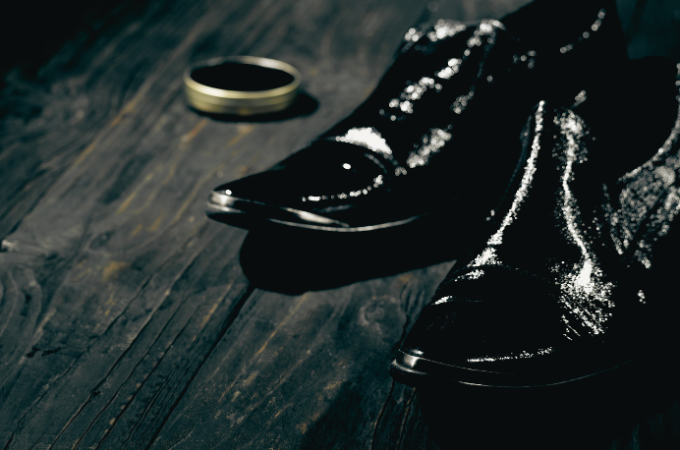
Instead of going to the shops for hair dye like other men, he said hair dye was “a gimmick designed to rob the middle-aged.” So, he went to the bottom drawer in the bedroom wardrobe, the one where old shoe brushes, afro combs, and broken belts are kept, and pulled out a tin of Kiwi black shoe polish. And that was how the restoration project began.
Every Saturday morning, he would wake before everyone, boil water for shaving, then sit on the edge of the bed with a small mirror in one hand and a wad of cotton wool in the other, carefully dipping into the tin and dabbing the black goo onto his head with the kind of precision usually reserved for car paint jobs or shoe displays in funeral parlours. At first, it was patchy. Some days his head looked like a failed map of Africa. But by the third week, he had developed a technique, circular motions, even pressure, and a thin coating of Vaseline to stop the polish from drying too fast.
He said it gave him back his dignity. His wife, my mother’s older sister, who never dyed her hair or worried about how her waist had widened, remained unmoved.
“A man’s beauty is in how he carries his responsibilities,” she said. “Not in how black his hair is.” She was seated at the kitchen table peeling potatoes for stew when she said this. She didn’t even look up. “Just make sure you come home with your full pay this Friday. No one here eats your confidence.” But he never flinched. He maintained that a man must be seen to be fighting back, even if the war is already lost.
He believed deeply in presentation. And he carried himself with a kind of puffed pride that refused to let the truth of his scalp disturb the illusion. Burial society meetings. Weddings. Walks to buy cigarettes at the corner tuck shop. Even when taking the bin out, he would not be seen without his cap and a fresh coat of polish in his side pocket.
The only problem was that Highfields, especially in summer, is not kind to such delusions. On hot days, the polish would liquefy and run in thick, oily trails down the back of his neck and onto the collars of his shirts, forming a dark ring that no amount of scrubbing could remove. In winter, it would dry and crack like old leather, giving his scalp the appearance of a well-worn boot. Still, he pressed on.
His wife, who had long stopped arguing about his choices, chose instead to deploy sarcasm as her only line of defence. On weekends, as he ironed his trousers and prepared to visit one of his friends, she would watch from the veranda and mutter just loud enough for their two daughters to hear, “I hope some money drops from the sky and sticks onto your dye. Just don’t bring any bird droppings back with you again.” He would chuckle, pretend not to hear, and adjust his collar with the dignity of a man who thought he looked like Bernard Chidzero when, in truth, he resembled a political poster left out in the rain.
“Better to die polished than perish plain!” my uncle would say, each time he caught his reflection in the window. To the daughters, his pride and heartbreak, the whole thing was both hilarious and tragic.
On Friday nights, when he returned from the beer hall with full plastic bags: roasted meat, steaming sadza, chunks of dripping stew, they gathered around the table like guests at a feast. They laughed at his stories, at the way his scalp glistened under the kitchen light, and how he blamed the IMF’s Economic Structural Adjustment Program for the rise in the price of everything. But when school fees were due, and he had nothing to show but shiny shoes and a darker-than-usual forehead, the laughter ended. There were tears, arguments behind closed doors, and long silences at the evening meal. The smell of polish hung in the air like something accusatory.
Once, the older daughter asked him directly why he couldn’t just go grey like other fathers. He replied, “Because I am not other fathers. I am yours.” It was the only time she ever saw him embarrassed. Not by his hair, but by his failings. My aunt, ever practical, never asked him to stop. But she kept the final demand of payment letters from the school in plain sight on the fridge, marked with a red pen and disappointment.
Still, every Saturday morning, the ritual continued.
Mirror. Water. Polish. Illusion.
And somehow, the household continued too.
In Highfields, where time passes visibly, on cracked walls, in fraying clothes, in the silence after payday, a man’s struggle with age is not just vanity. It is resistance. It is fear of being left behind, even by your children. And so, he fought. Not well, but sincerely. Until the day he stopped.
When the last Kiwi polish tin ran out, he did not replace it. And the mirror stayed in the drawer. No announcement. No discussion. Just a quiet surrender. And in that silence, the house began to breathe again.
Today when the daughters smell shoe polish on a pair of school shoes, they pause, look up, and smile. They remember their father. The man who dyed his head with defiance. And the woman who hoped that, just once, the sky over Highfields would drop money instead of rain.







COMMENTS -
Reader Interactions