

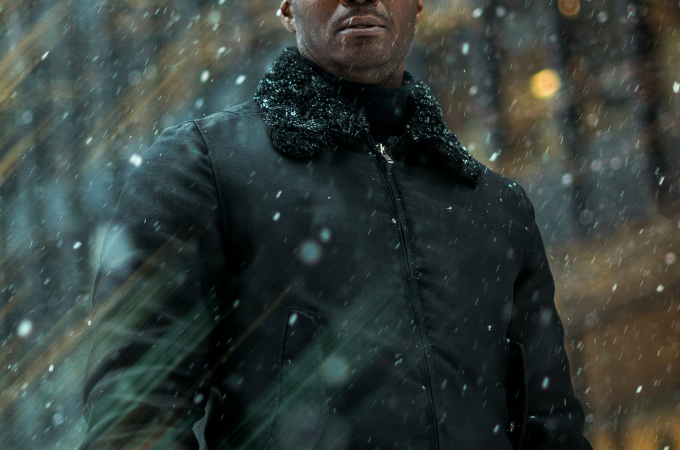
Eight months in Hamburg, and Nonso still counted his days like a man in exile. His rented room above the Turkish barber shop held only the heater’s wheeze and Afrobeats humming from his phone.
He had arrived on a visa-sponsored job. The marketing firm where he worked as a digital strategist had been his anchor in Germany for almost a year now, ever since he’d left Lagos, enough to cover rent, send something home to his younger sister and mum in Nsukka, and still keep his SIM active. He took up a part-time job in a warehouse as an additional source of income. It was a simple life, more or less, until Freya came onto the scene.
He had met her at a pop-up food market near Sternschanze. She was standing at the West African stand, asking in halting English if jollof rice came with cutlery. Nonso had laughed politely and handed her a plastic fork. That moment, as ordinary as it was, marked the beginning of something. When she learned he was from Nigeria, her eyes lit up with genuine interest—not the patronizing curiosity he usually encountered. She asked questions about his language, Lagos, and what he missed most, avoiding the typical focus on poverty and corruption. That was how they started.
She worked with a local arts collective, one of those multicultural, climate-conscious outfits that organized free film nights and poetry slams. She invited Nonso once, and to his own surprise, he went. It was the first time he’d sat in a room full of mostly white people discussing West African cinema while drinking hibiscus tea and speaking with earnest voices. She introduced him not as a friend, but with a small tilt of pride in her voice, “This is Nonso. He’s from Nigeria. He’s teaching me pidgin.” She said it like she owned a piece of him.
And maybe she did, because when she touched his hand during conversations, he felt a sensational warmth inside him. Something he hadn’t felt since he left home. Gradually, they became intimate in the careful way two people from very different worlds do—testing each other’s truths, laughing over cultural mix-ups, sharing music, food, and stories of childhood. Freya would send him her voice recordings of pidgin phrases she’d found online, butchering the pronunciation so badly that Nonso would call her, laughing, to correct her. Freya loved the Nigerian vibe.
“Wetin you dey do today?” she asked on her first visit to his apartment, her attempt at Nigerian Pidgin making Nonso grin as he prepared coffee for her.
“Your accent is getting better,” he lied kindly. “I’m just preparing for work. You?”
“Can you teach me more Pidgin?” she asked, accepting the cup of coffee, “I love how expressive it is.”
Freya was an eager student, scribbling notes as Nonso explained the subtle differences between “I dey go” and “I go dey go.” She particularly loved the expressiveness of it, how “person wey no get money no get mouth” portrayed complex social dynamics in just a few words.
“It’s like poetry,” she said. “Everything means more than what it says.”
***
“Do you ever want to go back?” Freya asked one Sunday morning, as they lay tangled in her bed, light filtering through the window in soft yellow beams.
“To Nigeria?” Nonso rubbed his chin. “Maybe. One day.”
She propped herself up on one elbow, “Do you ever talk to anyone back home? Like… a wife? Kids?”
He laughed, but it didn’t reach his eyes. “I tell you say I no get wife. You no believe me?”
“I do,” she said quickly, but there was a hesitation in her voice that didn’t go unnoticed.
She sat up, brushing her hair behind her ears. “It’s just… I told my friend about us, and she said I should be careful. Some Nigerian men marry white women to stay in Europe. That they sometimes already have families back home.”
Nonso’s body went still. He pulled himself out of bed and stood at the window, watching the trams glide past on the tracks below. “That’s what we are in your perspective?” he said, without turning around.
Freya reached for the sheet. “I didn’t say that. I want to know this is real.”
“It’s real,” he said, turning to face her. “But if you dey find reason to doubt, you go always see one.”
She blinked, surprised.
“I dey here eight months before I meet you,” he continued. “I dey do my work, pay my rent, live my life. You come appear. I no plan am. But I like you. If you dey look me like I dey hide something… no problem,” he said as he left her apartment.
For days after the conversation, a rift began to form between them.
“Their wives allow them to come and marry white women for opportunities,” her friend had told her. “They see us as opportunities, not true partners.”
“Why did the European women who were used never notice the presence of the other woman?” Freya had asked.
“What if he said she is his sister and spoke in their local dialect? How will you know she’s a wife or a fiancée?” her friend asked her in return.
It lulled the excitement Freya had for Nonso. A sister? So, after everything, he might go back to his wife or a potential future partner, while she was just a stepping stone. They still met, still shared meals, and she danced in the living room when the right song played. But something had changed. When she asked questions, they came wrapped in soft concern. When he answered, he double-checked his words.
One night, she brought up his mother. “Do you talk to her often?” she asked.
“Not too often,” he said. “She dey village. Network no dey strong. But we dey talk, sha.”
“What does she think about you dating someone like me?”
Nonso smiled, “She says as long as the woman treats me well, she no get wahala. My mama no be old-school like that.”
“I guess I’m just trying to understand where I stand.”
Nonso leaned forward, “You no just wan be ‘that Oyibo Nonso dey see.’”
“I want clarity,” she said. “And honesty.”
“I go give you all those ones,” he said, caressing her. “Small small. I no dey run.”
She chuckled, “You’re not running now. But what if your papers don’t come through? What if it gets hard? Would you go back?”
He shrugged, “If life turn like that, we go handle am. But I no dey plan to run. Not from this country. Not from you.”
***
One Saturday evening, Freya invited Nonso to her parents’ house in a quiet suburb outside Hamburg. The invitation came without pressure, but it landed heavily in Nonso’s chest. He knew what it meant—crossing that line from romantic interest to something more permanent.
“You sure say dem go like me?” he asked as she drove them through pine-lined roads.
She laughed, “My dad’s a retired professor who collects African art. My mom once spent six months volunteering in Kenya. You’ll be fine.”
He didn’t like being reduced to a cultural checkbox, but he said nothing.
Her parents were exactly what she said: warm, curious, and slightly too enthusiastic. Her mother complimented his accent, asking if he could say something “in your home language.” Her father asked about Biafra, colonial history, Nollywood, and oil politics. “Your people are incredibly resilient,” the man concluded, handing him a second glass of wine. Nonso smiled politely.
On the drive back, Freya was quiet. Nonso asked if something was wrong. She hesitated, then said, “My mother asked if you had family in Nigeria… a wife or a child you didn’t mention.”
He laughed, short and dry.
“Not funny,” she said quickly. “But… you do know there’s a reputation, right? About Nigerian men in Europe.”
He looked out the window. The streetlamps smeared gold against the windshield.
“I know,” he said. “So, because some men lie, I no fit tell truth again?”
She was quiet.
Then he added, “I no get wife for Nigeria. I no get pikin. If I get, I go talk. I am not hiding anything.”
“You told me,” she said. “I just needed to hear it again.”
They didn’t talk the rest of the drive. But when she dropped him off, she pulled him close and whispered, “Don’t let me look like a fool, Nonso.” He stared after her car while the words stayed with him long after she left.
***
The warehouse cold crept through Nonso’s sleeves as he pushed boxes onto the pallet jack. Around him, voices mixed—Polish, German, Romanian—a familiar symphony of people trying to get somewhere. No one asked questions here.
That evening, Freya didn’t pick up his calls. He called again at nine, still nothing.
By morning, her message came. I just need a little space. I feel like I don’t really know you. Maybe I romanticized things. Nonso read it twice, then sat down slowly on the edge of his bed. He remembered the look in her eyes after her parents’ dinner; the way they scanned him, not with hate, but with caution and curiosity. Like he was a museum piece. Exotic, interesting, but maybe not safe to take home. He left the message unanswered.
Three days later, she showed up outside the warehouse yard during his closing hours. She’d been grocery shopping and wanted to surprise him with ingredients for pepper soup.
“I’m sorry,” she said as he approached. He remained silent. “I thought I was different,” she added quietly. “I thought I didn’t see you the way others did.”
“I’m just tired,” he said. “This country hard, but I still dey try. I no tell you lie. I just dey survive.”
She reached for his hand, “I know. It’s not you. It’s… me, learning how much of the world I’ve carried in my head without even knowing.”
A long silence passed between them, broken only by the passing of a slow freight train behind the yard. Finally, he said, “Come, let’s walk home.”
They walked down the narrow street where Turkish kids kicked a ball against an old wall, and a woman sold roasted corn by a metro stop. Her smoke curled into the darkening sky. That walk didn’t solve everything, but it helped. They began again, not from where they stopped, but from a quieter place; less romance, more reality. At his kitchen, she laughed at how he stored spices in peanut butter jars and kept his socks in the microwave because his drawer broke.
“You’ve turned survival into an art,” she said.
He smiled. “Na only way we sabi live.”
Later, they went to her place. They sat in her small kitchen. He played Davido on his phone and taught her how to say “you too fine” in Igbo. She taught him to pronounce Württemberg properly. For a challenge, they spoke only in Pidgin for an hour, just to see how far she could go. They didn’t talk much about the future. He didn’t bring up marriage, and she never asked what he planned to do next. He was still on a one-year permit, renewable only if his boss liked him enough to sponsor.
They carried on like that, and still shared some memorable moments. Like one morning when she woke him at five to show him snow for the first time. He stepped outside barefoot, held out his palms and whispered, “Na real ice?” as the flakes melted into his skin.
“Welcome to winter,” she said, hugging herself against the cold.
In those small things, their rhythm returned. And that counted for something. Still, trivialities came. Freya’s brother stopped replying to her messages. Her mother asked, “Is he using you to get citizenship?” And once, after visiting a gallery together, a woman handed Freya a flyer about support services for women in vulnerable relationships. She tore it up before Nonso could see. Back home that evening, she lay on the couch and stared at the ceiling.
“Sometimes, I hate how white people treat love like a border to be patrolled,” she said.
Nonso, folding laundry, chuckled. “Sometimes, I feel like I carry my whole country on my back,” he said. “Just to show say we no all be bad.”
In the next few days, they didn’t visit each other. Realistically, they were breaking up. Not in any cinematic way. There was no screaming, no betrayal; it was just a slow peeling away of layers. Freya became busier with volunteer work and weekend retreats with her feminist collective. Nonso’s shifts grew longer, his back sorer. After a while, they saw each other, still kissed, still laughed, but less, like they were visiting old versions of themselves rather than building new ones.
Then came the letter.
His permit wouldn’t be renewed.
We thank you for your contribution and wish you the best in your future endeavors, parts of the letter read. He didn’t tell Freya for a week. When he finally did, her face crumpled.
“So… what now?”
“Maybe go back home small,” he tried to look cheerful. “And try again, or cross over.”
“Cross over how?” she asked.
He managed a tired smile. “You know say some people no dey ever stop moving. Na survival.” He told her about his cousin in Italy, maybe a warehouse job waiting.
Freya touched his hand, her eyes wet. “I kept waiting for you to prove you belonged here. But you already did, just by being yourself.” She paused. “I’m the one who had to learn how to belong in your world.”
“Na everybody dey hustle their own place,” he said quietly. “Some people just born inside am.”
***
Three weeks later, Nonso left Germany. Freya was with him at the train station. As the train doors slid shut, she whispered, “Promise me something.”
“Wetin?”
“That wherever you are, you’ll still speak your truth.”
He grinned faintly, “Even if na for Pidgin?”
“Especially if it’s in Pidgin,” she replied with a sad smile.
***
Months later, in a shared flat in Turin, Nonso received a mail.
I didn’t love you because you were different. I loved you because you made the world feel less divided. And I hope you never have to shrink to fit anywhere again. Na you show me say love no get accent.
He folded the note and slipped it into his wallet, next to his expired German permit and his new Italian residence card. Outside, snow was beginning to fall—the same snow that had once made him whisper, “Na real ice?” in wonder. This time, he didn’t reach out to catch it. He simply walked forward.
Photo by pouria seirafi on Unsplash






COMMENTS -
Reader Interactions