

Today is payday, a good reason to live. A good reason to work myself to death, too. Men with dusty faces and tattered aprons emerge from the dark quarry pits. On their shoulders are heavy rocks, which they deposit into mounds on the ground for others to carve out building stones. A short distance away, under a tree, women with shukas draped across their cracked feet hammer at the ballast, white dust billowing to the nearby bushes to form a white canopy. Away from the pounding, inside a shack, a middle-aged woman prepares githeri in a huge pot while two boys play with a paper ball at the back, keeping an eye out for the lone cow grazing nearby.
The sun is heavy on the back, its heat part of this rattle where hammers, mallets and pickaxes converse. Once in a while, a hammer slips, flattening a finger, the staccato rhythm fusing with the screams of the victim. Occasionally, a quarry collapses, maiming or killing; worse still, the closure of quarries by the authorities. Still, in this sun-soaked, dusty rural landscape, this is the only job that pays. Not much, but enough to keep you interested.
Today, the air chokes in a good way, because today is payday. Tree roots dangling from the roof of the quarry caress my back as I scoop the soil to expose a mass of rock beneath. From down here, the voices of women gossiping reach my ears above the constant clank.
“The small one killed off my sleep last night, wailed like a cricket all night,” Wangu says desperately, and rightly so. Her grown-up daughter returned from Nairobi a week ago, dragging along her four children and all household items, including a brown town rat which scampered into the bush when they unloaded the truck. She said she wanted to teach her husband a lesson for sleeping out. Now her newborn child hates the weather and cries all night, and Wangu cannot sleep.
“Make her stay here hard and she’ll go back,” Angelina, Wangu’s closest friend, advises. Besides being tenacious, Angelina considers herself knowledgeable about family matters. She tells Wangu that the only way to discourage her daughter from coming back every time she quarrels with her husband is by ensuring she (her daughter) doesn’t enjoy her stay. “When my daughter came home the other day, I brought her here and gave her a hammer and a pile of stones. The next day, she’s gone back.” The women laugh wearily.
Angelina adds that she doesn’t have an extra bed, and guests have to sleep on the floor. “You can’t afford comfort nowadays,” she says. “Comfort means soft life, and soft life attracts opportunists. These times require one to be picky about the mouths to feed.”
“Is that why your house is all leaky?” Wangu quips, and the women break into laughter. I smile, remembering the day I sought shelter in Angelina’s house during a storm, only to realize the roof was as leaky as the rain clouds themselves. Out of courtesy for her benevolence, I stayed until the rain was over. Sentimentality and survival go hand in hand here.
The women’s chatter offers a distraction to my tired body. I try to picture a gigantic rat taking a ride at the back of a truck, but all I see are the faces of my five boys, the first four dark like me, while the lastborn is as brown as the man whose quarry we work in. The man whose Toyota pick-up now approaches, its groan cutting through the air as it negotiates the winding terrain. My pit-mate, Chuuthi, drops his pickaxe and jumps out of the pit. Other men follow suit. Mr Munene is arriving now.
A Saturday. Payday. Gossip dries up, work tools get discarded, and a radio is switched off. A weaverbird chirps lazily. Hope invades our frayed souls. Mr Munene’s entry is met with smiles as fake as the shimmer of water in a desert. He is a short, round-bodied man, dons a brown leather jacket and walks sideways like a river crab. Soft-spoken when happy, his voice can drill a hole through your ears when infuriated. Today, he seems indifferent, though he doesn’t hide his disgust as the people jostle, push and step on each other to receive their pay.
“Next!”
It’s my turn, and for the first time, I take an interest in the man with whom I share my wife. He has small ears and slits for eyes. He smells of burning eucalyptus and the stench of sweat at the same time. This close, he resembles my lastborn. He looks away when he hands me my cash. He knows I know. For a second there, I want to flatten his nose and pop his eyes out.
I have barely turned from him when Mumbi confronts me.
“You owe me,” she says, her voice threatening and triumphant. “Six big teas and six chapatis, six ugalis and twelve beans…”
“How much?” I say, cutting her off.
She scrawls a bill on a piece of paper and hands it to me. As I cannot read much, I give her all the money in my hand. “All of it?” she says.
“What do you think?”
She smiles wickedly as she counts out her money, then gives me back the change. There’s still enough cash left for a few drinks at Kalishen bar. As for my family, Mr Munene will take care of their needs for now. Mumbi continues with her hunt, pouncing on her customers the moment they receive their dues. Some try to run, but she is too sharp for them. She jumps from one target to another, her big hand stretched before her.
Leaving the quarries on a Saturday afternoon has always been a most triumphant moment for me. A feeling that it could be the last time I see those ugly pits and the desperation in the air above them. But go where? A primary school dropout will hardly light up the world. If anything, he’ll scare away any opportunity with his scarred face and gnarled hands.
I discard the work clothes, dust my shoes and take the shortcut to Chaka market. The sun has drifted further to the west, and around it, shadowy clouds circle like hounds. It will be dark soon. Chuuthi catches up with me.
“I thought you’d go home first,” he says.
“Not today,” I respond and walk on. Mr Munene’s pickup flies past us, blowing dust and smoke into our faces. It disappears over a small hill and toward my wife’s welcoming breasts.
“That man is a pervert,” Chuuthi says of Mr Munene.
“It’s a free world.”
“A free world, indeed. If he were sleeping with my wife, I’d wait until he’s on top, burst in and demand big money. Turn his car into ashes if he doesn’t pay. Or slash his buttocks.”
I laugh at Chuuthi’s creativity but say nothing. So, the whole village knows of my wife’s affair with my boss? One of these days I’m going to…
“That’s why I’ll never marry,” Chuuthi continues. “Why most men live solo in this place.”
We march on, the market’s tower getting closer and closer. Behind us, more men headed in the same direction, dragging their feet on the dusty road. Farms dotted with withered maize plants under blackjack chokehold sway in the evening breeze. Far away to the north, Mt. Kenya’s ice tops gleam like propped diamonds.
“He’ll be done with her by the time we get to Kalishen bar,” Chuuthi murmurs under his breath.
“You talk about my life again and I’ll twist your neck,” I warn him.
He shrugs.
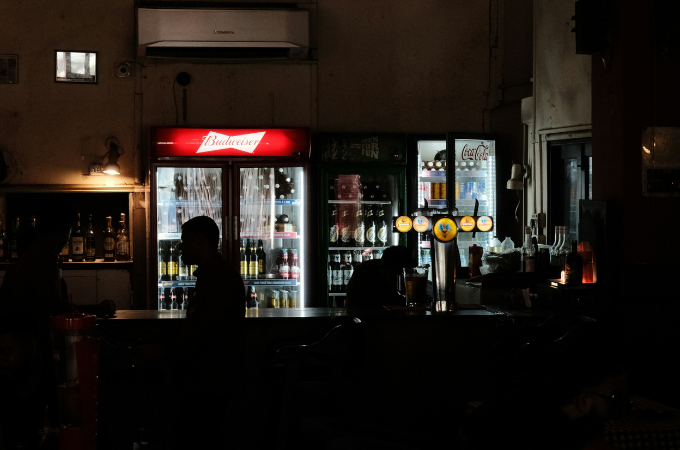
Chaka is just around the corner. The market is always chaotic on Saturdays, with prostitutes and pickpockets joining the mass of traders from the surrounding farms. The over twenty drinking dens, most of which host brothels, are where the quarrymen will disappear into for a quick drain of their loins. Chuuthi disappears into Kalishen bar. I don’t follow him this time. That blabbermouth’s words have poisoned my mind. I can’t erase the image of Mr Munene sweating on my wife’s breasts, and if Chuuthi keeps up his scorn, I fear I’ll kill him. On the other side of the open-air market where the old railway line passes, I find a newly opened bar called ‘Made in China,’ hop in and sit on the balcony overlooking the market. Unlike Kalishen, Made in China has a tiled floor, and the toilets are the type that flush water and make a drowning sound, which explains the overpriced beer.
I’m on my second drink when an elderly woman approaches my table. “I hope you don’t mind my sitting here,” she says, her eyes searching mine. She reminds me of my mother, now resting with the worms, and dons a kind of dress and heels that scream she’s from the city.
“I don’t own the place,” I say, and smile.
She smiles back, the contours on her face cracking up her makeup. “My name is Dorokathi,” she holds out her hand, her eyes never leaving me.
“Dorcas?” I ask her as I shake her hand.
“Blame my tongue.”
“Or your parents for giving you a name you can’t pronounce.”
She laughs, signals the waiter, and places her handbag in the space between us.
When the waiter returns with the drink, Dorcas fills her glass and takes one long swig.
“What are you?” she asks me.
“Call me Mr Man,” I say.
“Mr Man, eh?” she says. “Why, Mr Man?”
“Why not?”
She grins, exposing her few remaining teeth. “Mr Man, Mr Man. You remind me of my husband.” Her eyes flare, and I can see she wants to talk.
“Tell me about him,” I say.
“My husband?” she says and tilts her head. “There’s so much about my husband it would fill an entire library! Like that one Sunday, he took me to the zoo. There was this male monkey jumping from one branch to another, dashing after the females. My man was so amused by everything that he started to cheer like a madman. And when the male caught one of the females, he fell into laughter and almost high-fived that primate. ‘Did you see that?’ He asked me. I replied, ‘Isn’t this just like you?’ He said, ‘That is me, alright.’ ‘Well,’ I told him, ‘That’s you.’”
I laugh, though I don’t know why.
She continues, “God, I loved that man. Even when he couldn’t tell when he was wrong. Sometimes, I’d apologize for his stupidity, just to protect him.” She wipes her eyes with a handkerchief and sniffles. “But you know what? I couldn’t stop him from dying, could I?” Tears are now raining down her face, and her handkerchief can’t stop the flow.
“I am sorry,” I say.
“Can you hug a stranger?” she leans forward. I hesitate, then pull her into an embrace. This close, she smells old. This close, she smells of hurt. This close, she smells dead. We stay thus for close to a minute. When I pull back, Dorcas asks, “Are you crying?”
“I guess,” I say.
“Are you drunk?”
“Maybe.”
“With sorrow?”
“With pain.”
It’s Dorcas’s turn to hold me. Her bosom warms my blood despite the nothingness where her breasts used to be. My flesh and bones are as calm as the distant sky.
Later, she fiercely holds my hand in hers and says, “You remind me of my husband, but you lost your happiness.”
“You made him happy?”
“Yes, but not like that. We were happy together.”
“Despite his… the way he was?”
She is silent for a while, then she says, “There’s much more to our hearts.”
“The soul? You were soulmates?”
“You’re like my husband.”
“You said that.”
“I know.”
The night grows darker. We drink and talk and laugh. She no longer smells old. She smiles more. She will be young again, but with time. At 11 pm, she says she wants to go home. I tell her there are no city-bound buses left that late. She says she has a car and walks me to where it’s parked in front of the bar. I tell her I have never been inside a private car.
“I liked this night,” she says, looking across the rail tracks. “Can I drive you home?” I tell her I’ll walk.
“You’re like my husband,” she says, and starts the car.
Old age is an island surrounded by dead souls.
One month has passed since the encounter with Dorcas. I am seated in the same place we sat together that evening, overlooking the market. It is nearing midnight. With every shadow that falls, I turn to look. I think about her every day. I would give anything to meet her again. To talk to her. It meant something to hear her say I was like her husband. It meant I was valuable in some way, even if that value was a mirage.
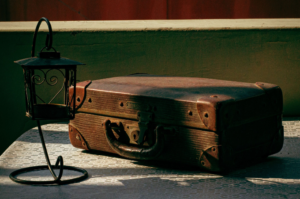
Photo by Sishir Malakar on Unsplash




Ron Odero March 08, 2026 14:32
The style of writing is a notch higher. Vivid story telling. Beautiful.