

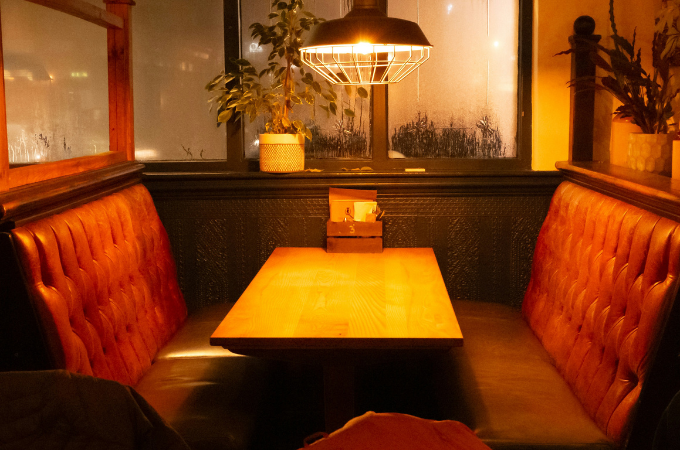
Tonde looked up from his phone and eyed the building across the street, the chill of the June air pricking the back of his neck. His eyes flicked between his phone and the building again, his brow knitting into a tight frown. The pictures Munashe had sent him were sepia-toned promises of cosy meals that could’ve been taken from aesthetic mood boards.
“My muchembere runs a little coffee shop in town,” Munashe had said, when they met at an anime convention just a week earlier. “You should drop by. She makes great food, it’s very nice!” Tonde had grinned and nodded a little too vigorously, later regretting his forced display of enthusiasm. He wiped his moist palms on his shorts, feeling an odd pang of envy for the relationship that Munashe seemed to have with his mother — one that earned him side-eyes, snickers and sympathy from anime fans who had no interest in his mother’s culinary skills — one that made him endure the side-eyes and snickers with a sated calmness.
“I would never perform this humiliation ritual for my mom,” Tonde thought to himself, pretending to check the time on his watch.
“It’s an awesome place, vintage! It’s the kind of place where Mae West would have enjoyed a nice stack of pancakes. Except, instead of a black and white film, it’s… well, in colour. Hehe. And it’s a real diner where you can actually sit and order and eat and enjoy yourself. Enjoy the meal, I mean. You know, I always wondered if people…”
As Munashe trailed on, Tonde took a sip of his drink, occasionally nodding, barely keeping up. The urgency in Munashe’s eyes, the way he had repeatedly begged other attendees to visit the shop, and the polite yet dismissive excuses they offered to escape his persistence had left Tonde feeling uneasy. So, although he nodded, “yes” and agreed to let Munashe airdrop him pictures of the place before making up an excuse of his own, Tonde assumed the thought of eating at this place would never cross his mind again.
But when he found himself searching for a quiet place to finish the last edits of his paper, his heart sank at the sheer lack of options he had in this small town. The library was out — he tended to be loud when he worked, and did not want to deal with irritable librarians. Fast food outlets were totally unthinkable. The thought of working surrounded by the greasy scent of fried food, with rambunctious music blaring from Chicken Inn speakers, was enough to make him grimace. So, when his google search for coffee shops in Gweru yielded only one result, he found himself standing across the street from Muchembere’s coffee shop.
The shop’s name in the pictures stood out in bold letters, “The American Coffee Shoppe,” in a peculiar shade of purple. But the building right across from him was shabby and run-down. The sign read, “Ameri an Coffee Shoppe,” ghastly ‘c’ shaped moss buildup remaining where the missing letter should have been. It was not until someone bumped into him, that he realised he had been rooted to the same spot for a while.
“You’re blocking the way!” a woman snapped, her piss-yellow blonde wig bobbing as she marched off, barely acknowledging him. Before he could apologise, he noticed a small figure waddling beside the woman, turning to glare at him. It took a moment to register: the little person’s left hand was clutched in its mother’s, while the other was addressed towards Tonde, with a tiny middle finger raised in annoyance. The absurdity of it was not lost on him: being flipped off by a toddler while standing across the street from an ‘American coffee shoppe’ in a little Zimbabwean town.
Checking both sides of the road first, Tonde made his way to the other end of the street, and his eyes registered the rows of vacant dining tables through the glass walls. The weak winter sunlight barely caressed the room. It was eerily dark in the cafe, like the sangoma huts depicted in South African bioscopes. A rotund woman was perched behind a teak counter, with stray hairs, grey from age, peeking from beneath her thick woollen hat. “That must be Munashe’s mother,” Tonde thought to himself. As he made slow, cautious steps into the cafe, he felt a deep dejection envelope him. It seemed to have made itself at home in this shop, seeping into the fading wallpaper and settling like dust onto every surface.
The woman behind the counter stared blankly into the street, the folds of her neck contracting each time she swallowed. She appeared entranced by the traffic outside, almost like she was hoping every passerby would be her customer, almost like she had not noticed the one who had just walked in. Tightening his hold on the right strap of his satchel, Tonde cleared his throat and greeted the woman, who turned to face him — except it felt, to him, like she was staring right through him. Her lips were slightly downturned at the corners and she observed Tonde without saying a word to him.
“Hello, is there… a menu I can look at?” he said, wondering if she was hard of hearing. She motioned towards the seating area, and Tonde glanced at it and back to her, confusion furrowing his brow.
“Sit. Go sit. Waiter will take your order.” Tonde almost jumped when he noticed, for the first time, a lanky, subdued man standing in the far-left corner of the shop, by the coffee machine.
When he had settled at a small table, he could not shake off the feeling that he was being watched. Munashe’s mother stole a glance at him every few seconds, as if she thought her one patron was an apparition that would vanish if ignored. He could not help but think of his own mother as he set his laptop on the table. Over the years, she had surreptitiously put on visible signs of aging — fine lines creasing her ochre skin, crows’ feet webbed around her eyes, a crown of black curls fading to wisps of silver. Time is a thief, he thought to himself, wishing the past were a kind of nebula he could stick his hands into and retrieve the glint behind his mother’s eyes that had begun to wane when his dad died.
He had watched her withdraw into herself and drift, each day — from her bedroom, to work and to her bedroom again — sparing the smallest of pleasantries for him, and much less for herself. Her eyes were the bruised crimson of pomegranate pulp, puffy each time he saw her, and he wished he could patch himself onto whatever tear the loss of his father had ripped. He had started to clean more, cook more and do the laundry, picking up after his mother where she previously would have picked up after him. He had hoped that he could fix her, that he could hack away the thorns that made it near impossible to crawl out of her grief. He felt himself get close each time he made her laugh, each time his quips lit a tiny spark in her face that he hoped would rekindle the flame behind her eyes. But she had shipped him off to St Matthews.
“St Matthews?” he had asked, pulling himself up from the linoleum cupboard. “But it’s a boarding school. You and…” he shifted nervously. “You and dad promised I’d never go to a boarding school.”
Minutes passed between them. His mother was unmoving, her hands fastened around a heavy mug. The steady hum of the refrigerator seemed to grow louder with each passing second, an unbearable sound he wished he could blank out with a pencil eraser.
“Mhamha?” Tonde called, his voice breaking. “I can’t go kuboarding.”
“It is for the best.”
“Don’t forget your mother, wazvinzwa?” his mother had whispered to him when he boarded the bus to St Matthews for the first time. When he waved goodbye to her from the window seat, he knew he was leaving behind a part of their relationship he would never get back. Guilt hardened in him when he settled into the chaos of boarding life like he had always belonged there. When he never called — procrastinating each time his friends went to phone home — his mother never remembered to, either. The school terms became stretches of silence that grew thick and solid between them. With each holiday, the way two people could live in the same house for weeks on end and barely know each other anymore had struck Tonde with unease.
The story behind his piercings remained unknown to her. When he got them — on a random night in college when he tried weed for the first time and said “yes” to every dare he got — he had been fearful of her reaction. But when she saw him with studs glinting on each ear, she greeted him, “How are you, mwanangu,” as she always had, and drove him home from the bus rank. There are a few other moments when he missed his mother more than he did in this moment. Fiddling with his phone in the passenger seat of the CR-V, he mourned the woman who would’ve yelled at him for getting his ears pierced, who had warned him about cultic jewellery and demonic tattoos his entire childhood. When they got home, he had plopped himself in front of the old mirror, cloudy and splotched with age, and taken out his studs. As a lone tear crept down his left cheek, he pressed the faux silver earrings into the palm of his hand, as if to crush them into a sheer powder. He heard the tired swish-swish sound his mother’s shoes made as she dragged her feet to her bed in the room next door, and then the creak of the bed as she sat on its right side. She always sat on the right.
The mechanics of their relationship had remained this way over the years, speaking only when necessary, maintaining the brevity of each interaction, as if to unburden themselves of the weight of remembrance. Yet fragments of his father still crept into his mind. The man with the sturdy hand and the tobacco-cured laugh appeared in his dreams, his features set in a specific point in time. Sometimes he liked to imagine an older version of his father, but the man was stubborn. He appeared the same way he always had; always with a pack of Everest cigarettes in his pocket, always with a steaming cup of black instant coffee that scalded Tonde’s tongue when he slurped it long enough to forget he would have to wake up to the absence of his father.
“Americano and a plette of cheeps?” the waiter asked, after Tonde had skimmed the menu. The chair creaked as he shifted uncomfortably in his seat, the woman eyeing him with a fixed look from behind the counter.
“Actually, I’d like a rock bun instead of the chips.”
“Justy the bun?”
“The bun and an Americano.”
“No plette of cheeps?”
“No chips, thank you.”
When the waiter grunted and made his way to the kitchen area, Tonde opened his WhatsApp chat with his mother. He looked over their text thread, a sparse collection of ‘Hi moms’ and ‘I’m fine, sons’. He scrolled to the bottom of the thread, and his eyes swept over their last exchange.
— Don’t forget we are visiting Baba today. We need to do it before waenda.
— Ok mom
He shoved his phone in his pocket before allowing his eyes to trace the interior of the shop, his laptop open and unused in front of him. Apart from the one he was seated at, every table in the cafe was vacant. He pictured Munashe’s mother opening this shop years prior, installing tables reminiscent of 60’s Hollywood diners. He imagined her selecting each fixture, each painting for the cafe’s walls. Yet many years later, not even these impressionist paintings of tastefully nude African women would save her dying business.
“Your Americano and your bun,” the waiter said, setting Tonde’s order on the table. “You would’ve loved a plette of cheeps. Enjoy.”
Noticing the light brown coffee before him, Tonde called the waiter back. “Sorry, I wanted an Americano.”
“Yes. Americano.”
“But this coffee has milk in it?” he said, his face hardening in annoyance.
“Yes,” the waiter said. “Americano.”
Photo by Mark Hamilton on Unsplash






C.I. March 10, 2026 02:59
This is such an amazing story!