

GUN
My father wrote in sixty-one
to a comrade in mind and perhaps
in arms, “Harry, put a bullet through
my skull if I betray the revolution.”
I wanted to think it all melodrama,
a kind of poetic bombastic bravado,
but then I remembered the years
of bloody insurrection, the CIA
operatives at the door, the sheltering
of revolutionaries from Cape Town’s
townships, the canvasing and bribe-
gathering for the release of the detained,
the drive along the Atlantic coast
to see if the remains of the executed
will be released—the rum and akpetechi
at the Senior Common Room after,
the tears and songs, the International
following—baritones across the Kumasi
nights, the scent of gun powder, the logic
of the carcass of the oppressing
class and the convulsions of youth.
So, I trembled with that old
sickness in my belly in the face
of violence. It is not a matter
of appetite or mettle, it’s the weight
of my brutalized soul-case—I’ve seen
the remainders of struggle and have
always stayed on the outer edges
of the “victory” march, watching
the decomposing of the defeated
as they calculate their revenge. I wrote
this morning—I hate guns. As a boy
I learned the rattle of their machinery,
the genius of their efficiency, and I carry
in me the intimate stench of oil and powder,
the terror of it all. I hate guns,
thoughtlessly and thoughtfully,
I hate the intention of their genius,
the intentions of their working.
DECAY
“Our body is our oldest museum”
Wangechi Mutu
1
The right ankle’s temperamental ways
are no longer the objects of concern.
The physician gazes at the curious
bulge, holding my feet gently,
a cradling of care.
I relish these tender deliberate acts,
so rare now that I think of it,
so longed for without the lines
of desire. He says, “Yes”– meaning,
in time everything falls apart,
his warm hands calming me.
2
My smile is its own remembrance,
the gap in the middle, some
old forgotten history. The dentist
says the teeth move apart
to compensate for the gaps
left after extraction. As a boy,
I had no gap in the middle,
but now I declare it sensual,
this efficient tool of pleasure.
3
My body offers me its archives
of meaning. I collect them now,
delight in them while I can,
before the flame, before the ash.
A MONTH AFTER DEATH
For Kojo
There has been so little laughter,
and despite the lamps glowing in my room,
despite the flood of sunlight through
the louvres, all I feel gathering about
me is shadow, a kind of morose dullness.
I fall into sleep, deep as a kind
of forgetting, the wake and stumble
through the dark, a torch light
to guide me, but the soft hold of dark stays.
At dawn, I rise, my body aching
with a kind of fatigue. Someone
suggests I miss all appointments
with doctors, for each test is a ritual
of learning what new ways my body
is devising to die; and perhaps the swelling
of ankles and fingers, the stomachs
thudding, these will fade into merciful
forgetting. Instead, they say, make insects
made of paper, each careful fold, sharply
precise, as a way to defy the shadow.
I don’t listen to the soothsayers, this takes
too much work. I have been watching
the Lamentation of Christ, the slow
march to his ending, and this is a way
to consider how the dead bury the dead.
Perhaps, brother, after we have said
our farewells in that teeming city a-bubble
with the defiant energies of the living
always on the lookout for new terrors—
that Kingston where we grew into ourselves—
I will find mercy in the rituals of “irie”
and “bless up” that lead to a kind of peace.
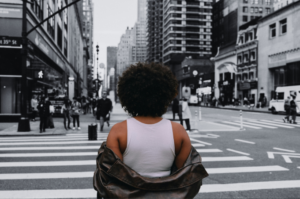
Photo by Annie Spratt on Unsplash




COMMENTS -
Reader Interactions