

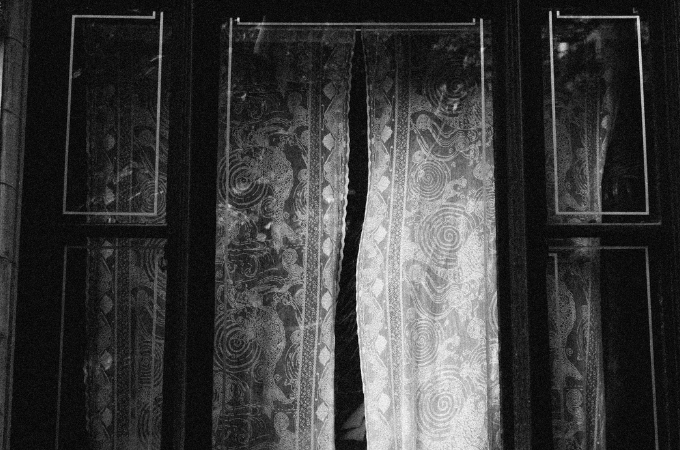
When you are the daughter of an exorcist, life loses any hope of becoming ordinary, because even when the world is quiet, demons have a habit of making noise in the strangest ways.
While other children learned multiplication tables and folk songs, I learned the difference between a spirit that merely enjoyed attention and a demon that wanted to reenact its own private Nollywood sequel inside someone’s body. My dad — who insists that exorcism is “just another family business” — has spent years teaching me every odd skill required to keep the company running, and though I pretend to complain, I secretly love the chaos of it all.
I have watched him drive spirits out of people who swore up and down they were perfectly fine until the moment holy water touched their skin, and they started hurling curses in three different languages. Once, a demon paused mid-tantrum to insult dad’s choice of shoes. Another time, one claimed he wasn’t leaving because our prayer session was “too noisy,” which was hilarious considering he was screaming like a generator on its last leg only five minutes earlier. So yes — possession can be funny, almost endearing, if you ignore the part where someone’s life is hanging in the balance. But every so often, something crawls out of the dark that wipes the smile clean off your face, and you suddenly remember why father keeps a fireproof safe full of rosaries, oils, and charms locked in his bedroom. This was one of those days.
Lately, my father has been busier than usual, so busy it would leave him muttering Yoruba proverbs under his breath while juggling calls from clients describing suspicious shadows, unexplained fevers, and voices whispering behind closed doors. Since I turned sixteen, he’s been giving me more responsibility — small things at first, like organizing materials or preparing the altar — but this morning, he looked at me with a seriousness that felt too heavy for breakfast and announced that he trusted me enough to handle the initial investigation for a new case.
Just a preliminary assessment. Walk in, sense the air, observe the occupants, report back. Nothing dramatic. Nothing life-threatening. Nothing soul-devouring. He said it so casually that I almost believed him.
The house in question had already frightened one of our junior exorcists, who claimed that the family portraits on the wall occasionally wept, their tears sliding down the frame in thin, deliberate streaks. He said the residents would suddenly start coughing in unison — long, empty coughs that shook their chests until they were too weak to stand. Another reported strange disturbances at night: furniture shifting on its own, small objects vanishing and later reappearing in absurd places, like a set of keys found inside a sealed jar or a child’s toy inexplicably perched at the top of a wardrobe.
I thought, perhaps naïvely, that it might be allergies. Mold. Bad ventilation. Something scientific—anything but the supernatural explanation he was obviously leaning toward. But all that confidence dissolved the moment I reached the heavy metal door of the startlingly beautiful white house, and the air around me changed.
The atmosphere pressed against my skin in a slow, suffocating way, and the hair on the back of my neck rose as though responding to an instruction only my body could hear. It was the familiar prickle of my gift — my ability to sense spiritual presence — which had saved us more times than dad would openly admit.
I should have left. I knew it. Every instinct told me to turn around, call my father, and pretend I had completed a thorough inspection. But curiosity, that stubborn creature living rent-free in my chest, refused to let me walk away.
It took nearly three minutes before the door creaked open, and the woman who stood behind it looked like she had not slept in days. Her eye bags sagged heavily, her cheeks were hollow, and her once-bright eyes were reddened and unfocused, as though something had been pulling at her from the inside.
“Good morning,” she murmured, her gaze sweeping over me. “Are you the one who called? Aina?”
I suddenly became aware of how ordinary I looked—brown trousers, simple shirt, nothing about me said “certified handler of supernatural crises.” I realized I had been staring at her for too long and finally forced out a reply. “Good morning. Yes. I’m Aina Olufemi.”
She stepped aside without another word.
The house, like its owner, was beautiful in a way that felt unsettling. The walls were an immaculate white, yet they seemed to pulse faintly, almost as though they were breathing. The air smelled faintly sour, something between metal and dampness, and the brown sofa at the center of the room — plush, inviting — felt like the last place I should ever sit. Then I saw the boy.
He stood in the far corner of the dining area, facing forward with a stillness that sent a small ripple of dread through me. He didn’t blink. He didn’t shift. He didn’t acknowledge us.
“What— what is he doing?” I asked.
“Oh, he’s just playing,” his mother replied, waving her hand dismissively, as if children routinely played by becoming statues.
I continued surveying the house, pretending I wasn’t growing increasingly uneasy. I had enough signs already — a tense atmosphere, a mother who looked spiritually drained, a child who seemed frozen in a trance — and dad had always told me that when the spiritual energy felt too heavy, I needed to leave. But another part of me refused to accept that the entire assignment could end with “I saw a staring boy and moving shadows.” I wanted to prove I was capable. That I was worthy of dad’s trust.
Then a shadow bolted across the corridor, quick and purposeful, and a low growl followed.
“Did you hear that?” I gasped.
“That’s the dog. Chardonnay,” she said.
I glanced down to see a tiny chihuahua — because of course it was a chihuahua — baring its teeth at a large framed portrait of an elderly woman. Chihuahuas, in my honest opinion, are demons masquerading as pets. One bit me on the bum six years ago and I still have the scar, a constant reminder that evil wears many disguises.
“Who is this?” I asked, pointing at the portrait.
“I don’t know,” she answered. “I found it when I moved in. It looked beautiful, so I kept it.”
Beautiful was not the word I would have chosen. The woman’s painted eyes seemed to track my every movement, heavy with judgment and an unsettling familiarity. Then, right before me, tears slid down the woman’s cheeks inside the portrait. Real, wet tears.
I stepped forward, hands shaking, and lifted the frame to check for hidden tubes or holes — anything that could explain this — but the back was smooth and clean. No mechanism. No trick. And when I turned it toward me again, the clear tears had transformed into thick, crimson streaks of blood. I dropped the frame instantly, my heart stumbling in my chest. That was all I needed. I spun toward the door, ready to abandon pride and protocol entirely. But before I could escape, the woman behind me began to cough — hard, violently — her body shaking. The boy mirrored her exactly, his tiny frame trembling. Then he dragged his nails across his throat, clawing desperately as though something inside him was trying to break out.
This was no longer a simple investigation. Dad had always insisted I carry holy water in my bag, and though I had never used it outside practice sessions, my hands flew for it now. My mind scrambled for the procedure — did I cleanse myself first, or the child first? Or both? Panic blurred everything dad had drilled into me.
I uncapped the bottle, but before a single drop could touch my palm, the boy struck it out of my hand with terrifying force. The bottle shattered, water spilling uselessly across the floor. He stopped coughing. Then he reached for me. He grabbed my collar with strength no child his size should possess, dragging me toward him, his face slack and eyes unfocused.
“You’re a better fit,” he whispered, his voice layered with something ancient and cold. Tears streamed from his eyes. Blood dripped from mine. My vision dimmed. My body weakened. And everything fell away.
When consciousness finally returned, I found myself lying on my back in the same living room, ropes securing my wrists, my clothes torn as though I had fought for a very long time. My father knelt beside me, gripping a cross in one hand and a half-empty bottle of holy water in the other. His face — usually stern, controlled, unshakeable — carried a fear I had never seen before.
“Dad?” I croaked.
He exhaled shakily, closing his eyes for a moment before muttering, “You are grounded. Indefinitely.”
Photo by Parker Coffman on Unsplash



Tracy February 19, 2026 06:14
this is a great piece,i Love it