

Night drapes itself over the city like a verdict. Slow. Certain. Watching.
Some say the world only claims those who have run out of ways to wait. Those whose dreams stayed hungry long after their bodies learned how to endure. Every tragedy fractured into pieces.
The story that never survives daylight.
The story the neighbours tell.
The story the family edits.
And the one she carried alone, the one no one thought to ask about.
Tonight, the city pretends it does not remember her name. What a beautiful day to die. The sky purples into something swollen, something that looks like it has swallowed too much and said too little. Evening does not apologize.
Grip the balcony rail. The metal is indifferent, disciplined. It presses its cold into your skin as if reminding you that gravity is patient. Let the chill travel inward. Let it settle.
They say a bird that sprints ahead of its own shadow forgets how to land. She mistook speed for escape. She mistook distance for deliverance.
Slide your palm across the concrete. Feel how the world offers no cushioning. When you speak, lower your voice until it barely belongs to you — a thin sound slipping through a narrow space. Say something weighty. Say that the earth is faithful in a way people are not.
Pause.
Ask them to come closer. Make them believe they are safe listening. This is the version you hand them. This is the story that never survives.
The balcony remembers. Concrete has a longer memory than people admit. It has listened to arguments, to rehearsed acceptance speeches, to whispered prayers thrown into traffic below. It has felt the tremor of indecision beneath bare feet. It does not forget weight.
The rail did not corrode where her hands once clung. Salt preserves more than it destroys.
Adaeze was a girl raised on reflections. She rehearsed herself constantly; in mirrors, in bus windows, in the dark screen of sleeping. She perfected her tears before she ever understood despair. Performance came easily. Silence did not.
Her village eyes carried too much sky into a city that traded only in smoke. They arrived wide, expectant clay vessels waiting for gold and were filled instead with residue.
For three years, she pursued the stage as if it were a promise already made. She sold her mother’s coral beads for transport fares. Boarded buses thick with sweat and stale ambition. Measured hunger like discipline. Sharpened herself into angles.
At auditions, men with polished shoes and vacant eyes would tilt their heads and say, “We’ll be in touch.” They were not.
There is an old warning: anyone who offers you a crown first measures how easily you kneel.
On the night she stepped into the air, the wind remained neutral. It did not plead. It did not accuse. A director had just told her she was “good but… not enough.” Two small words. Enough to hollow a ribcage.
She climbed the railing. Below her, the city glittered a bright fabric indifferent to missing threads. Light without mercy. She leaned forward. Not dramatically. Not angrily. Simply forward.
And gravity did what gravity has always done. But death was not an ending. It was a hallway without windows. And Adaeze found herself walking it alone.
This is the story her neighbour tells.
Then Nora moved in. Nora, all sharp edges and restless laughter. Her tongue could slice fruit in midair. Her heart, though, echoed when struck. She did not arrive chasing destiny. She arrived chasing rent she could afford. The lease was cheap. The paint was new. No one mentioned what the walls had already absorbed. Rooms remember longing.
The first time it happened, it was almost tender.
Nora stood before the mirror, drawing a comb through her hair. Mid-stroke, she stilled. Her reflection blinked half a second too late. Her pupils widened as if someone had opened a door behind them.
And then she began to speak. Not in her cadence. Not in her breath. Lines from Antigone spilled out of her. Precise, aching, ancient. The voice that carried them sounded brittle, like wind moving across dry earth.
Possession is not violence at first. It is alignment. A small adjustment of posture. A borrowed rhythm. Nora felt different. Focused. Brilliant.
On stage, she became magnetic. The university theatre leaned toward her. Applause gathered around her shoulders like a shawl. She tasted a triumph she had never pursued, so never question why it felt inherited.
There is a warning elders rarely explain: what you borrow will eventually ask to be returned with interest.
Adaeze did not want fragments anymore. She wanted occupancy.
She pressed closer. Into Nora’s pauses. Into her silences. Into the seconds between thought and action. Nora began losing time, minutes misplaced like keys. Mirrors held expressions she did not remember making.
The applause grew louder. So did the space inside Nora’s head.
It is night again. The sky trembles with thunder. Adaeze calls it applause, a delayed ovation finally reaching her. Nora hears impact. A body meeting certainty. The neighbours call it rain. Only the wise distinguish celebration from collapse.
Stand still. Do not look over the balcony. Watch the mirror instead. If your reflection nods before you do, breathe slowly. This is the story no one explains. The screams of the living fracture the air. The silence of the dead rearranges it.
Nora stands on the balcony, toes grazing the edge. Wind presses against her calves like a test. The night waits. Her face is hers and not hers. Sorrow sits on it like borrowed makeup.
“Leave,” Nora says. Her voice is not trembling. It is stone striking stone. “It is my life to waste. You died because you were tired of being ‘not enough.’ Well, I am tired too. But I am still standing.” Nora leans forward. She shows Adaeze the void. “Look,” she says. She shows her the hunger for the concrete below. She offers Adaeze a choice: leave the body or fall with it again.
Our people say two ghosts cannot inhabit the same skin without one of them becoming a demon
Adaeze hesitates. In the reflection of a darkened window, she sees something she never allowed herself to study long enough, endurance. Nora’s father waiting at a gate. The slow repair of a strained home. A life that was imperfect, unfinished, stubbornly ongoing. She sees it clearly now: when she stepped into the air, the world did not collapse. The buses still ran. The stage lights still warmed other faces. The sky did not dim.
She did not destroy the world. She only forfeited time. The realization is not dramatic. It is cold. Precise. Shame falls without sound.
The story did not imprison her. The city did not condemn her. The word “enough” was a verdict she kept rehearsing long after the audience had gone home.
“You don’t need the stage,” Nora whispers, her heels clicking back onto the solid floor. “You need to rest.”
Adaeze lets go. She uncurls her spirit from Nora’s ribs. She slips out of the lungs, out of the throat, out of the eyes. The room shifts temperature. The scent of old perfume dissolves into rain.
Nora stands alone now. Ordinary. Breathing. Frightened. Alive.
The wind begins as a murmur. Then it gathers teeth. It tears at the sky until light breaks through in a violent seam. Lightning writes a brief sentence across the dark.
There is an old saying: a soul that forgives itself becomes too weighty for anything to drag it downward.
This is the story her family tells.
Adaeze at six. Village rain silvering the earth. An oversized wrapper slipping from her shoulders. A crooked crown of hibiscus bright against her brow. She stands on a wooden stool before an audience of goats, dust, and wide sky.
She recites with reckless conviction. Her father watches from the doorway, pride softening his posture. “You have the spirit,” he tells her. And she believes him.
She feels something inside her expanding, not ambition, not applause, but possibility. The warm ignition of becoming. Gold without witnesses. She laughs. She spins. She promises the trees she will not shrink for anyone.
She does not yet know cities. She does not yet know about auditions. She does not yet know the violence of the word “enough.” She does not know she will one day mistake exhaustion for finality.
But in the long corridor she once wandered, she sees that child waiting. Hibiscus crown. Bare feet. Unafraid of silence. The girl who did not require clapping to feel sovereign.
They look at one another. No accusation. No theatre. Only recognition. They take hands. And the night vast, impersonal, once terrifying, widens. Whatever waits beyond does not block their path. Even the dark yields to something that has forgiven itself.
This is the story Adaeze carried. The one that none thought to ask about.
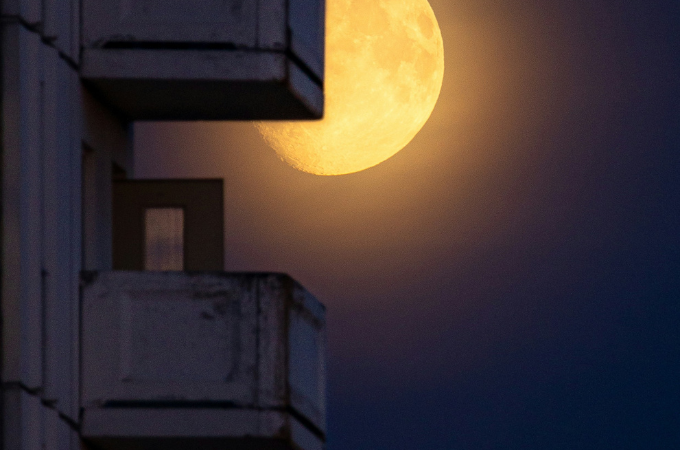
Photo by Dmitry Grachyov on Unsplash






Chisom iheadiri April 27, 2026 02:26
Honored to have The Girl Who Stayed featured here. Thank you, Brittle Paper, for giving this story a home. I am deeply grateful.