

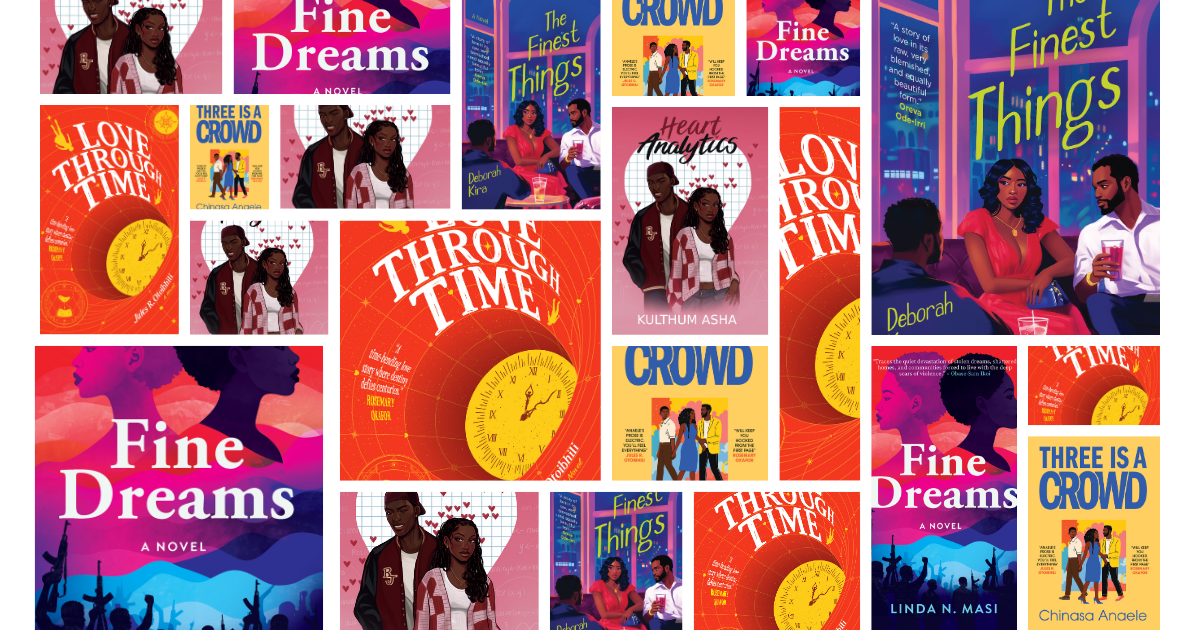
22. That is the number of debut authors Masobe Books is pushing out this year. And some of their work is already out, from Chinasa Anaele’s Three Is a Crowd and Deborah Kira’s The Finest Things to Kulthum Asha’s Heart Analytics, alongside upcoming books like Love to Time by Jules R. Otoibiri.
Masobe has always been at the forefront of grooming new voices. And this work is important as African writing is still heavily mediated through publishers based outside the continent. Many major Nigerian and African authors continue to be published internationally, including Chimamanda Ngozi Adichie, whose works are published by Knopf in the United States and Fourth Estate in the United Kingdom, while earlier generations such as Chinua Achebe also had significant portions of their publishing careers tied to foreign presses. This structure has long shaped questions around ownership, access, and licensing of African literature.
Within this context, Masobe’s focus on debut authors represents both a creative and structural intervention. First-time writers typically require extensive editorial development, including substantive editing, line editing, and structural refinement before their manuscripts reach publication standard. For Masobe, investing in 22 debut authors in a single cycle signals a significant commitment to talent development and a calculated bet on the future of Nigerian literature.
We spoke with Mr Othuke Ominiabohs, founder of Masobe Books, about the press’s strategy for debut authors, the editorial and developmental processes behind their titles, and the broader philosophy driving its investment in new literary voices in Nigeria.
Brittle Paper
What made you decide to invest so heavily in first-time writers, especially in a market where that level of development work is often expensive and uncertain?
Othuke Ominiabohs
Someone had to do it. But besides that, I realised quickly that if we are ever going to grow the African literary ecosystem to compete with the rest of the world, we need to own our stories. Right now, most of our stories are domiciled in the West, signed off in perpetuity, giving other territories complete ownership.
One of the biggest challenges I encountered as a “new” publisher was trying to convince foreign publishers to allow us publish African stories on African soil by licensing the rights to us. We met, and still meet, with a lot of resistance and sometimes outright refusal.
This got me thinking: Africa is the talent. It has always been here all along. So we decided to dig deep, find the new voices that will herald the future, nurture and platform them until such a time when they will, in turn, morph into what will become the greats and the classics of their time.
This decision has been financially rewarding as well, at least in the long run. Readers love our homegrown stories, and some of these debuts have quickly overtaken local bestseller lists. I like to think of it as an investment into the future and in discovery.
Brittle Paper
With books like Three Is a Crowd and The Finest Things, both debut-led projects, how intentional is Masobe about shaping each book differently depending on the author’s experience level, and what extra layers of support go into making debut titles publication-ready in a system without a strong literary agent structure?
Othuke Ominiabohs
Every published Masobe title is in the best form that it can be, regardless of the author’s “experience level”. That’s where editing comes in: the rigorous process of combing through each manuscript until it is near perfect and print-ready. One of the things we look out for when acquiring manuscripts is the writer’s voice. It has got to be unique from the jump. All we do while editing is sharpen that voice and make it clearer and more distinct so the story shines through.
Literary agents do not have much of a role to play in the actual publishing process. Their job is to find a suitable home for books and then serve as liaison between author and publisher. Our debut manuscripts go through the publishing cycle starting with acquisitions. Then they run through a funnel of edits: developmental, line and copy edits, proofreading, and then typesetting.
Marketing begins right from acquisitions: What are the thematic preoccupations of said work? What are the sales statistics of comparable titles? Who is the audience for said work, and what tweaks can be made to increase its appeal and even widen the market range? Marketing guides the direction of edits: what stays on the page, what is emphasised, and what is toned down. Even the choice of cover aesthetics and reveals is carefully thought through and tested. Essentially, a few months before a debut is released, we would have successfully engineered a significant amount of interest for it.
Brittle Paper
Looking at debut authors like Deborah Kira, Chinasa Anaele and others in your catalogue, what are the most recurring craft or structural issues you encounter in first manuscripts, and how does Masobe work through those edits while still preserving the author’s original voice and intent?
Othuke Ominiabohs
With most debut authors, you can generally find the author’s voice and a good chunk of the plot intact, usually enough of it to want to engage with the work. What I have found to be missing among a lot of debuts is skill at the sentence level. I have also encountered a lack of plot cohesion and structural gaps that a little more time with the manuscript could have fixed.
We have a dedicated and skilled team of editors. We have all worked through a lot of these kinds of manuscripts that, I like to think, we have become some sort of subject matter experts. A series of edits done in collaboration with the author is the first step towards working through the manuscript while maintaining the author’s voice and intent.
The timeline for edits depends on the level of work needed and the availability of either party to work on the fixes. This could take anything from two to twelve months.
Brittle Paper
In contexts like Nigeria, where the literary agent ecosystem is still very thin, publishers often end up playing multiple roles. How has Masobe adapted to that gap, and what challenges does it create when working closely with debut authors?
Othuke Ominiabohs
We leverage our connections and network to get our debut authors to agents and publishers outside our territory. In fact, we have been able to secure publishing deals for four of our titles and literary agents to represent another six. We stand in that gap, but it is not always a comfortable place to be in because every author wants their work to travel, and they look to you, the publisher who now also stands as their agent, to make it happen.
There is a mounting pressure that only gets worse as weeks roll into months and years and there is still no word of a deal or an opportunity. We can share these literary works with our contacts; agents, publishers, and many others. We can ensure that they are read and considered, but we cannot force a deal.
These and other reasons are why we built the Masobe App, an ebook platform where readers can access ebooks and also buy the physical copies of our titles from their devices. Now readers can access our stories through the Masobe App from anywhere in the world. All they need to do is download the app from the Play Store or App Store.
Brittle Paper
How do you think about preparing debut authors not just for a book launch, but for a sustainable writing career beyond their first publication?
Othuke Ominiabohs
I’m not sure how much preparation we can give outside of offering our platform and whatever support the author might need for their craft. To become truly great in any endeavour, that drive must come from within. One must become obsessed with excellence.
To build a sustainable writing career beyond one publication, one needs focus, determination, and a near obsession with stories and how they work. Neither of these qualities are external. Masobe Books can fix your edits, but not your will or your hunger for more. How far you want to go depends entirely on you.



COMMENTS -
Reader Interactions