

Translated by Djeneba Deby Bagayoko
We left Accra on a mission. On the bus were writers, filmmakers, artists, and thinkers from Mali, Senegal, Ghana, Nigeria, and Great Britain, brought together by LOATAD around a single project: to cross West Africa by road, from Accra to Banjul, to observe, listen, film, and write. Not from a hotel. Not from a plane. From the road, with its fatigue, dust, borders, and all they reveal of a continent still searching for itself; a people who, through the upheaval they have endured, unconsciously exalt their greatness through their millennia-old resilience.
We left Sierra Leone early in the morning, heading for Guinea-Conakry. The country of the great leader of African independence, His Excellency Comrade Sékou Touré, the one who said “non” to De Gaulle in 1958 and paid the price of his dignity; but who managed to preserve the freedom and greatness of the Guinean people of Africa. Continuing our journey, we arrived not as tourists, but as heirs to the legacy of our ancestors. We arrived as inheritors of a shared history, seeking to understand what this continent is doing with this heritage today, to better grasp the mission of this generation, our mission.
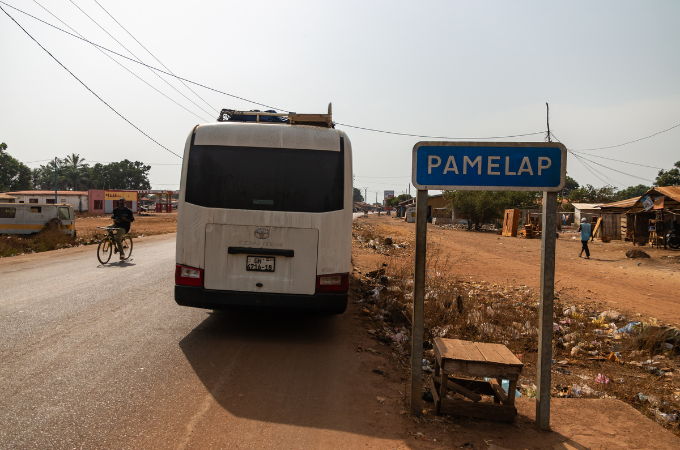
One of the most striking, emotionally charged, and instructive moments regarding the dream of a united Africa struck us upon our arrival at the junction of this imaginary line separating Sierra Leone and Guinea-Conakry. After crossing several border posts, often under arduous conditions imposed by time, dating back to the era of balkanization, it was the first time we witnessed a space where two African states seemed to genuinely cooperate. The shared building housing the administrations of both countries embodied, in a concrete way, a possibility, a dream becoming reality: an Africa capable of overcoming its inherited divisions and uniting.
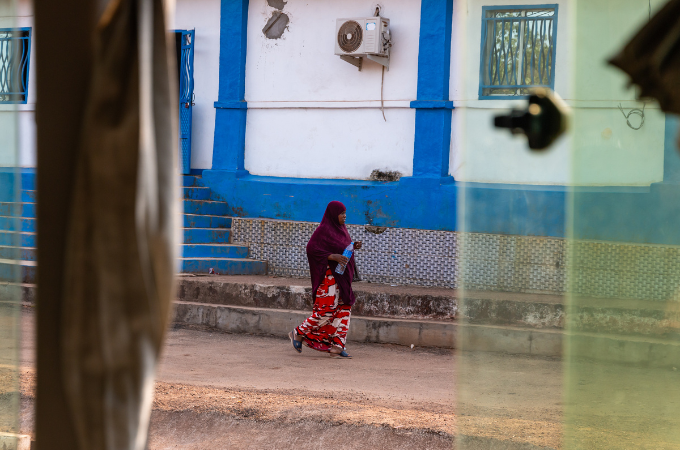
This moment took on even greater significance in light of the numerous hardships we had previously endured. Harassment, bureaucratic hurdles, various forms of pressure, and corrupt practices had marked our journey. These realities, while rooted in systemic dynamics linked to poverty and the institutional fragility of our states, remain major obstacles to the free movement of Africans within their own continent. Yet, in the face of this, our Pan-African faith and our level of awareness enabled us to persevere, until we reached this border region where the hope of genuine collaboration between African states was reborn – an essential condition for any prospect of unification.
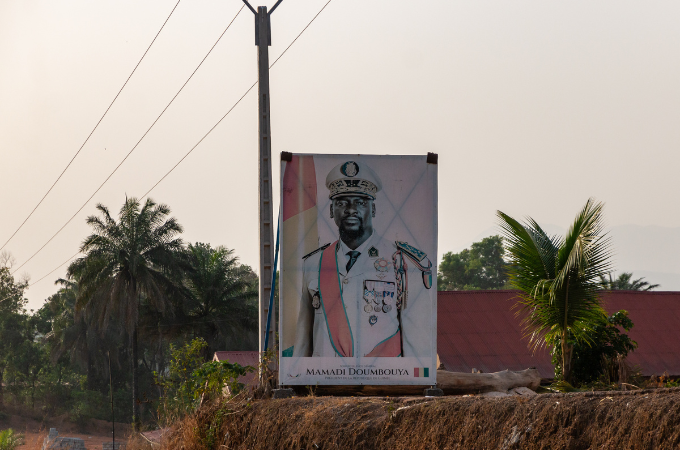
This combined border post, inaugurated in 2022 through the joint initiative of Presidents Mamadi Doumbouya and Julius Maada Bio, is one of the few concrete examples of border integration in West Africa. Officials from both countries work side-by-side, share the same premises, and coordinate their procedures. For the first time since our departure, we were encouraged to film freely at a border post where others had categorically forbidden us from taking out our equipment. This seemingly insignificant detail spoke volumes about the prevailing mindset there.
Bakary Sey, a Sierra Leonean we met there, confirmed it with genuine pride: since the opening of this post, things have changed. Less corruption, less arbitrariness, more efficiency. For him, this building was living proof that African unity can begin where you least expect it: at a border post, between two officials who decide to work together. He hoped other countries would follow suit. We do too.
Two Guinean officers approached us during our check-in. Upon learning of our residency and the difficulties we were encountering on other routes, one of them took the time to explain the context of border conflicts between African states, their colonial origins rooted in the Berlin Conference of 1884-1885, and their continued existence today. Then he simply said : Guinea never poses a problem for an African. Guinea is a Pan-African country.
This wasn’t propaganda. It was a statement of identity, conveyed by an ordinary officer, in uniform, at an ordinary border. We spent nearly an hour and a half at that post. It was among the most significant moments of the trip.
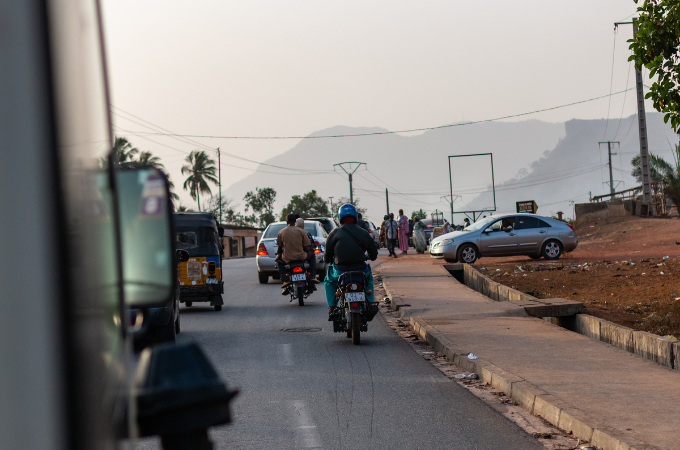
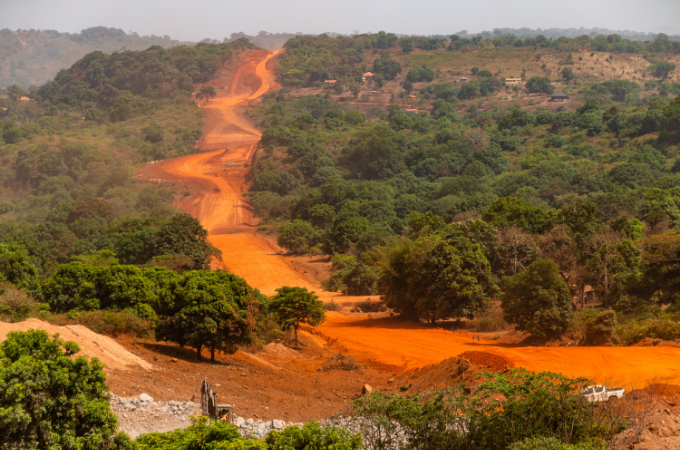
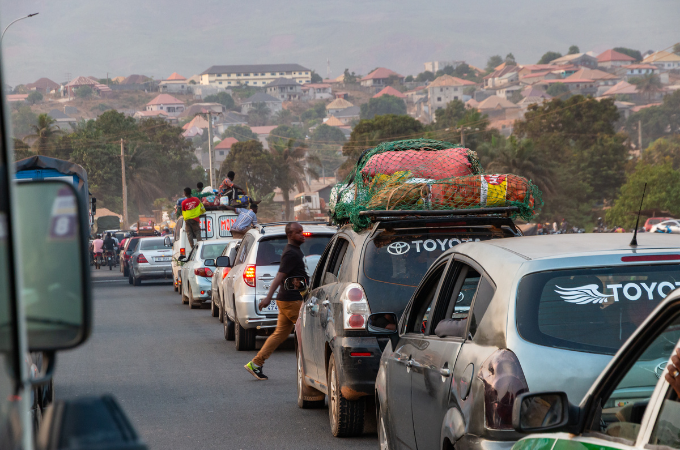
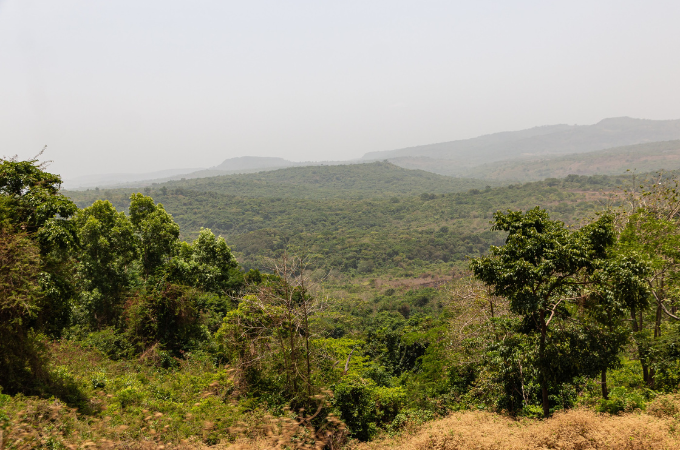
As we continued our journey towards Conakry, we were enveloped by another form of teaching, quieter but just as profound. The Guinean countryside offered a striking contrast to urban tensions and modern demands. There, the pace of life seemed peaceful, almost in harmony with what truly matters. This immersion led us to a fundamental question: why do we continue to chase after external models that, for centuries, have distanced us from ourselves?
The landscapes we crossed, the dense vegetation, the majestic Fouta Djallon mountains that feed the great rivers of West Africa, the Niger, the Senegal, and the Gambia., the vibrant villages of Moussaya, Forécariah, and Souriaya told a different story of Africa. An Africa rooted, dignified, and in motion.
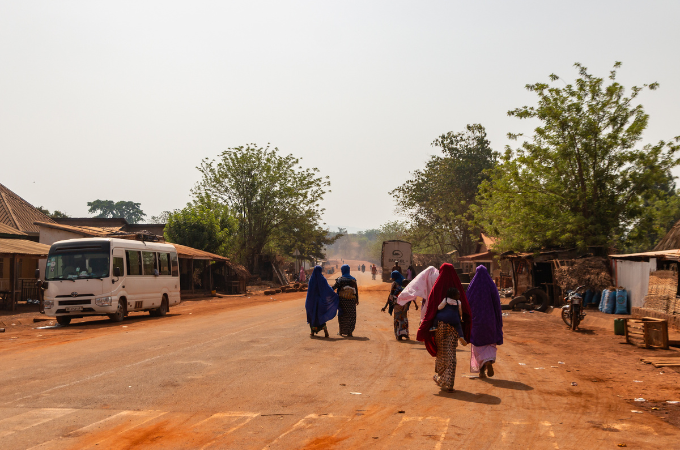
Along the roads, children walked to school with a natural grace. The open-air markets offered a profusion of local dishes: attiéké, aloko, and various fried foods, true expressions of a vibrant grassroots economy. The exchanged glances, the fleeting smiles, and the gestures of solidarity testified to a remarkable capacity to transcend hardship. The African people, even in the most difficult circumstances, carry within them an irrepressible life force.
Guinea, however, holds a considerable share of the world’s bauxite reserves. Subsoil wealth that goes to enrich multinationals while the roads remain dilapidated and the people wait for this abundance to reach them. This contradiction was evident in every town we passed through. The checkpoints along the route didn’t pose any serious problems: Guinea let us through, and in West Africa, this detail is never insignificant.
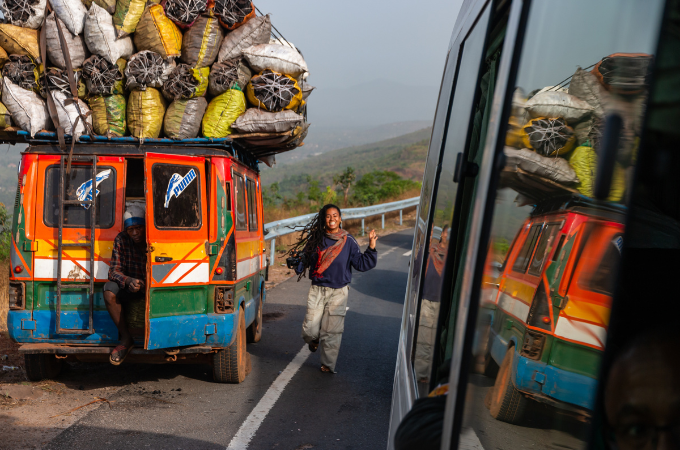
On the outskirts of Conakry, an incident served as a stark reminder that this country remains a state governed by the rule of law. Kehinde, one of our mentors, was filming from his vehicle, as was his custom. Inadvertently, his phone framed two gendarmes on duty. One of them followed our convoy on a motorcycle, stopped us, and invoked the right to privacy, a real right we couldn’t contest. The negotiation was long and tense. We then reminded the gendarme of what his colleagues at the border had told us about Guinea. The argument resonated. He let us go. Two faces of the same country: a state governed by the rule of law, with officers doing their job, and a people capable of hearing an argument of brotherhood when it is expressed sincerely.
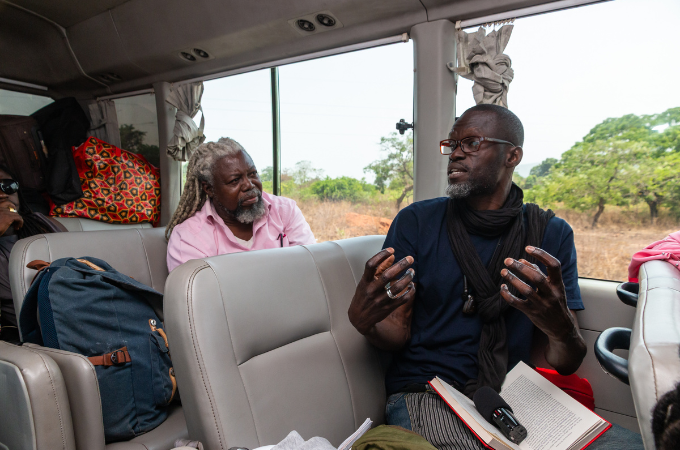
Our arrival in Conakry marked a new chapter. Settled into the Gamal Abdel Nasser Hotel, the university hostel in Conakry. We were quickly confronted with practical realities: finding an ATM, withdrawing money, and dealing with technical difficulties. But beyond these challenges, a simple moment transformed into a meaningful experience. We chose to eat from a woman selling attiéké on the sidewalk late at night. This choice was not meaningless. It was an act of conscious solidarity with these African women who, behind the scenes, sustain the economy and the dignity of families. Through this interaction, we experienced firsthand the silent power of the masses.
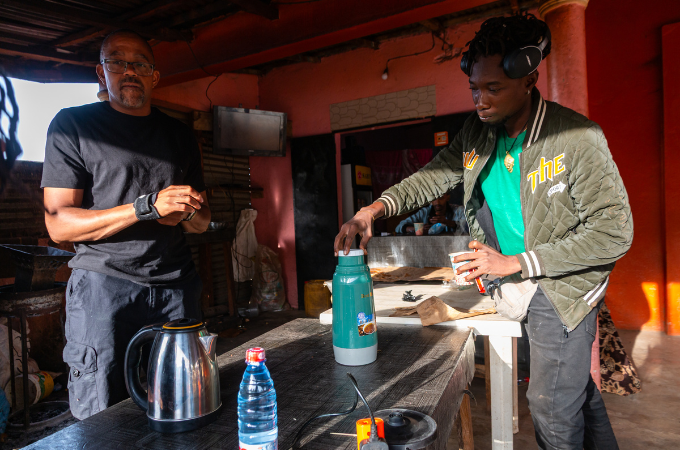
Later, the hotel manager and security guard offered us ataya, the ceremonial green tea widespread throughout West Africa. A ritual of slowness and hospitality, not something one drinks casually. Sena, one of the residents, joined us. We talked until 3 a.m. about Guinea, Africa, and our stories. It is in these moments, far from protocols and speeches, that Pan-Africanism is truly experienced, not as an ideology, but as a shared humanity.
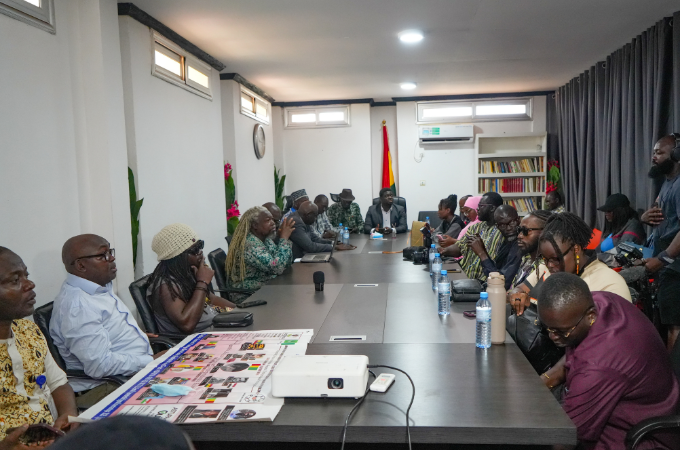
On Monday, April 13th, at 10:00 AM, we were welcomed to the National Library of Guinea by its director, Daouda Tamsir Niane, son of the great historian and writer Djibril Tamsir Niane, author of Soundjata ou l’épopée mandingue (The Epic of Soundjata), a seminal work that restored to Africa one of its most powerful epics. That this man’s son is now the guardian of Guinea’s national memory is no coincidence. It is the continuation of a lineage that has chosen to keep the consciousness of a people alive.
This meeting was no accident either. It was the result of a connection forged beforehand by Bachir Tamsir Niane, the director’s brother, a Guinean writer who had participated in a previous writing residency organized by LOATAD. He was the one who had built the bridge between our two worlds. This bridge, in itself, illustrated what we had come looking for: proof that when Africans know and trust each other, they can build great things together, without asking anyone’s permission. Another bridge was CAP26 convener Djeneba Deby Bagayoko who maintained this connection, consistently to facilitate our correspondence with Guinea.
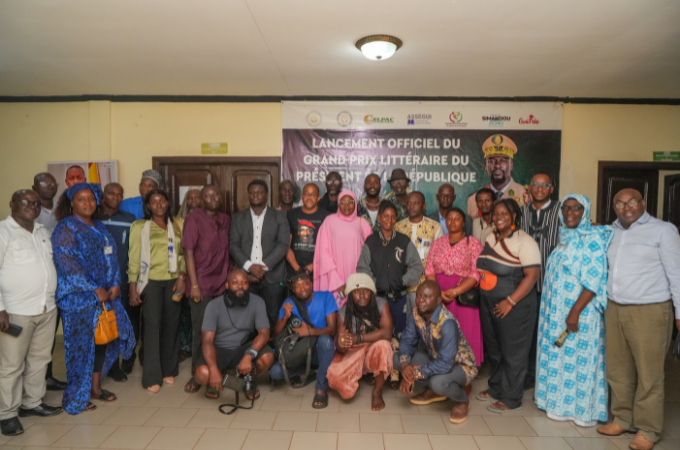
The meeting was exceptionally enriching. It brought together, in the same room, individuals whose commitments speak for themselves: Fadama Itala Kourouma, President of the Guinean Writers’ Association; Sansy Kaba Diakité, Vice-President of the Guinean Publishers’ Association and promoter of the 70 Hours of the Book, the cultural marathon that transforms Conakry into an African capital of books and thought each year; Bernard Pévé Béavogui, Director General of the Public Reading and Cultural Activities Centers (CELPAC), who presided over the ceremony; and Moussa Balandou Diallo, President of the Central Network of the N’Ko Alphabet, the writing system invented in 1949 by the Guinean Solomana Kanté to transcribe Mande languages and restore to these peoples control over their own written expression. Sharing the same building, the Public Reading and Cultural Activities Centre was also represented, alongside the executives of the national library.
Seth, head of our delegation, opened the session by presenting LOATAD, the objectives of the residency, and the meaning of the journey. The residents shared their experiences. Then the Guinean associations took the floor, and that’s when the meeting took on a new dimension.
The discussions focused on the fundamental role of writers in building a Pan-African identity. The writer was defined as a guardian of memory, a builder of conscience, and an architect of the collective soul. On a continent whose identities were fragmented by colonization, literature appears as a tool for reconstruction, capable of forging a shared imagination and restoring a long-eroded pride. The shadow of Sékou Touré loomed large over the discussions; his extensive body of work, comprising dozens of books, testifies to a structured and visionary political thought that remains largely untapped. References to Kwame Nkrumah, meanwhile, recalled that audacious moment when Guinea and Ghana attempted to embody a concrete political union, before external interests sabotaged it.
Moussa Balandou Diallo spoke about N’Ko with a conviction that moved everyone. Sansy Kaba Diakité reminded everyone that Guinea is a land of writers. The country of Camara Laye and his novel L’Enfant Noir, of Djibril Tamsir Niane and his Mande epic, of William Sassine, a critical and unsettling voice in post-independence literature, of Alioum Fantouré, author of Le Cercle des Tropiques, and of Tierno Monénembo, whose writing transcends borders. A literary tradition rooted in history and resistance.
Discussions with WARR 2026 members allowed for the sharing of experiences from different countries. All converged on a shared observation, notably highlighted by Orake: the obstacles to African unity are not only material, but also mental. Linguistic, monetary, and infrastructural divisions reflect a lack of a common vision. And as long as Africa does not fully embrace its own languages within its institutions and educational systems, it will remain marginalized. The potential is immense; it is left to be harnessed.
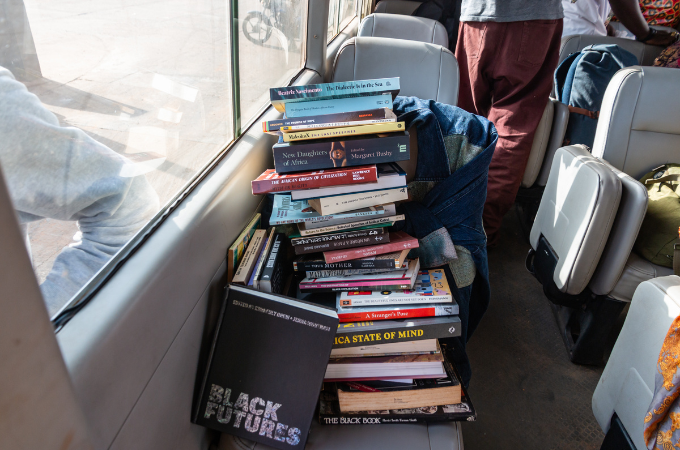
At the end of the meeting, a simple gesture touched us all: Ghanaian author Nana S. Achampong and fellow resident Nigerian Testimony Odey donated copies of their more recent books to the library. African books joining an African library.
A chain closed. A memory enriched. The country’s information minister had hoped to meet with us at 3 p.m. and was genuinely pleased by our visit. But our schedule didn’t allow it. This missed appointment spoke volumes about the constraints of travel, but also about the real interest our initiative generated here.
After the library, our visit to the National Museum of Guinea opened up another avenue of reflection. Faced with certain symbols inherited from colonization still present in the museum space, an intense discussion ensued regarding the need to rethink spaces of memory. Why continue to valorize figures of domination instead of highlighting the heroes of African resistance? The anthropological exhibition, however, revealed the country’s cultural richness: masks, instruments, representations of different ethnic groups, testifying to a profound diversity that is still insufficiently valued internationally. These objects are not mere curiosities. They are proof that, above all, a civilization once existed here.
In the evening, a cultural celebration organized in our honor by the publishers brought this leg of the residency to a magnificent close. Around a dinner table, Sansy Kaba Diakité and the members of Bembeya Jazz National awaited us. Founded in 1961, at the dawn of Guinean independence, Bembeya Jazz is not just a musical group; it is a living institution. Their revolutionary rhythms have rekindled the memory of the struggles for independence. The figures of Patrice Lumumba, Kwame Nkrumah, and Sékou Touré were ever-present in the songs and speeches. Traditional dishes, dances, and the collective energy made this evening a moment of intense Pan-African communion.
And our residents responded: Basira recited a poem that held the place spellbound. Tben Vox and Megborna offered performances that surprised and moved the audience. African art is not an ornament. It is a commitment.
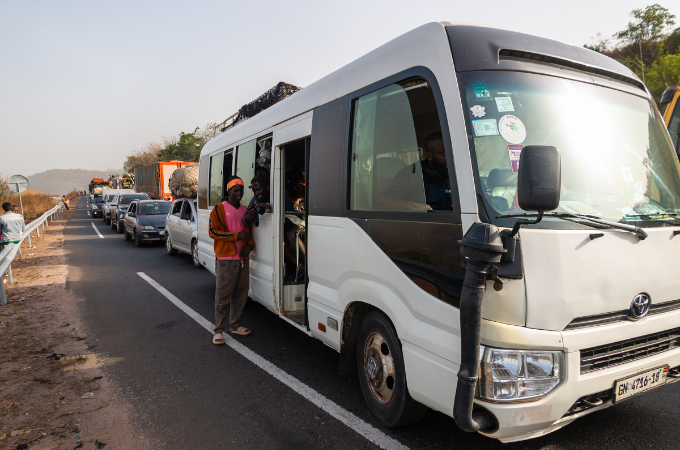
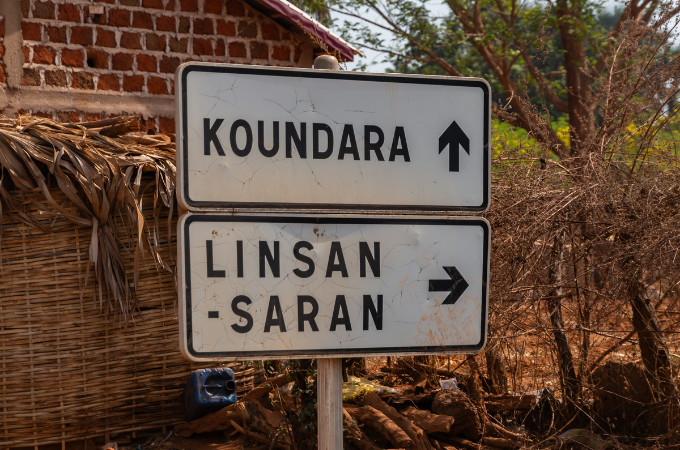
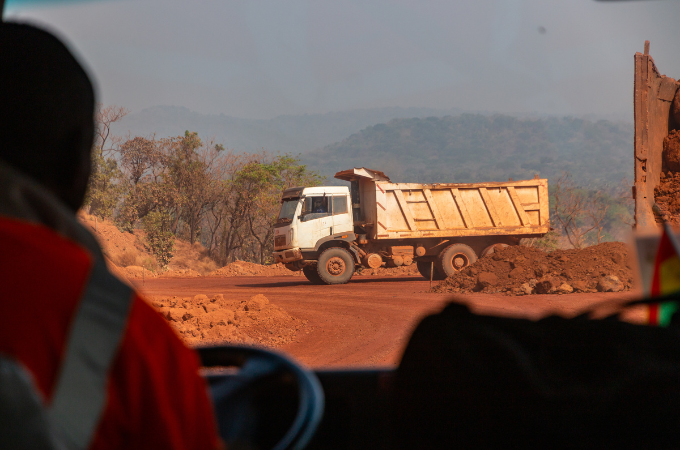
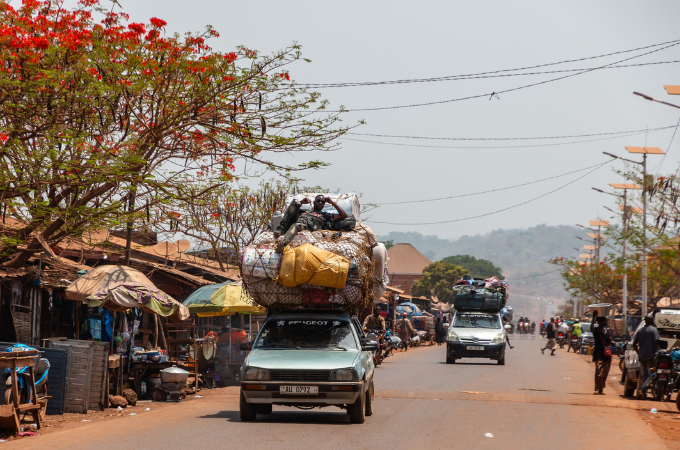
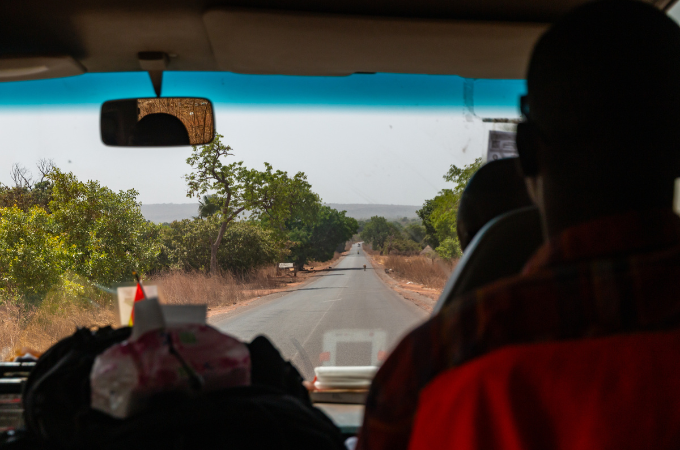
The departure from Conakry towards Mamou, then Koundara, marked the beginning of one of the longest and most arduous journeys of the trip. Between breathtaking landscapes and extremely poor road conditions (due to ongoing road construction). Particularly between Mamou and Labé, we experienced the contradictions of African development.
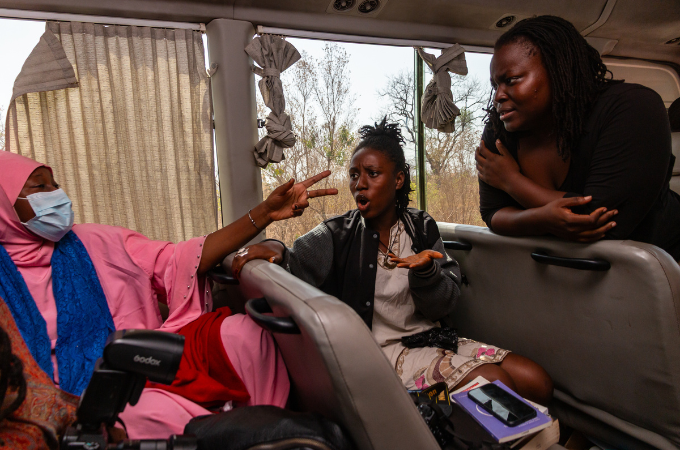
Discussions on board touched on languages, cultural differences, misunderstandings, but also on the need to learn to understand each other beyond these divergences. These frictions between us, people from different backgrounds, were themselves a lesson: African unity cannot be decreed. It is built, patiently, through the will to remain together despite everything.
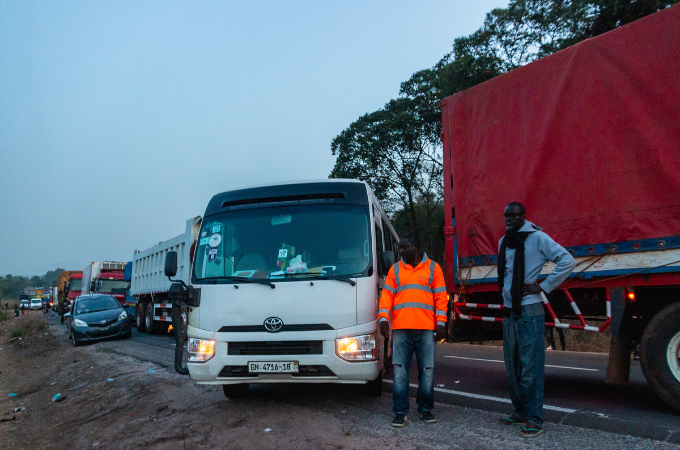
The difficulties intensified as we approached the border: long lines of trucks, administrative roadblocks, and visa problems for a team member. Yet, amidst these tensions, acts of humanity emerged: Bagary Keita, the Guinean Customs official who helped us move forward, supporting our cause with the few Dalasis (Gambian currency) he had in his drawer, and the Senegalese authorities who, despite the border closure, facilitated our passage while respecting the rules.
Finally, after these trials, we were able to cross the border and resume our journey towards Popenguine, with the feeling of having crossed much more than territories: a profound human, political and spiritual experience, revealing the challenges and promises of Pan-Africanism in progress.
Guinea gave us living proof that this dream is not dead. A shared border building. A meeting made possible by the trust between two men who knew each other. Tea offered at midnight to weary strangers. A guitar from Bembeya Jazz that still plays for Africa.
Sékou Touré chose freedom in poverty rather than wealth in slavery. Guinea in 2026, imperfect yet resilient, has not renounced that choice.
We’ll leave with that.


COMMENTS -
Reader Interactions