

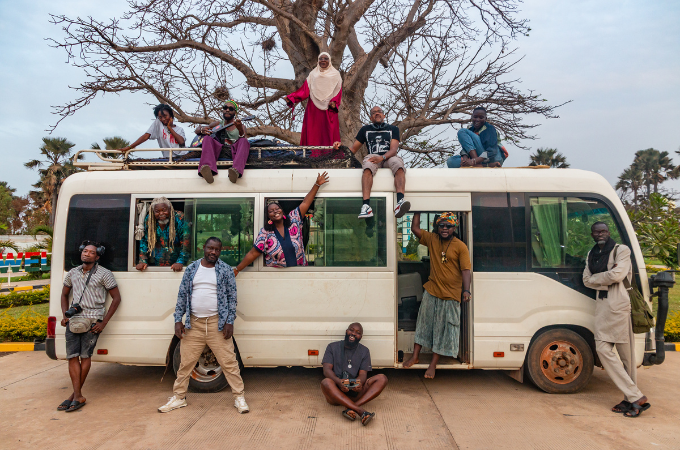
In Banjul, anyone can dream.
When we got on the road, Banjul was front of mind. On the best days, it was the end of our little adventure. On the worst days, it was a finish line. I had traveled by road before. Long, tiring distances through Nigeria with family. But I had never done anything like this. Before the road residency, Africa was unknown to me. When I applied, I knew that a lot would be demanded of me. A week before departure day, I got scared.
Our exodus to Banjul was preceded by the longest stretch of travel we had to face since the beginning. Guinea to Senegal was difficult. It was the first part of our journey where we were left alone with nature. And in turn, with ourselves. We had hit the one week mark on the road and the impact of that milestone was felt across the bus. We were exhausted. Early mornings coupled with long days on the road and constant close proximity bred heightened emotions.
As the stunning highlands and mountains stretched and contracted in front of us, their long, winding dusty roads rattled our home and caused our tired bodies to ache.
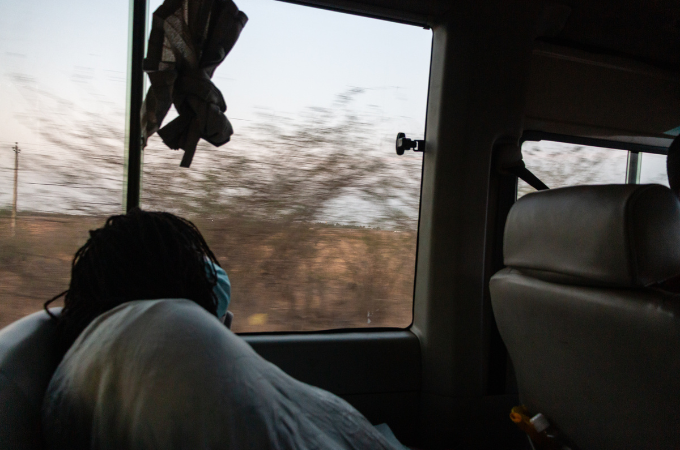
The Guinea border was sweltering. We were a steaming pot boiling over. We spent 4+ hours transitioning between there and Senegal. When we crossed, our road dad, Seth, announced that we would not be stopping at a hotel that night. We would be driving into the night to meet up with our engagement in Senegal.
I cried soft, quiet, tired tears: we were dusty, hungry, and exhausted. We slept on the bus that night, while the drivers took turns pushing us to our finish line. Banjul was only a day away. We had to make it.
The Attractions
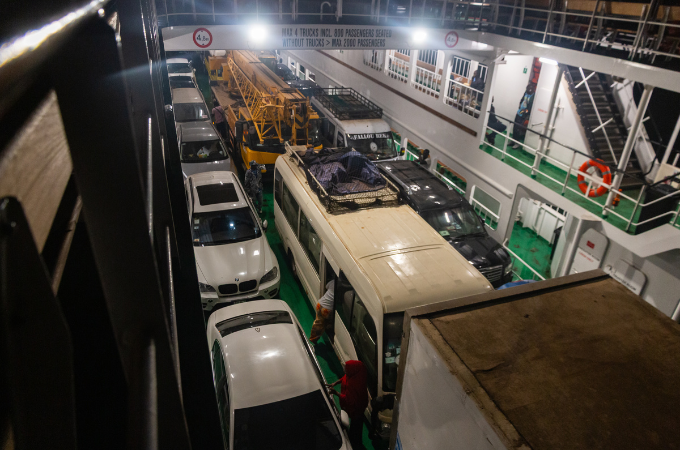
The Gambia is a very small country in both land mass and population. The sliver of land marked out on the map represents how colonization shaped the past and future of its people. The land is defined by its proximity to the Gambia River, a 1,120 kilometre river running through the country, Senegal and North of Guinea. The borders were drawn around the river as a compromise between British and French forces during the Anglo-French Convention of 1889. Although these borders were seen as temporary at the time, they have remained unchanged ever since.
Today, the country continues to be defined by its proximity to colonial extraction and exploitation. This time around, it comes in the form of “development” and a special type of tourism.
On a drive back home after a night out, our driver pointed out a stretch of land next to us. He called it “Radville Farm”, one of the largest agri-businesses in the country, owned by a UK firm. The company happens to be the largest exporter of crops in the Gambia, accounting for 75% of exports and cultivating approximately 300 hectares of vegetables & fruits. Most of this produce is exported to the United Kingdom.
“Imagine, I cannot eat food that is planted on my soil and farmed by my people.”
Other than the fertile land, there’s another attraction that brings foreigners to The Gambia. Banjul is where dreams come true and fantasies are fulfilled. People fly in from all over the world looking for “exotic pleasures”, a world outside of their bubble where they can get lost in their idea of paradise. On our first night in Banjul, we drove through Senegambia, a lively street filled with clubs, music, and people pouring out of venues. Our initial excitement slowly dissipated as we realized the demographic of partygoers.
“Sex tourism is a booming industry here.”
They were everywhere – moving in pairs and small clusters, old and young, black and white – like a quiet tide that had learned the rhythm of the city. In Banjul, we could not miss them. The attractions bent toward them, the lodgings adjusted their prices and their promises for them, the restaurants seasoned their menus to their expectations, and even the craft markets arranged their wares with these visitors in mind. The young men on the streets wore long locs and spoke in borrowed Jamaican cadences, performing an elsewhere that seemed more profitable than home. At night, despite the sharp Gambian cold, the women stepped out dressed for heat, for sun, for a climate that existed more in a brochure than in the air.
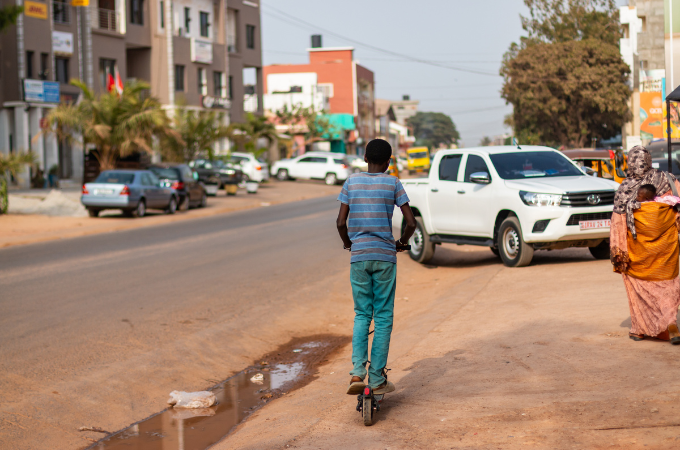
The attractions do more than entertain; they begin to shape the city’s social fabric. On the streets, you feel it immediately – sellers sizing you up, quietly reading who you are, whether you belong, and what you might be worth. You watch them adjust in real time: shifting posture, softening tone, choosing words with care, all to draw you in. It carries the familiar rhythm of Lagos, that restless, inventive hustle. Perhaps because of that, I found myself less startled by it, almost numbed to the abrasiveness of being constantly sold to.
Despite this, there is a gentleness in how Gambians relate to each other and how they open up to accept others. It is in the intimacy of the average interaction, the way they show their care for each other. Even when they’re speaking their native language, the cadence and laughter in their voices are infectious. Their kindness extends to other Africans who migrate and settle there. In Banjul, it’s possible to belong.
Ghana Town
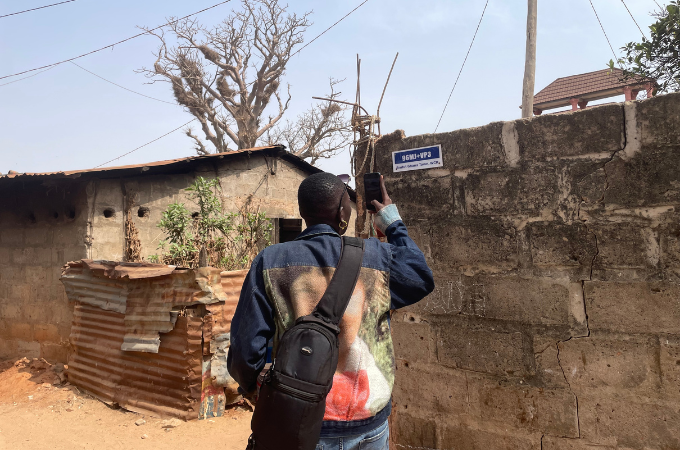
Tucked away at the edge of Brufut, a settlement of Ghanaians lives and builds their home in Gambia. Our Ghanaian delegation took me there when they visited, and the joy in their faces told me everything I needed to know. Ursula said it smelled like a typical Ghanaian fishing town. She made notes on the architecture and the branding of the shacks we passed by. The food was the main attraction. I had never seen Seth so happy.
In Banjul, anyone can dream. You can aspire, work, and build. The soil is rich and abundant with life, regardless of where your roots are from.
Ursula’s Birthday
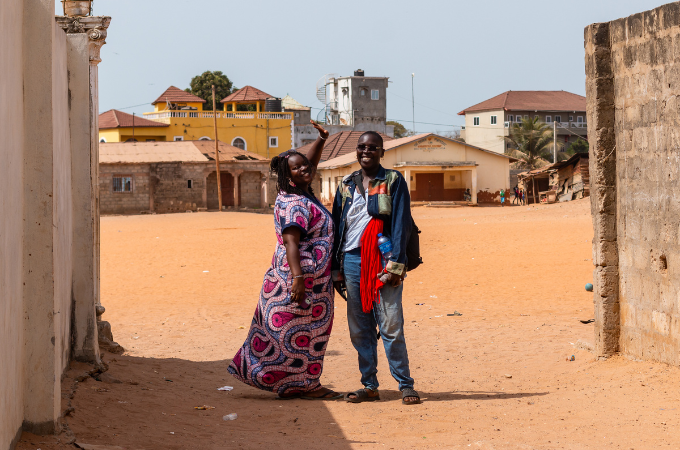
A few of us had been toying with the idea of staying a few extra days after the residency officially ended. We needed a pause before returning to ‘civilian’ life. The day after the residency ended was Ursula’s birthday. Ursula was my roommate for the entire residency, and I had grown quite fond of her. I adored her and I wanted to make her birthday special. With the encouragement of our road dad, four of us rescheduled our flights so we could join her in celebration.
Ursula wanted a night out for her birthday, and I was fixed on delivering. How often do you get to spend your birthday in a new country? Senegambia had a thriving nightlife, and I had assumed we’d easily find something fun to do. We planned to go bar crawling and end the night at a club. Our new friend, Frida, led the way, and we started our night at Turntable.
Banjul might be one of the few places I’d enter public transit at any time.
As we started to aimlessly roam through Senegambia, pleasure-seeking like the tourists around us, we were met with an uncharacteristic silence. Sure, it was a random Tuesday night, but this was Senegambia! There’s always music in the distance and laughter flowing from far-off corners. Plus, we didn’t want the weekend parties carefully curated for a foreign palette. We wanted something authentically Gambian. As I write this, I see the irony of our mission. The Attractions shape every part of Banjul’s social life.
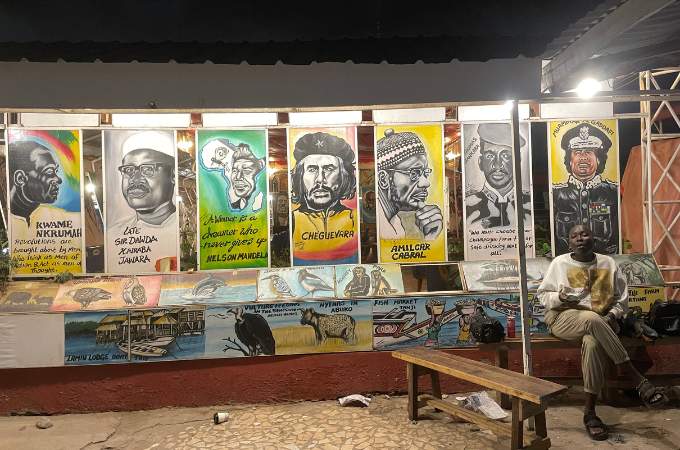
While our search proved unsuccessful, I learnt two things. One, just because a place can be considered safe doesn’t mean it’s safe for women. Two, Gambian men can be persistent, and shooing them is an essential part of the nightlife experience.
Eventually, we stumbled back to a local club I had found earlier in the trip. It was small and didn’t start till past midnight. The familiar rhythm of Afrobeats welcomed us from the entrance. Once we spoke to the staff at the entrance, we were greeted with open arms. They took us to the VIP section behind the heated dancefloor. It was someone else’s birthday that night, and they invited us to join them once we told them it was Ursula’s birthday. A time was had.
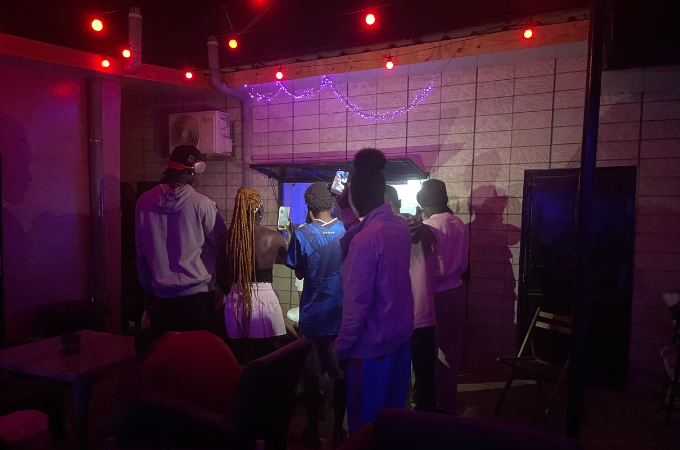
“This is how we party in Gambia! Once we’re here together, it’s like we’re family and we’ve known each other forever.”
The Convention of Afrikan People 2026
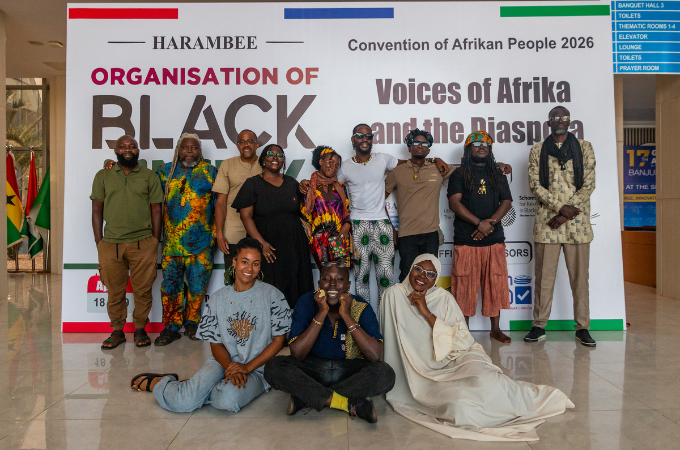
If the road was a training arc, CAP 2026, organised by Djeneba Deby Bagayoko (for the Harambee Organisation of Black Unity), was the big game at the end of the film. Our time on the road was spent learning and creating together. Every country we experienced shaped our thinking, sharpened our resolve, and fed our creativity and confidence. The road residency was an opportunity for each of us to put our ideals to the test and reevaluate who we were and what we believed. CAP 2026 was the end of that refinement and the revelation of our evolution. By the time we arrived in Banjul, we were ready to bloom.
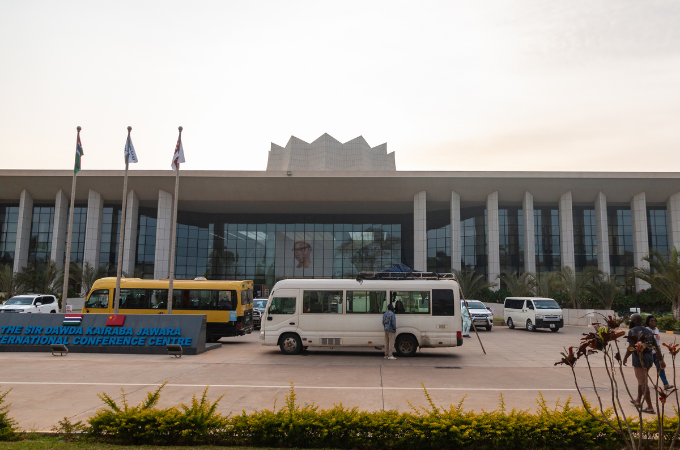
I had tried many times to picture what that moment would look and feel like to me. Walking into a room filled with people who had the same dreams as I did and communing in the name of Afrikan unity.
When the event started, what I felt couldn’t have been imagined. It started with song and dance, a ritual as old as the land we walked on. The rhythm reverberated through the auditorium and became something alive. Sound became spirit, spirit became movement. People ran from the audience to join the band on stage, performing, each showcasing the fullness of their abilities. “How incredibly African,” I thought to myself.
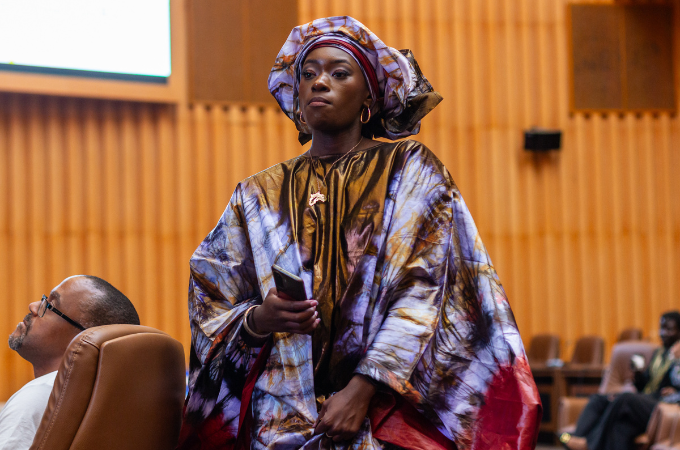
The rest of the convention followed that tone. At any given moment, we were thinking about, discussing, or celebrating the things that pull us closer together. Speakers from across the continent and the diaspora shared ideas, stories, and experiences about the current state of Africa, and together we charted new paths to our ideal future – a borderless Africa that is owned and built by us.
CAP 2026 was an incubator for the change we want. Other than facilitating the community and conversations we need to build, it was a showcase of the brilliance we are capable of. It was inspiring and left me feeling deeply hopeful. The future really is in our hands, and now I believe those hands are very capable. For the first time in a long time, everything I’ve dreamed about felt possible.
Goodbyes
Throughout my travels, one thing I learned is that the rhythms of life are the same regardless of where you are geographically. We wake, we eat, we work, we commune, we play, we laugh, we pray, we curse, we rest, we dream.
My dreams came true in Banjul. Everything I’ve ever wanted sat in front of me. The idea of Pan Africanism didn’t just sit in the furthest parts of my ideas. It was alive and in front of me. It was burning inside me after our journey. Banjul represented a milestone and shift in my mind and body. I sat with the reality of what we had accomplished, the people we had become after the road.
I enjoyed existing in that liminal space of becoming. The journey between where we started and where we were heading. The experience of getting to know my road family, finding friendships and love in strangers. The beauty of watching a new creation take form. It was life-changing, and I’ll never forget it. Banjul was the final stage of our evolution and the turning point of all that is to come.
Banjul represented our dreams realized, the end of an era, and the start of something larger than our individual lives.

COMMENTS -
Reader Interactions