

I
The Arrival
No one remembered the exact day the doctor arrived.
Some said he came during the harmattan, when the wind carried fine red dust across the hills like the breath of old spirits. Others swore it was the rainy season, because the river had overflowed that same week and the old wooden bridge collapsed beneath the weight of a travelling merchant’s cart. A few elders claimed it was neither — that the doctor had simply appeared one morning, the way a strange tree appears in a familiar forest, as though it had always been there and everyone had only now decided to notice it.
But everyone agreed on one thing. He did not belong to the village.
He came from somewhere beyond the red roads and thick forest corridors, beyond the markets where traders argued in tongues nobody in Umu-Agwu could name. He arrived on foot, alone, carrying two heavy wooden boxes and wearing a long black coat that seemed absurd in the afternoon heat. He had calm, watchful eyes — the kind that appeared to notice things slightly before they happened.
He did not introduce himself. He did not greet the elders first, as custom demanded. He simply walked to the edge of the village where the old healer’s hut had stood empty for two years, set down his boxes, and began to unpack.
The villagers watched from a distance.
They called him The Good Doctor — not yet out of affection, but out of the careful respect one gives something they do not understand. A title offered in hopes of being returned in kind.
At first, they feared him. He used words nobody recognized. He boiled water before touching wounds — a thing which struck the older women as wasteful and peculiar. He carried small silver instruments that glimmered like charms from another world, and when he stitched torn flesh together, with thread finer than spider silk, the onlookers covered their mouths. He knew which leaves suppressed fever and which roots, in the wrong proportion, turned the blood to poison. He seemed to read the body the way a scholar reads a page — patiently, searching, never surprised by what he found.
But fear slowly becomes awe when a man consistently does what others cannot. The first child he saved was little Ezinne, who had stopped breathing after a snakebite near the river. Her mother’s wailing had already awoken the compound at midnight. Burial cloths were being located. The elder women sat with the stillness that precedes grief. Then someone, out of either desperation or curiosity, ran to the doctor’s hut.
By morning, Ezinne was sitting outside in the sun eating roasted corn. After that, the gifts began.
*
Hunters left antelope at his doorstep before dawn. Farmers brought yams so large two men carried them on a single pole. Palm wine tappers gifted fresh gourds every week without being asked. Women arrived with oranges, kola nuts, smoked fish, woven cloth, beaded necklaces they had no real reason to part with except that they wanted to give something — anything — to the man who understood death and spoke back to it.
Nobody quite knew how to repay a man who pulled people from the edge of the afterlife. So, they gave everything they had, and hoped it was enough. Among all the villagers, none gave more than Mr Ogba.
Chukwuemeka Ogba was the wealthiest farmer in Umu-Agwu. His compound was the largest. His barns were never empty even in the dry months. He had three wives, seven children, and enough land that other men sharecropped it and still went home with enough to feed their families. During harvest season his compound looked like a small market. He wore his wealth without apology, as men do when they have worked honestly for it. And he gave generously. Loudly, yes — but generously.
“The Good Doctor must never lack!” he would announce, spreading his arms as though personally responsible for the village’s fortune. “A man of his learning, living among us? We should be ashamed if he ever goes hungry.”
One morning he arrived at the doctor’s compound leading a full-grown cow by a rope. An entire cow. The village talked about it for months. The elders nodded in approval. Mothers pointed it out to their children as an example of proper gratitude. Young men who had given a single yam quietly felt the sting of comparison. Even the doctor — who accepted all gifts with the same polite nod — paused briefly at the sight of the animal before thanking Ogba and directing a boy to take it around the back. Ogba returned home walking taller than usual.
What he did not see, because he was already leaving, was the doctor standing in the doorway afterward — watching him go — with an expression that was impossible to read. Not warmth. Not displeasure. Something quieter. Something that looked almost like a man who already knew the end of a story and was watching its beginning without surprise.
*
Mr Koyi lived at the poorer end of the village, near the cassava plots where the soil thinned out. His compound was small and often in need of repair. He had one wife, a daughter named Simi, and a reputation that followed him like a shadow he could never quite outrun.
Years ago, during a particularly brutal drought, Koyi had stolen two goats from the farm of a widow named Mama Chito. He had returned them, under pressure from the elders, but had never apologized properly — in fact, he had argued that Mama Chito’s fence was careless and therefore partly to blame, which only deepened the contempt people felt for him.
There was also the matter of the yam barn. Three planting seasons back, sacks of yam seeds went missing from a communal storage barn the night before distribution. Nobody saw who took them. But the following week, Koyi’s farm was planted more densely than a man of his means could explain. When the elders questioned him, he shrugged and said he had saved extra seed from the previous harvest. A few believed him. Most did not.
He was not violent. He did not shout or threaten. He simply existed at the edge of the community’s tolerance — a man whose presence was endured rather than welcomed, whose company people avoided, whose name in conversation was usually followed by a brief silence and a slight lowering of the eyes.
He had never brought a gift to the doctor. Not once. His daughter Simi had been sick twice in the past year — a cough that lingered, then a fever that lasted too long. Both times, the doctor had treated her. Both times, Koyi arrived at the compound empty-handed, accepted the treatment, muttered something that may or may not have been gratitude, and left without looking back.
The village noticed. People always notice that kind of thing.
“A man like that,” Ogba said once, to no one in particular, though several people were listening, “takes and takes and takes. He doesn’t even see what he takes from. He just takes.”
Nobody disagreed. Not even quietly.
*
The doctor was mysterious in ways that unsettled people even as they admired him.
He treated a beggar before a visiting chief once, and when the chief’s attendants protested, he said nothing — simply continued working. He sometimes ignored people who shouted the loudest, turning instead toward those who had gone quiet. He sat outside his hut at night staring at the stars with the focused stillness of a man listening to a conversation others couldn’t hear. He had no wife. No family that anyone knew of. He did not drink palm wine at gatherings. He laughed so rarely that, on the occasion when he did, it startled people the way unexpected thunder startles people — not dangerously, but sharply.
Some called this wisdom. Others, in lower voices, called it something else. But the children loved him. And in Umu-Agwu, as the old people said, children know things adults have forgotten how to feel. The little ones came to his compound the way they came to the river — without agenda, drawn by something they couldn’t name.
That was enough, for a long time, to quiet the doubts.
II
The Choice
It began before sunrise, with screaming.
Two girls had fallen ill in the same night. Amara, daughter of Mr Ogba. And Simi, daughter of Mr Koyi. Both burned with high fever. Both coughed blood into clay bowls. Both drifted in and out of consciousness before the sun had fully risen over the hills. Whatever had taken hold of them moved fast and without mercy, the way certain sicknesses do — ones that seem to have made up their mind before you’ve even noticed they’ve arrived.
The two households were summoned into panic in different ways. Ogba woke to his daughter’s gasping and within minutes his compound was alive with movement. He sent runners in three directions simultaneously. He commanded his wives. He organized the carrying mat — decorated, padded, borne by six strong men. He arrived at the doctor’s compound as a man accustomed to arriving: with noise, with speed, with the full weight of his resources thrown forward.
“Doctor!” he cried, while his men were still arranging themselves. “My daughter — Amara — she is dying. You must treat her immediately. Whatever it costs. Name it and I will bring it. Name anything.”
He was already listing what he would give. A piece of land at the edge of the eastern farm. The two rams he had been fattening for market. Whatever the doctor needed. He was a man who had always been able to solve problems with resources, and he applied this logic now with the urgency of a father who had never truly been helpless before, and found the feeling unbearable.
Not long after, a second figure appeared at the compound gate. Alone. Koyi. His wrapper was torn at the hem, dusty from running. He had no men to carry his daughter — could not afford them, had not thought to ask — and so he carried Simi himself, her head against his shoulder, her legs dangling limply against his side. He was not a young man and the effort showed in his breathing. Sweat darkened his shirt. He said nothing when he arrived at the gate. He stood slightly apart from the crowd that had gathered, his eyes finding the doctor’s hut and fixing there, his lips moving in the private mumbled language of a desperate parent. In his free hand — the one not occupied with holding his daughter — he clutched a small bundle wrapped in old cloth.
Someone in the crowd leaned over to look. Shriveled yams. Three or four of them. Small, wrinkled, the kind set aside because they are no longer good for planting or proper eating. A sound passed through the crowd — not quite laughter, not quite contempt, something in between. The kind of sound a crowd makes when it has already decided the outcome of something and is waiting for events to confirm its decision. The answer was obvious, after all.
Ogba had given more than anyone — had fed this doctor, honored him, brought him a whole cow while others brought single yams. Had made public declarations of loyalty that other men could only aspire to. The gifts were not merely gifts. They were a relationship. A covenant, built over years, in full view of the village. And Koyi? Koyi who stole from widows? Koyi who had never brought so much as a kola nut to the doctor’s compound? Koyi who was barely tolerated in this community even in ordinary times?
Even Koyi seemed to know it. He did not push forward or make demands. He stood at the edge of the crowd and waited with the patience of a man who has learned to expect very little from the world and has made a kind of peace with that expectation.
The door of the doctor’s hut opened. The doctor stepped out and looked at both girls.
The compound went quiet. He looked at Amara, lying on her decorated mat, surrounded by her father’s men, her face flushed and glistening. He looked at Simi, draped across Koyi’s back, half-conscious, breathing in short uneven intervals.
Then he looked at Koyi. And pointed. “Bring her inside first.”
Nobody moved. Ogba let out a short sound — half-laugh, half-disbelief. He turned to the man beside him as though confirming he had heard correctly.
“What?”
The doctor had already turned back toward the doorway. “This one first,” he repeated, without turning around. His voice was completely calm. No hesitation. No apology. As though he were simply stating a fact about the weather.
Koyi carried his daughter inside. The door closed.
Outside, for the first time since the stranger had come to Umu-Agwu, the murmuring against The Good Doctor began — not in whispers, but openly, in the full afternoon light, while Ogba stood at the center of it, with his arms at his sides and a look on his face that no one who saw it that day would easily forget.
Amara died before sunset. Simi was seen sitting up and drinking water two hours later.
*
The grief was enormous and real. Every parent in the village felt it in their chest when they heard — that cold rehearsal of a fear they all carried. The women came to Ogba’s compound with food and sat with his wives through the night. The men came to stand in the yard, to say the things men say when words are not enough but silence feels worse. The elders performed the necessary rites. The village mourned Amara properly, as a daughter of a prominent man deserved.
But Ogba’s grief was different from ordinary grief. Ordinary grief is a wound. Ogba’s grief was a wound with a question inside it — a question that refused to stop bleeding no matter how tightly he pressed against it.
Why?
Not why did she die — death was an old neighbor in Umu-Agwu, familiar if never welcome. But why in that order? Why that choice? Why him? After everything he had given. After the cow. After every yam and every declaration and every morning he had told his children, “That is the man who protects this village, that is the man we honor. “ He had built a relationship, brick by brick, in full faith. And the doctor had looked at that relationship — had looked at the cow, at the years, at everything — and pointed at Koyi instead.
Koyi. Who had stolen from a widow. Who had never given a thing. Who the village barely tolerated.
“The doctor had his reasons,” people told Ogba.
“Then let him give them,” Ogba said.
Nobody had a response to that. Because the doctor offered nothing. No explanation. No condolence visit. No acknowledgment that a choice had been made, that a man had lost something he could never recover. He simply continued his work. Treated the next patient. Boiled his water. Sat under the stars at night.
And Ogba, sitting beside his daughter’s grave in the evenings, began to feel something colder than grief, settling into the place where his faith had been.
III
The Elixir
The murmuring did not end after Amara’s burial. It grew — the way a cooking fire grows when fed quietly and steadily — from whispers beside evening fires into open conversation at the market, from market conversation into argument beneath the great nnukwu tree where village business was conducted.
People who had said nothing while Amara was being buried now found themselves saying things. Old doubts were retrieved, dusted off, reconnected to this new one. And at the center of it all, louder than anyone, was Ogba.
“The man is wicked,” he said one evening outside the palm wine hut, to a gathering that had not exactly assembled on purpose but had not dispersed either. “What kind of goodness is this? A man who lets years of loyalty die in the dirt while he holds the door open for a thief?”
“You speak from grief,” someone said carefully.
“I speak from sense,” Ogba replied. “Grief does not make a man blind. Sometimes it makes him see more clearly.”
The attempts to calm him were genuine but ineffective. People genuinely believed the doctor was beyond ordinary judgment — mysterious, operating by a higher logic, moved by considerations no village person could access. This was comforting to them. It meant the world was ordered, that the doctor’s choices were not random, that somewhere behind the inscrutability was a pattern that justified everything. Ogba found this argument infuriating.
“So, we cannot question him?” he demanded. “A man lives among us, eats our food, takes our gifts, and when he destroys us, we are not even permitted to ask why? That is not wisdom. That is obedience dressed up as wisdom.”
Tempers frayed.
One evening, Ogba threatened openly to drive the doctor from the village by force. This was enough to summon the elders.
*
The village assembly gathered at dusk beneath the nnukwu tree. Oil lamps were placed in a circle. The elders sat in the inner ring. Behind them, the village pressed in — men and women and half-grown children who had found reasons to linger.
The doctor arrived late, as he always did, as though timeliness were a social convention he had agreed to observe loosely. He wore his black coat despite the warmth of the gathered bodies. When he sat, it was without mention, not for his lateness or out of interest for the summoning.
The head elder, old Mazi Nweke, cleared his throat with the formality of a man accustomed to managing situations that had already gotten out of hand.
“Doctor,” he began carefully. “The village is troubled. There are words being said — some here tonight, some beside fires where we cannot moderate them. People fear that your… judgment… does not always serve the interests of Umu-Agwu.”
A murmur of agreement moved through the crowd. Ogba, seated at the front, said nothing. His jaw was set. He watched the doctor the way a man watches something he had already decided on.
The doctor looked around slowly. He did not appear chastened or defensive. He looked like a man surveying land he was already familiar with.
“I have heard the words,” he said quietly. “All of them. I know that many of you now doubt me.”
Ogba scoffed — a short, sharp sound.
The doctor continued without acknowledging it. “But you should not be afraid. What I am preparing for this village is larger than anything I have done before.” He paused, letting the silence work for him. “I have been developing an elixir,” he said. “A medicine that, once taken, will reduce sickness in Umu-Agwu by ninety percent. Perhaps more.”
The silence transformed immediately. Ninety percent. To people who buried infants from fever. Who watched infections eat men alive from small cuts. Who had lost mothers to coughs that started gently and ended catastrophically. Who planted prayers alongside crops every season because sickness could empty a compound faster than drought. Ninety percent was not a number. It was a world.
But before the excitement could root itself — Ogba stood. The crowd turned.
“Lies,” he said. Simple. Flat. Like a stone dropped in still water.
The doctor looked at him directly for the first time that evening.
“You expect this village,” Ogba continued, his voice controlled but vibrating beneath the surface, “to trust the judgment of a man who let my daughter die in the yard while he treated a known thief’s child first. You come here tonight, and announce a miracle? My daughter is in the ground.” He looked around at the assembled faces. “Do not drink anything this man offers you. Whatever he gives freely, ask yourself, what will it eventually cost.”
The elders rebuked him sharply. Voices overlapped — sit down, you speak from grief, control yourself, this is not the place.
Ogba sat. But the seed had been planted. The doctor watched, and said nothing.
*
The elixir was distributed three weeks later. Clay cups filled with dark, faintly bitter liquid passed through the village from compound to compound. Some villagers held the cup for a long moment before drinking — remembering Ogba’s voice, weighing it against years of watching the doctor work miracles. Most drank without hesitation. Why would they not?
This was the man who had saved Ezinne from a snakebite. Who had stitched hunters back together after forest accidents. Who had cured a sweating sickness the previous wet season that had emptied three compounds elsewhere in the region. Who had more knowledge of the body in one hand than the entire village possessed collectively.
They drank.
For two days, nothing happened. People went about their work. Farms were tended. Markets opened. Children ran between compounds the way children do when nothing is wrong. Then the sickness came.
First, it arrived as fever — familiar, manageable, the kind every household had its own remedy for. But this fever did not break on the third day the way fevers did. It deepened. And then came the legs.
The pain arrived suddenly, like a door slamming open in the night. Not the aching tiredness of a long day’s work but something altogether different — deep, grinding, white-hot, seated in the bones themselves. Within hours people who had woken up healthy could not stand. Could not walk. Could barely shift themselves from where they had lain down. And then, worst of all, it spread.
Contact was enough. A mother soothing a feverish child. A husband reaching for his wife’s hand. It moved through families first, then between compounds, following the paths people walked every day as though it had memorized the village’s geography.
The market emptied. The farms stood silent. The village paths, usually full from morning to night, became ghost roads where only the healthy moved — and there were fewer healthy people every hour. Within two weeks, the sickness had taken almost everyone.
Two households remained untouched. One was the doctor’s. One was Mr Ogba’s, because a dead daughter had made him careful in a way no living child ever could have.
Now people looked at him differently as he moved through the village carrying water and food to those who could not rise. Not as a bitter old man blinded by personal loss. As the man who had seen it. Who had said so. Who had been right. But nobody said this loudly. Not yet.
There was still hope the doctor would appear and explain, and the explanation would make everything sensible again. People are capable of extraordinary tolerance for suffering when they believe someone they trust is managing it toward a good end.
The cries filled the village day and night. Groaning from behind compound walls. Children calling for water. The sound of the sick is distinct from ordinary sound — it occupies a different frequency, one that enters the ears and then travels somewhere deeper.
Then one afternoon, when the suffering had reached its peak and the village had nearly surrendered to it, the doctor summoned everyone to the market square.
*
They came however they could. Some limped. Some leaned on sticks or on each other. Some were carried on mats by the few healthy ones. Some dragged themselves. The market square, which normally held the noise and color of commerce, was silent except for breathing and the soft sounds of people in pain settling themselves on the ground.
The doctor stood at the center. Calm. As he had always been. He looked at what surrounded him — the suffering, the hollow eyes, the people who had trusted him — and he began to speak.
“The treatment,” he announced, “was always designed to happen in two stages—” The square erupted.
“You poisoned us!”
“My son cannot walk!”
“Three people in my compound have not risen in four days!”
“You said it would heal us!”
The doctor raised one hand. The noise did not stop immediately but it dropped to a level where he could be heard.
“The first elixir prepared the body,” he said. “Weakened the disease at its root. The second dose completes the cure. It will work quickly — within hours.”
“Then give it to us,” someone shouted. “Give it now!”
A silence fell that was different from the previous silences. Because the doctor did not answer immediately. He looked at the crowd with an expression that was not quite regret and not quite indifference, but something occupying the uncomfortable space between them.
“The second dose,” he said quietly, “requires an offering.”
Nobody spoke.
“Two goats,” he said. “And one fowl. Per household.”
The silence held for three more seconds.
Then the square exploded with a noise unlike anything Umu-Agwu had produced before — not the noise of celebration or mourning but something rawer than either. Outrage. Betrayal. The sound of people realizing what has been done to them.
“You made us sick and now you charge us to recover?!”
“I buried my mother yesterday!”
“I have no goats left — my goats are sick!”
“We trusted you!”
The doctor waited. He let the noise spend itself. He stood in the center of the market square surrounded by suffering he had authored. He waited with the patience of a man who already knew what would happen next. Because he did. He had always known what would happen next.
A mother at the edge of the crowd looked at her child. The child had not walked in six days, and had begun to look at her with eyes that held no more questions. She looked at her two remaining goats. Then she looked at her child again. She stood and walked toward the doctor.
That was the first. A hunter followed. He sold the iron traps his father had left him — traps he had used for twenty years — and brought the payment that afternoon. He could walk by evening.
Each recovery was witnessed. And each witnessed recovery made the next payment more inevitable.
Because the doctor could cure them. That was now beyond argument. The suffering was not accidental, was not a natural disease, but a manufactured condition with a known treatment that worked immediately and visibly. Meaning he had always had the power to end it. He had simply been waiting for payment.
Not everyone could pay. Some died in the days that followed — people who had nothing left to give, or who held out too long, or whose bodies surrendered before their families could arrange an offering. Some were carried to the edge of the forest in the old way and buried quickly, without the proper ceremonies, because there was no time and too many others still needed saving.
The doctor accepted every offering without comment. His compound filled. Goats tied in rows along the inner fence. Chickens crowding the yard. The sounds of livestock replaced the silence that had previously surrounded his hut — a noisy, living testament to what the village had paid to survive.
Ogba walked past the compound each day on his errands of charity to the sick. He looked at the animals through the fence. He recognized some of them — he had sold goats to half the village and knew their markings. He said nothing. Not yet. He was waiting for the right moment. Because some fights cannot be won by a single man alone, and Ogba was, above all things, a patient man.
IV
The Departure
By the time the sickness passed, Umu-Agwu was no longer the village it had been.
The laughter that usually lived in the market had gone quiet, replaced by the careful, smaller sounds of people who have survived something and have not yet decided what to do with the fact of their survival. Children walked with limps that might or might not improve with time. The farms had fallen behind by weeks. Fresh graves lined the outskirts near the forest path — some with proper markers, some with only a cleared patch of earth and a stone placed at the head.
The count, when the elders finally made it, was one hundred and thirty-four dead. Some of these had been old. Some had been sick already. But many had been healthy people who had simply not been able to pay in time, or at all.
One hundred and thirty-four. And the doctor still lived in his compound at the edge of the village. Untouched. Untouchable.
Mr Ogba requested a private meeting with the elders. They gathered at old Mazi Nweke’s compound, the senior elder, on a night when rain tapped steadily against the roof. Oil lamps burned low. Nobody offered palm wine. This was not that kind of meeting.
“This man must leave Umu-Agwu,” Ogba said. He did not raise his voice. He had made this decision some time ago and it had settled into certainty, the way long-held grief eventually settles into a quieter, colder thing.
Mazi Nweke looked at his hands.
“He also cured it,” another elder, Eze Okonkwo, said carefully.
“After infecting us,” Ogba replied.
“We cannot know—”
“We can know,” Ogba said. “We were healthy before the elixir. We were sick after it. The second treatment — which he had prepared in advance, which he distributed immediately when payment was made — cured the sickness the first treatment caused. This is not complicated. A child can follow this reasoning.”
Silence.
“And his compound,” Ogba continued, his voice dropping to something almost gentle. “Go and look at it. Count what is in there. Those are the goats and chickens of your people. The livestock of families who lost members to a sickness he gave them. He charged the dying for the privilege of not dying. And he did it in full view of everyone, and no one stopped him because everyone was afraid, and he knew they would be afraid, and he planned it precisely that way.”
The elders were quiet for a long time.
Mazi Nweke, who had lived seventy-three years and presided over droughts and wars and successions and feuds, stared at the lamp flame and said nothing.
Finally, he nodded. Once. Slowly. “We go at dawn,” he said.
*
They arrived at the doctor’s compound, as the sky shifted from black to the grey that precedes sunrise. Mazi Nweke, four other elders, Mr Ogba, and six men of the village guard carrying spears — not as a threat, the elders had said, but as formality. As emphasis. They stopped at the compound gate. Because they were not alone.
A crowd had gathered in the night. Not in opposition to the elders — at least not obviously. They simply stood there, in the half-light, arranged between the arriving party and the compound entrance. Old women with wrappers pulled tight against the morning cold. Recovered hunters still walking with careful steps. Mothers holding children who had not walked six weeks ago but were now. They had not been summoned. Nobody had organized them. They had come, separately and in small groups through the night, drawn by word passed through the village that the elders were moving against the doctor. And they had come to stand.
At the front stood Ogbu the blacksmith. His son had nearly died. Had lain motionless for eight days before Ogbu sold everything he could, quickly, and brought the offering. The boy stood beside his father now, thin but upright, his hand in his father’s. Ogbu was not a dramatic man. He did not speak with force or elegance.
He looked at the approaching party and said simply, “You will not pass.”
Mazi Nweke stopped. He looked at the crowd — at these people he had known since their births, whose parents he had buried, whose children he had blessed — and he stopped. Ogba stepped forward. He looked at Ogbu. They had known each other for twenty years. Had drunk palm wine together at a hundred celebrations. Had helped each other during planting seasons when the rains came wrong.
“Ogbu,” he said. “This man poisoned you.”
Ogbu held his gaze. “He cured us,” he said.
“He gave you the disease and then charged you for the treatment. You understand that? He caused your suffering and then made you pay to end it. And now you are standing here guarding him.”
“But we are alive,” Ogbu said.
Ogba looked at the crowd. “His elixir has killed over a hundred people in this village,” he said, loudly enough for everyone to hear. “A hundred and thirty-four. Mothers, fathers, children. People who had nothing left to give him, and died for it.”
An old woman’s voice came from somewhere in the crowd, “And saved hundreds more.”
Others murmured agreement.
“He saved my grandson.”
“My brother is alive.”
“My husband walks again.”
Ogba felt something tighten in his chest — not anger now but something colder and more frightening than anger. He tried a different approach.
“Look at his compound,” he said. He pointed through the gate to where, in the growing morning light, the animals were visible — rows of goats, clusters of chickens, the livestock of the village redistributed behind one man’s fence. “Those are your goats. Your chickens. That is what he collected while your families were suffering. That is what he made from your pain. And you are standing here protecting him with your bodies.”
The crowd looked. Nobody moved.
A young man near the back said, “What healer does not charge?”
“Not like this,” Ogba said. “Not by first creating what he then charges to cure.”
“How do we know he created it?”
“Because we were healthy before he came!”
The argument splintered. Multiple voices at once. The crowd was not hostile exactly — but it was immovable. Every point Ogba made was absorbed and returned to him transformed. Yes, but we are alive. Yes, but consider how many more might have died without him over the years. Yes, but who are we to understand his methods? He had his reasons.
That phrase again. That terrible phrase that could excuse anything if spoken with enough faith behind it.
Ogba took a breath. Then he said the thing he had been holding since the day Amara died.
“And my daughter?”
The crowd went very quiet.
Ogba’s voice, when it came again, was not the voice of argument. It was the voice of a man simply telling the truth of what had happened to him.
“I loved this man,” he said. “Before any of you understood who he was, I was already bringing him gifts. I fed him. I honored him. I gave him a cow — a whole living cow — because I believed he was good and I wanted him to know we valued him. I did not do it to purchase favor. I did it because that is what you do for a person who protects your family. You honor them.”
Nobody interrupted.
“And when the moment came — when my daughter and Koyi’s daughter lay dying on the same morning — he chose Koyi’s child.”
The name moved through the crowd uncomfortably. Koyi. Even now, with his daughter alive and healthy somewhere in the village, Koyi was a name that produced a particular silence.
“Koyi who stole from Mama Chito,” Ogba continued. “Koyi who emptied the seed barn and never admitted it. Koyi who never brought this doctor so much as a single kola nut. Who never said thank you. Who took and took and gave nothing back.” He looked at Ogbu. “That is who he chose over my Amara. And she died. And no one — not one person in this village — has ever been able to tell me why. Not even the doctor himself.”
Ogbu looked at him for a long moment. Then said, quietly, “He had his reasons.”
Ogba stared at him. He opened his mouth, then closed it. He had given them logic and they returned faith. He had given them evidence and they returned gratitude. He had given them grief — his own grief, real and unperformed — and they returned a phrase that required no engagement with anything he had actually said.
He had his reasons.
You could not argue against it. It was not an argument. It was a door, closed in your face, that locked from the inside.
Ogba looked at the elders. Old Mazi Nweke’s face was unreadable. But he was not moving forward. Ogba looked at the crowd one more time — these people he had grown up beside, farmed beside, mourned beside. These people who had drunk a stranger’s poison and now guarded his gate.
He turned and walked away.
*
He told his family that evening. His wives did not argue. His surviving children said nothing. Perhaps they had felt it too — the slow shift in the village’s atmosphere, the way it had reorganized itself around the doctor like iron filings around a magnet, pointing toward him, away from everything else.
They packed through the night. The things you take when you leave for good are different from the things you take on a journey. You take the things that are you. The tools your father gave you. The cloth your mother wove. The carved stool that has been in the compound longer than anyone can remember. You leave everything else and you do not look at what you leave because the looking will undo you.
By morning, the carts were loaded. No villager came to the gate. No elder arrived to reconsider. No voice called after them as the family moved through the quiet morning paths of Umu-Agwu for the last time.
At the edge of the village, where the path bent toward the red road and the forest beyond, Ogba stopped. He turned back. One last time. He did not know what he was looking for. A face he recognized in a doorway. Some gesture of acknowledgment from a village that had been his entire life. Something.
What he saw was the doctor. Standing on the hill above his compound, visible against the early sky. Watching. Smiling. Not warmly. Not kindly. Not the polite professional smile with which he had received gifts and greeted patients for years. Something different. Something that had perhaps always been underneath the other expressions, waiting for a moment when it no longer needed to hide. A slow, private smile. The smile of a man who had known, from the beginning, exactly how this would end. Who had perhaps arranged it.
Ogba felt the cold again — the same cold he had felt months ago, standing at his daughter’s grave, when he first understood that what lived in the doctor’s hut was not what it had appeared to be. But now he understood something further.
The villagers had not been tricked. They had been changed. There is a difference. A trick is something done to you. A change is something that happens inside you, so deep and so complete that by the time it is finished you no longer recognize what you were before — and you do not want to. The doctor had not merely cured them. He had made them into people who would guard his compound. Who would return every argument with faith. Who would stand between him and any consequence for anything he had done or would ever do, and they would do it willingly, and they would call the willingness gratitude. He had made them his.
Ogba turned away from the hill. He did not look back again. The carts rolled forward onto the red road, and the forest closed behind the family of Umu-Agwu’s wealthiest farmer, and the village that had been his home for fifty years disappeared behind the first bend in the path.
Behind him, in the market square, the villagers were already gathering. Around the compound of the man they still called, without hesitation, without irony, without a single shadow of doubt, The Good Doctor.
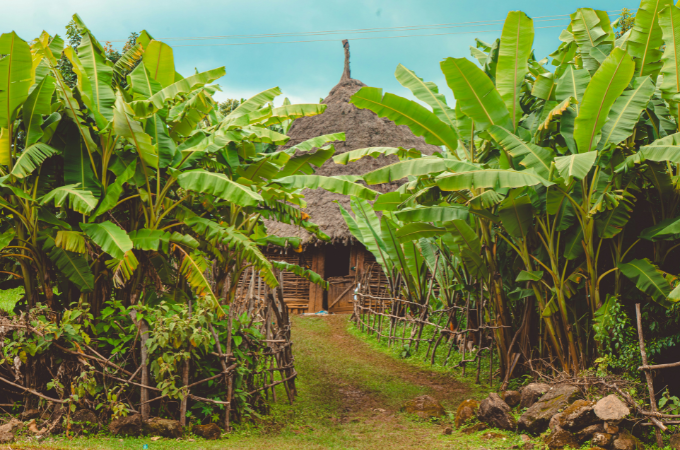
Photo by Bemnet Mesfin on Unsplash






COMMENTS -
Reader Interactions