
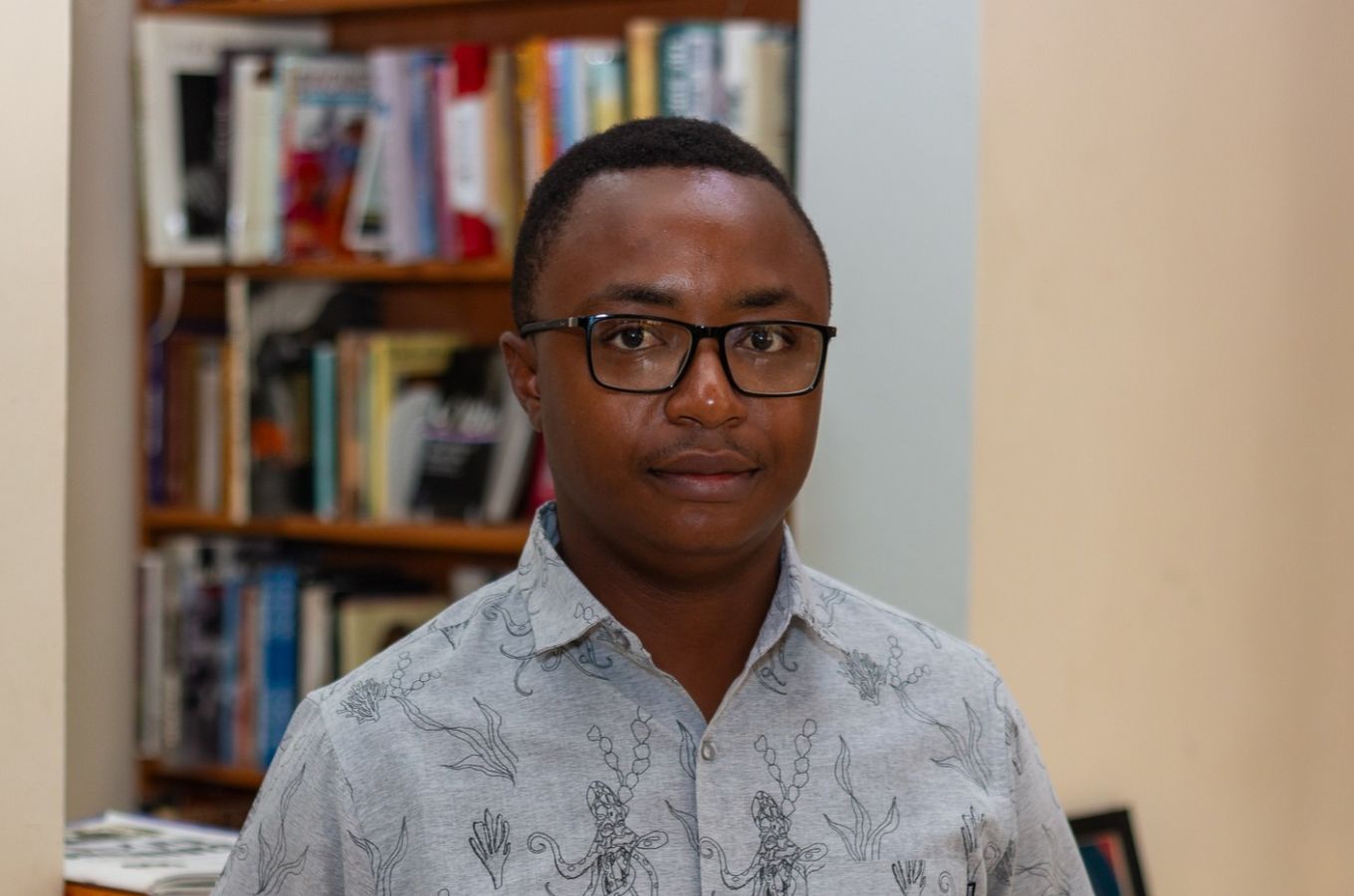
On October 6, Zimbabwean writer Simbarashe Steyn Kundizeza was announced as the 2026 winner of the Caine Prize for African Writing for his story “The Blue Fighter” published in The Shallow Tales Review. The Caine Prize is one of Africa’s most prestigious literary awards, an annual short story prize established in 2000 and currently administered by Africa ’95, a UK-registered charity, and overseen by a board of trustees chaired by Ellah Wakatama, OBE.
What followed was a dramatic five-week period that will likely become a memorable episode in the history of African literature and its relationship with digital technology. On October 11, Canadian-born novelist and journalist Vauhini Vara published an article in The Atlantic questioning whether Simbarashe had used AI to write his winning story. It ignited a wave of responses, including expressions of support for Simbarashe and criticism of the article’s journalistic standards. Some commentators also raised concerns about the particular scrutiny directed at writers from the Global South.
The Caine Prize initiated a review of the allegations on October 11. On October 13, Simbarashe issued a detailed public statement challenging the allegations. The Caine Prize’s investigation, as was later disclosed, involved examining drafts of the story, conducting a cyber-forensic analysis, and speaking with the author, his editor, and others involved in the story’s publication. On November 11, the Prize announced that its review had found no evidence that the story was written using generative AI and reaffirmed Simbarashe’s win.
On November 11, following the publication of the findings of the investigations, Brittle Paper spoke with Simbarashe over Zoom from his home in Harare. The interview was conducted by Editor-in-Chief Dr. Ainehi Edoro and Submissions Editor Tahzeeb Akram.
Our goal was to make space for Simbarashe to speak about his experience. Throughout the controversy and the intense public scrutiny, much of what readers knew about him and his writing was filtered through other people’s accounts. We wanted to give him the opportunity to tell his own story: what really happened? How did he experienced it? What has the ordeal meant for his relationship with writing and the literary community?
Note: The interview has been edited for clarity. Throughout the interview, we refer to Simbarashe as Simba, as we did during our conversation.
***
Brittle Paper
Simba, we saw the statement that the Caine Prize published this morning, and we’ll talk about that in a bit. But the goal of this conversation is to make space for you to talk about the ordeal, as well as your winning story “The Blue Fighter.
But let’s start with the joy of winning the prize. You received an email from the Caine Prize? And this comes weeks after all the attention from having been shortlisted.
Take us back to 6th October when you first found out that you won.
Simba
By the evening of the award ceremony, I sort of got the feeling that this was probably not going to be a win for me. My thinking was that they would have informed the winner of the prize beforehand maybe a day or two before. So, when it gets to the morning of, and then the afternoon of, and then the evening, and then there’s an hour left, you tell yourself, “oh, somebody else has won,” which is fine. I was just really happy to be on the shortlist.
I think there was a football match that evening, which I stayed up late watching. Everyone had gone to sleep, my wife and my kids. So, I’m basically alone in the house at that time. And I’d gone to bed with my phone, and then I’m just, you know, I’m on social media, and I check my email. I don’t know why. Maybe, force of habit. And then I see this email from Susi, and the subject is “Congratulations.” It was a pretty weird moment, reading the email. I wouldn’t say unexpected, but it was, in a way, unexpected. A very pleasant surprise. As you can imagine, I didn’t get much sleep that evening.
And then the next day, I did three interviews. It was a whirlwind, you know? I get the win, and then suddenly there’s all this attention, which, I think, from the outside looking in, you know what the Caine Prize is, you know how big it is, but you don’t really realize the level of scrutiny and attention that comes with it. It was a real crash course for me to just try and keep up with everything that was going on.
Brittle Paper
Do you remember who interviewed you?
Simba
I did three interviews with the BBC, with their different programs. BBC Newsday, the radio program. Then BBC Focus on Africa, we did two interviews, one for the podcast and one for TV. And there was another with France 24, and one with Monocle radio. These are the ones that I still remember.
Brittle Paper
You describe your experience so beautifully. And you are right. Sometimes we don’t quite grasp the level of attention that The Caine Prize brings. One day, you are going about your life as a writer, and the next you are in the spotlight and everyone wants to talk to you.
What did you think the next few weeks were going to be like? How did you envision that this prize was going to change your world as a writer? You already won The 2024 Island Prize for Debut African Fiction, which is a big prize. With this win, how did you see things unfolding in the following weeks?
Simba
In terms of expectations, I was very circumspect about the level of opportunity it could bring. You mentioned the manuscript prize that I won in 2024. I’m still trying to get that published. For me, it was a question of: is the attention from The Caine Prize going to help us move the manuscript? Are we going to get requests from people who want to read the manuscript? That’s something that I would have been discussing with my agent. Even if we didn’t win, we would’ve still moved ahead and discussed how to maximize the attention that being part of the prize brings. We hadn’t come up with anything concrete in terms of a strategy. It was more of let’s wait and see how things will unfold.
Brittle Paper
And then, The Atlantic piece was published the next week. How did you first learn about the article?
Simba
Actually, I was at my younger sister’s wedding. So, I get a call from my agent saying, “can you talk right now?” They explained that a journalist writing for The Atlantic had contacted my literary agent. She’s writing this article about how the story had been generated, written using AI. That was pretty much how I first learned about it on that Friday. And then afterwards–I think on the same day– the Caine Prize team also got in touch to say they had received communication from this journalist.
Brittle Paper
They had called to notify your agent and the Caine Prize that this article was being written and would be published?
Simba
Yes. In the initial communication, she had asked for an interview with me, and then she’d also requested a comment from the Caine Prize and my agency.
Brittle Paper
What happened after that call?
Simba
I was in the middle of a wedding. You know, African weddings are not just one-day events, they are ceremonies. I was actually planning on going on a road trip the next day with my sister to visit her in-laws. So it wasn’t really a good time. The Caine Prize team also wanted to meet to discuss the issue. Meanwhile, the journalist had initially said that they would publish the article on the following Tuesday, and I was notified on Friday. But then on the morning of the Sunday — or the evening of the Saturday, I’m not really sure because we’re in different time zones — she contacted the agency and the Caine Prize team to say that the article was actually going to come out on the Sunday. So she was requesting an interview within a few hour’s notice, which, of course, was impossible for me.
Brittle Paper
How did that make you feel? Hearing this.
Simba
Initially, of course, you think this is a misunderstanding. But then when the article came out, the tone of the article and the allegations made, it was immediately quite clear that this was really never about a discussion or about verifying anything. She had made her position quite clear. And so we basically, at that point, had to respond. But it was difficult to engage with someone who’s already made up their mind about something.
Brittle Paper
How do you think the journalist could have handled things differently?
Simba
Well, it’s difficult to say, because I’m not really sure about the motivations people have, but the way I see it, if you are going to do an article and you’re sincere about giving someone the right of reply, it has to start from a good faith position of hearing their side of the story and then trying to establish the truth. Because when you read the article, it’s very damning, but it’s also really weird because it’s putting circumstantial pieces of information together that don’t really match up. On the one hand, she’s relying on an AI detector that flags the story as AI-generated based on certain writing patterns. On the other, she criticizes the quality of the writing, arguing that it lacks the literary qualities or subtlety of my earlier work. And I’m not sure what we’re supposed to take from that, because a story can be cliché or sentimental without being AI generated. Equally, a writer can produce something that is considerably different in style from their previous works. Neither of those things are necessarily evidence of AI use. What it does make me wonder is whether she was approaching this with an open mind, or she’d already reached a conclusion and was looking for things to support it.
Brittle Paper
Without putting the burden of explanation on you or making you feel like you have to make sense of this journalist’s methods and procedure, there were clear issues with simple professionalism with the article. There were so many red flags. That article should never have been published as journalism, certainly not by a publication of The Atlantic’s caliber.
Simba
The information about the literary agency that represents me, and the specific agent from that agency that represents me, is available online on all of my social channels. But alongside that information, as well, is my contact number and my email address. If she had been really genuine about wanting to contact me, she would have done that, which she then did on the Monday after the article had been written to say, “oh, I didn’t realize I could have just emailed you about this directly.” I’m not going to speculate about the motive, but I felt like she was trying to isolate and discredit me initially with people who represent me, with the institution that awarded this prize, before even reaching out to me directly, if that makes sense. She also went and contacted the poet whose poem was at the beginning of the story to ask her about the story. All of this before she even contacted me. It was really weird. It was not like she couldn’t have found my information. It was right there next to the other information that she used for her article.
Brittle Paper
You said that she emailed you on Monday – the following day after her article was published? Why did she reach out after the fact? What did she want to communicate?
Simba
She emailed me on Monday, a day after the article came out, saying she was still interested in talking. I’m not really sure what the conversation was supposed to achieve at that point. Perhaps she thought I was going to confess! I just found it a little strange that she was reaching out directly after the fact. My agency did send out a statement to The Atlantic, but I haven’t had direct communication with her.
Brittle Paper
At what point did you realize how massive the controversy was?
Simba
I think I already had an idea how massive this could get, especially with the Commonwealth story that happened earlier in the year. So I knew the level of interest that this could potentially generate. Also, no slight to the Commonwealth Prize, but the Caine Prize is a much more established and a much bigger prize in terms of attention. So I think I was fairly aware of the potential fallout that this could generate. But I didn’t really expect to be on the BBC.
Brittle Paper
Accusations about AI use is new territory for the literary culture and industry. It used to be that somebody would accuse a writer of plagiarism. But that was never at this scale. With this technology, somebody can come up to a writer and say, “you did not write your work.” Something is different and strange about this new kind of accusation and a writer having to defend themselves against accusations that they, not a machine, wrote something. Can you reflect on what you think of this new kind of accusation that could be levelled against a creative?
Simba
I think accusing a writer of AI use is much more insidious and dangerous than plagiarism, although both are obviously serious accusations. I mean, with plagiarism, two writers can arrive at similar ideas or use similar expressions without one necessarily having copied the other. There’s a process of establishing whether it actually happened. But with AI accusations, it’s a different situation with a higher burden of proof. You’re using a piece of technology to say, this is AI generated. And arguing against that declaration is seen as going against the science. It is a very, very difficult argument to go up against because people say this is technology, it’s neutral and unbiased, and it doesn’t lie. How do you counter a supposedly scientifically proven position that you didn’t write this story? So you are left having to show receipts. Have you got a documented process of how you developed the story, how you wrote the story, when you wrote the story? And if you don’t have that, then does it automatically mean that you lose this argument? That’s one of the things that I think is really scary about this, because for some people, AI detection is enough. There’s really nothing else that can disprove it.
Brittle Paper
What was the conversation with the Caine Prize investigative team like? Take us through that experience. What kinds of things did they ask you to bring? According to the recent Caine Prize statement exonerating you, there was a cyber forensic element to this.
Simba
I don’t have a full view of the actual process that they undertook. I can only speak to the process as I encountered it, and other people that they did speak to. One of the other people that they did speak to was Nzube Nlebedim of Shallow Tales Review. I think most of the discussions focused on their submission process. As in, when was the story submitted? Were there any edits that Nzube did as the editor? And for me, they were basically trying to get a sense of the developmental history, like the inspiration for the story. How did I write the story? Do I have handwritten drafts? Which I didn’t.
What I did share with them were drafts of the story that I shared with people when I was writing the story. One of the people that I did engage with about the story was the poet, vangile gantsho whose poem is at the beginning of the story, and she had sent me this document with edits and suggested comments. That was one of the things that I was very fortunate with, that we had those timestamped documents, so that The Caine Prize could examine the metadata, look at the documents, and view the editing time.
As I mentioned before, the story is based on the poem, but it also has elements of my own personal experiences in it. So they wanted to understand what those personal experiences were and how they informed the story, and how they shaped the story.
Brittle Paper
So you had to send timestamped documents of the writing process.
Simba
Yes, thankfully, the ones that I did have – because it’s not something you ever think about when writing. You never think, “I need to preserve this. I need to save this initial draft because maybe I might need to prove authorship.” But like I said, I was fortunate that I had shared earlier drafts of the story with people. Those documents, the emails, and the WhatsApp messages where I communicated with people during the process of shaping the story were all timestamped. Those were some of the things that we did share with the Caine Prize team.
Brittle Paper
This is really fascinating to consider. Do you see this changing the way that writers work? Writers have never had to imagine that their work would become “the scene of a crime.” And that experts would be running forensics and looking at timestamps and metadata. How do you see this changing the drafting experience, or even just the process of creating new work?
Simba
I can’t speak for other writers, but for me, it’s changed everything. You have to think about what sort of programs to use that will leave detailed breadcrumbs to show the development of the story. I’ve always written my work on Word, maybe even on the same Word document, just coming back whenever I needed to edit or continue writing. But now you need to think, do I use Google Docs as opposed to Word? Since it has a better way of keeping history. Do I need to use track changes when I’m writing on Word? When I’m editing? Do I need to email copies of the work to myself, to other people, on a weekly, maybe a daily basis? It’s a really paranoid way of thinking about your writing. But this is the climate and the environment that we’re now operating in. You try to document as best as you can. I want to say it’s an un-ideal situation, but it is what it is.
Brittle Paper
Your use of the term, “paranoid way of thinking”’ is striking. Creative work is somewhat becoming a space of paranoia, where writers feel compelled to leave behind evidence of their process without knowing who might demand to see it.
On a different note, did you feel supported by the Caine Prize?
Simba
Yes. Up to a point. Initially, they were very reassuring in terms of contacting me and outlining and explaining what the process was going to be. They explained that their process was going to be a human-centered approach. And that was great. It really put me at ease because I had a level of confidence that I would be able to produce and explain some of the things that they needed to understand as part of their review process. But obviously, there’s this distance that comes in out of necessity because they are, at the end of the day, investigating you. You are a suspect until you’ve been cleared. So it does put this distance between you, because obviously they need to think in terms of preserving the reputation and integrity of the prize. But, you know, for me, it’s much more than that. It was very, very personal. It’s my livelihood – my career on the line.
Brittle Paper
And your team?
Simba
I was immensely supported by my agent, Adrianne Ingram, and the CEO of the agency, Regina Brooks. There was a time when we were in constant communication, talking about what we could do. They were very helpful. I don’t like to think about what the process would have been like for me if I hadn’t had that guidance. Regina is well versed in these issues, so she was really able to guide and advise on what to say, what to do. There was a time when I was getting, I think, five or six interview requests a day. She was the one who said, we’re not going to go on the defensive. We’re just going to wait and see this process out. I definitely felt supported. I don’t have any hard feelings towards anyone from the Caine Prize. I understand the process and why it was necessary.
Brittle Paper
The African literary community took a stand, even though there were some people within the community who maybe had differing opinions. What do you think of the way the community responded to the situation?
Simba
I think overwhelmingly, it was positive. I did really feel supported, and I felt like people had my back. It was great to see, and humbling as well, to see people, writers, big writers, people that I’ve looked up to, coming out and saying they’re in my corner, and calling out The Atlantic and the journalist. And not just that, but also drawing attention to the broader trend of writers of color being subjected to this kind of thing. I think this was the straw that broke the camel’s back. People had been building up frustration and had enough of it. It did feel like we’d been here before, and this was just a continuation of that trend.
And as for the differing viewpoints, I think this is one of the things that is really fascinating. I would say there are entrenched views on either side. There are people who say this is the most AI story they’ve ever read, which is very interesting. And then there are people who don’t agree with that viewpoint. There’s very little in the middle, so it’s a weird situation. But overall, I would say the African literary community, as you said, came together, and I was glad for that support. You can deny all you want, but you really do need people to stand up for you, to be your voice.
Brittle Paper
Are there particular people whose support you are thankful for?
Simba
A lot of people. I don’t want to mention names in case I leave anyone out, but I will say there are obviously a few that were vocal from the get-go. Troy Onyango being one. I felt humbled seeing Troy standing so firmly on my side. Ellah Wakatama, Sue Nyathi, Joe Ruzvidzo, Tolu Daniel and Petina Gappah as well. Elnathan John, even though I don’t necessarily agree with everything he’s said. I think some of the criticism of the Caine Prize was too harsh, but I appreciated him and others speaking up and engaging with the situation. It’s important to understand that people can disagree on certain things and still be supportive of you.
A lot of Zimbabweans came out and were very, very vocal. To the point that The Atlantic had to redo the post for the link to the article, I think, because the initial post had gotten so many negative comments. There’s a very prominent lawyer in Zimbabwe, her name is Fadzayi Mahere. She galvanized and mobilized people. It was weird seeing people rallying on Twitter/X to support you. There were a lot of other people who messaged me directly to say, “you don’t need to worry about this. It will blow over.” And obviously, Nzube, the editor of the Shallow Tales Review. He’s been a rock during this time, a great support and a great friend.
Brittle Paper
That’s wonderful to hear. Moments like these show our presence and strength as a community and show the world that they can’t just treat our own however they please.
Thinking of your reference to Nzube, it had to have been a surreal experience for him. As an editor, one of the greatest honors is having a story that you published win The Caine Prize. So for him to have that, and then two seconds later, there are allegations brewing, it must have been difficult. Can you reflect on what that interaction has meant for you? Having your story published in Shallow Tales Review, and then having to deal with this together?
Simba
I would say that Nzube has been a champion for this story, right from the beginning. He was actually with us, myself and vangile, at the LOATAD cohort in Accra where we first encountered the poem. So obviously, it was an easy decision for me to submit to the Shallow Tales. Nzube was already familiar with the poem. He’s been a fantastic champion for the story. He loved it from the beginning. They submitted it to the Caine Prize when I personally wouldn’t have. I didn’t believe it would be the kind of story that could go on and win. And as you said, it’s been a shame as well to see Shallow Tales get dragged into this, considering the work that they do, giving a platform to African writers.
Brittle Paper
And for the judges as well, because they also got dragged into this. We saw this with the Commonwealth Prize too. It’s one of those things that really seeps in and tries to sully everybody involved in the prize.
Simba
To be quite honest, there’s also the other shortlisted writers. If I was in their position, I think I would feel a certain kind of way, you know. It’s unfortunate, really, this whole episode. It has been one unfortunate thing. If there are any positives to take away from this, it is that you kind of now know what the game and the blueprint is. It is important, not just for the Caine Prize, but for other prizes, other journals, publishers, and editors too, to know that this sort of thing could happen at some point and to be prepared for what to do.
Brittle Paper
Tahzeeb, I know you’re particularly interested in “The Blue Fighter.” Did you want to ask Simba a few questions about the story?
[Tahzeeb Akram takes over the interview.]
Brittle Paper
Thank you, Ainehi, and thank you, Simba, for letting Brittle Paper sit down with you.
No one really had time to just enjoy the story after your win, because the allegations came out soon after the announcement. So, now that the investigation is through and the Caine Prize has confirmed that you will remain the winner, we can now actually enjoy “The Blue Fighter” for what it is: a brilliantly told story.
You said earlier that it is a personal story. How long after reading vangile’s poem did you decide to write the story?
Simba
How long after? I think, immediately. It was immediate for me. One of the things that was so interesting about it is, I’m not really a big poetry person. Being in a cohort with a poet — not just any poet, but one of the best, in my opinion — she has this huge range of work to inspire. And what was fascinating about this particular poem is that this was one of the first poems that I really got. During the critique session of the cohort, I said how this almost reads to me like the beginning of a short story or a novel. In the same way that Tsitsi Dangarembga’s Nervous Conditions begins: “I was not sorry when my brother died.” It just gives you everything at the beginning of the story. This is kind of that same thing. You get almost the entire story structure, right there, in those lines. You understand immediately the father’s obsession or hobby, and the effect it is having on his wife and child. So it was really more of an immediate reaction. I saw a short story in the poem. And then I asked vangile if she was planning to write a story based on it, and when she said no, I asked if I could.
Brittle Paper
You said that to her before you even started writing it?
Simba
Yes, at that point, I was actually worried that there would be a scramble over who got to write a story about it. So I just put my hand up first and asked. It was that good. It was that captivating.
Brittle Paper
And we’re so thankful you did!
Near the end of the story, the father says: “‘The Blue Fighter. Good choice.” He glanced at me. “They’re resilient. Can survive in almost any condition.’”
While we wish you did not have to endure the allegations, it is almost funny how ironic it is to conjure up claims about this particular story. A story of resilience and adapting to increasingly difficult environments.
A reader is responsible for how they take on a story, but how would you wish people to interpreted it?
Simba
I think people interpret the story in different ways. And so one of the interesting things has been peopel saying that they saw themselves or a family member in it, or how it reminded them of a certain family member who had this obsession, this hobby. Someone said it reminded them of a family member who was into beekeeping. Someone else said the family member was into video games. It’s not just that the experiences are different for everyone, but that you can kind of pick something you can relate to. And then when you talk to people from Zimbabwe, they recognize the time of the story, the timing, the setting of the story, the introduction of bearer cheques, the beginning of hyperinflation, and how that affected different families in different ways. I hope people can interpret and see themselves and their families, because this is a story about my family, told through a made-up hobby of building fish tanks.
Brittle Paper
In The Atlantic article, the comment was made that the story was “full of tired tropes.” But Wakatama defended the story, arguing that it was realistic to everyday experiences. What do you say to “critics” who think African stories need to always fit a certain mould?
Simba
The whole conversation about tropes is a bit weird to me. Is it a trope when American authors write about veterans’ issues? Because that’s a familiar story in American literature. Or when British writers bring up working-class poverty? But you can tell it in different ways, in different settings. And yet, when African writers explore familiar experiences, there’s a tendency to dismiss those as tired tropes.
I don’t know if anyone has done this before, has told a story using the motif of fish and fish tanks as being representative of a family. If that is a trope, then I won’t argue against that. But is a trope necessarily, in and of itself, a bad thing in literature? Because stories can be familiar. You can recognize a familiar story, but it’s been told in a different way. And with African tropes, I don’t really know if all African stories are that similar as some critics seem to suggest. It’s really not my area of expertise. But my response to that is, at the end of the day, either you enjoy the story or you don’t. And that’s okay. It’s okay to not like a story, for whatever reason.
[Dr. Edoro takes over the interview.]
Brittle Paper
The Caine Prize released their statement today, bringing everything to a close, hopefully. Has the statement given you the closure that you needed?
Simba
I think yes and no. Yes, in the sense that, for The Caine Prize, this phase of the story is now over. We can now move on to the next phase, which is the awarding ceremony. No, in the sense that, as I said before, there are very entrenched views on this. I don’t think the statement is, in itself, going to be sufficient for people who do believe that the story was written by AI. I’ve come to a sort of acceptance of that. Not everyone is going to be satisfied. Not everyone is going to be convinced. I don’t know exactly what it would take. Probably nothing at this point is enough to turn people’s opinions, which is okay. Frankly, the only opinion that I care about is the judges’ opinion at this point. And as the statement notes, they did go to the judges again to get their views on the story in light of the accusations. With that being said, with the confirmation of the win, I think I’m going to have to be content with that, and find solace.
Brittle Paper
You’ve spoken about how much attention has been given to AI detection. Do you feel that the story itself has been lost in all of this?
Simba
I think there’s a different conversation to be had between people who read the story and people who take the story and feed it to an AI detector and wait for a score. I’m not sure that the majority of the people who support that position have actually taken the time to read the story, which is unfortunate, because then I cannot take you through certain aspects of the story and try to explain to you as best I can how I came to write this specific detail. As I said, it’s okay to not like the story, but to question the authorship, that’s a different conversation to have. There’s facts, and there’s alternative facts. That’s the kind of world that we live in. People will hold on fast to whatever information or facts make more sense to them. And to some people, if an AI detector says this was AI, that is the thing that makes the most sense. Short of a video of you writing the story, I really don’t think there’s anything that I can provide to prove it. So it would be great for naysayers to change their minds, but I think realistically, it’s unlikely.
Brittle Paper
After everything, what does returning to writing look like for you?
Simba
It means working on my novel manuscript. I really do believe in this novel titled Freelance and the story that I’m trying to tell in it. Getting a publisher, getting it out, that’s my major goal right now.
Brittle Paper
We are in a time where technology is being used to devalue creativity. What would you say to writers starting out on the writing journey — to reaffirm their belief in the power of creativity, in the power of expression, and in the power of writing?
Simba
It’s funny, one of the things that the detractors have been saying is, ‘this is the most AI story I’ve ever read,’ or ‘this is a classic piece of AI writing.’ So people have started identifying certain things in writing and saying, this is typical AI. But what I would say is that AI is not creative in the way that human beings are. It mimics human writing. That’s basically what it does. You can talk about the different models and their strengths and how advanced they are, but at the end of the day, they’ve been trained on human writing, and they try to replicate that writing. And I think that tells you something about where creativity actually comes from.
For anyone who’s trying to get started in writing, I would say, the thing that should matter, first and foremost, is that you have a story to tell. Tell the story with all of your ability. With honesty, with authenticity. These are the things that AI cannot do. This is one of the things that gave me confidence throughout this experience, because I was writing a story about my childhood, about my country, about my experiences. It was easy for people to say, “but we recognize these things that he’s writing about. We’ve lived through the same things ourselves. It doesn’t make sense to tell us that AI can write these sorts of experiences with such honesty and heart.”
So, write your story. At the end of the day, in spite of attempts to discredit human creativity and say that AI can do it better, faster, and cheaper, write your story and prove it wrong, as best as you can. Don’t let the existence of this technology make you question the value of your creativity.
Brittle Paper
Beautiful, beautiful! Simba, thank you so much for taking the time to chat with us. And Congratulations on your Caine Prize win! We can’t wait to see you continue to soar in your writing journey.
Simba
Thank you.


COMMENTS -
Reader Interactions