

A sodden film coats the windshield, forming unsettling grimaces that morph from frowns to grins beneath the wiper’s slow sweep. The headlights stretch forward into an openness that runs beside the highway, illuminating vast, lush fields. Inside, the car’s heater emits a warmth that combats the chill, blending with the earthy, dreamy scent of wild fig trees. I sit in the passenger seat, instinctively winding an engagement ring around my finger, watching how the gold catches the light and how the paler, ghostly spots of flesh on my knuckles dance against the brightness of the dashboard.
My fiancé slouches across from me, adjusting the lumbar support on his seat. He then looks at me in the rearview mirror and gently asks, “Is everything okay, Mpenzi?” His voice is gentle on the Swahili term for “my love.”
“Yes. I’m fine,” my throat tightens as the words leave me. My fingers fiddle with the seatbelt, the clasp feeling warm on my palm. “I’m just… a little nervous, that’s all.”
He doesn’t look at me, his gaze remaining fixed on the road, but I notice his grip tighten on the steering wheel. “A little nervous, aren’t you?” His voice is gentle and coaxing. Finally looking at me, he says, “You know you can talk to me, right?”
“I know.” When I meet his gaze, my body winces a little. “It’s just that we’ve never done this before. It feels… big.”
He takes my hand in his, reassuringly. “You don’t need to be nervous, okay?”
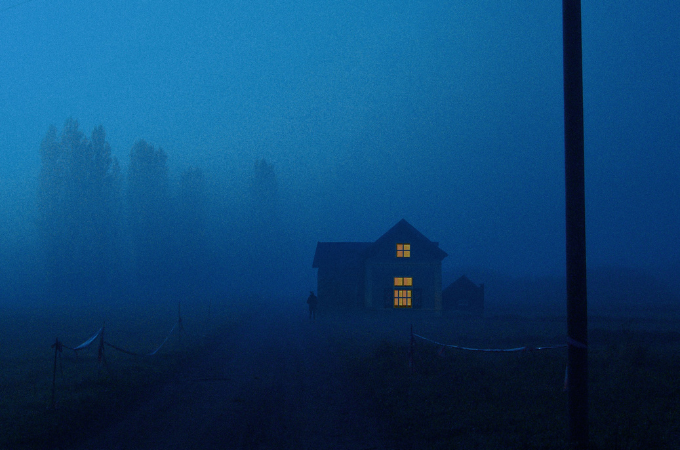
I discreetly turn towards the window. My mind wanders in a trance, following the rows of sisal farms that pass by, tidy and regimented like soldiers on parade. The small strip of highway stretches behind us. We’re driving to his parents’ farm estate. The farmhouse becomes visible ahead. A dilapidated red and white structure with peeling paint and windows that resemble sagging eyes. The wind kicks up and rustles withered bougainvillaea leaves across the gravel road, tires crunching as we pull close. Moonlight washes over the borders of the house, a solitary stone and steel rectangle. Inside the car, I look straight ahead anxiously, my fingers teasing and toying with the hem of my dress.
Mwakideu steps out first, still high from the trip. He circles the car and opens my door. I do not move immediately. When I do, it is slow, controlled, graceful. The door closes softly behind me. He smirks. “Tell me that wasn’t the smoothest ride of your life.” With a courteous nod, I walk past him, and we make our way toward the house.
Before we get to the front door, it opens to reveal an elderly, broad-shouldered but stooped man tapping his cane in a slow, methodical pattern ahead of him. His unusually acute eyes shudder at the sight of me. “You must be her,” he adds, his voice cold. His gaze lingers.
Mwakideu steps in, declaring, “Yes, she’s the one.” He then faces me to make the introductions. “This is my father. Dad, meet Chausiku.”
His father doesn’t smile. He only gives a curt nod before turning away, leaving the door open behind him as if to show the way. The inside of the house smells like wood polish and stale air. Dark wooden flooring squeaks. The walls are covered in photos of people I can’t place, with the exception of a youthful Mwakideu standing with his parents, all three wearing stoic expressions.
We walk along a narrow hallway into the dining room. The table is set for four. Mashed potatoes, coconut rice, and fried chicken with stew. In the center, a ceramic vase holds white and purple bougainvillaea flowers. His mother sits at the far end of the table. She is tall, with prominent cheekbones and a boisterous demeanor. Her gaze falls on mine, studying me curiously, as if she were a scientist peering through glass at a strange specimen.
“Ah, finally,” she says, her gaze steady. “You have such… striking features.” A smile that barely reaches her eyes follows, “Welcome to our humble home.”
“Thank you,” I murmur timidly.
We all sit. Dinner begins gently, marked by the subtle clink of cutlery and the creak of chairs. My throat thickens with saliva, and I can’t seem to swallow, so I go for a glass of water. I observe my reflection in the mirror across the dining table and notice warped eyes replacing mine, as well as bending lips and a misaligned nose. As I squint and stare at that display, I’m reminded of the lighter skin patches on my face, which form their own map. Mwakideu’s unheeding hand grabs my shoulder, startling me. “You should serve another piece of chicken, Chausiku.”
I force a smile and grab the dish. Grease clings to my fingers as I lift another piece, warm and slippery. Mwakideu begins talking about the farm. Its age, history, and the fact that nothing has changed since his infancy, if not longer.
The father clears his throat. “It is silent. Always has been.”
“Yes,” I say quietly, the word catching on my breath. “Very quiet.”
His mother lifts her spoon, then lowers it before tasting anything. “So Chausiku,” she asks softly, “you and my son met… where exactly?”
“We met through a mutual friend,” I say. “He visited my art gallery during one of my showings.”
“Oh, really?” she says with a faint smile. “I always imagined he’d meet someone at church or work.” Her voice is sugary and pleasant, but the sweetness ends at the edge of her tongue.
Mwakideu clears his throat. “She was the most interesting and beautiful person in the room.”
The father scoffs under his breath.
“And what do you show at this art gallery?” she asks, carefully slicing up a piece of chicken.
“I am an art curator. I paint as well. Mostly portraits and flowers. Sometimes animals.”
“Oh,” she replies. “So… creative.” Her smile hovers, never landing. “You don’t find that kind of work… uncertain?”
“It’s not always predictable,” I say. “But it fulfils me.”
She folds her napkin with slow precision. “And you live alone?”
“I do.”
“Mm. An independent lady,” she says to no one in particular. “These days, women must learn how to stand alone, I suppose.” Something in her voice suggests that the balance has tipped too far.
His father speaks up. “Have you always lived in Nairobi?”
“I was born and raised in Lamu,” I explain. “By the ocean.”
“Ah,” his mother says, her spoon hesitating mid-air. “That explains the skin.”
I blink. “Excuse me?”
She makes a vague gesture, her eyes fixed on her plate. “I just meant… the sun must be unforgiving out there.”
Mwakideu tenses alongside me. “Mum, please.”
“I’m only speaking my mind,” she says. “When I first saw you, I thought, well. I was unsure…” She blurts, rushing the words out, “Maybe she is an albino.” Her glance snaps to me. “But you’ve… always looked this way?”
I take a sip of water, and it feels like drinking shards of glass.
“I’m not an albino; I have vitiligo. And no, the patches began when I was fifteen. They spread slowly.”
She tilts her head, “Do they itch?”
“Not at all.”
“Ah. So, they’re not painful. Just… visual?”
Mwakideu places his spoon down with a loud clatter. “Can we not do this right now, mother?”
“I’m only asking,” she admits, wounded. “A mother is allowed to be curious.”
I nod slowly, keeping my hands folded. “Yes. They’re just visual.”
“I see,” she leans back.
His father shifts in his seat, mutters something about the weather. Moments later, his mother pours herself some coffee. The cup cracks, and the liquid slowly leaks into a spider web fracture that extends around the saucer’s base. She does not notice.
She sips it, continuing. “Obviously, we’re not shallow people. We do not worry about appearances. Not really. People out there are small-minded. It is unfortunate.”
“Mum, you—” Mwakideu starts again, but I stop him with a gentle press of my hand under the table.
I smile at her. It’s the type of smile I’ve learned to curate. Unthreatening, humble, and welcoming. “I’m used to it.”
“Well, that’s admirable,” she sighs. “A woman like you must be… resilient.”
The coconut rice gets chilly before I can eat it. It’s an acquired taste, I believe. Conversations sink and soar in uneven waves. I try to think of questions about the house’s design and his childhood, but each sentence I construct falls flat. Mwakideu glances at me as he eats, and I feel exposed. After a dessert of dry mangoes in coconut cream, Mwakideu invites me outside.
We walk side by side, holding hands, towards an old livestock pen at the edge of the compound. Inside, there are tools, bundles of Napier grass, and rusting machinery. The air smells like oil, manure, and dried grass. Light leaks through the striped and gilded wood slats. He takes out his phone to present a photo to me. Him as a youngster, standing on the pen’s threshold, with his mother by his side and his father behind the camera. He’s beaming, wide-eyed. I trace the boy’s cheek in the photograph with my fingertip.
“This was me,” he says.
“You had such a lovely smile. Still do.”
He doesn’t answer. I look up, and he’s no longer beside me. He’s standing at a distance, beneath the dark rafters, peering at something I don’t see. My head throbs slightly. The familiar fragrance of oil and manure fades, replaced by something ancient and dry. The world around me blurs, boundaries soften, and colours intensify. The air becomes lighter. The Napier grass is gone. The rust and manure odour subsided. It smells different now. Of old papers and dust. A thin drape breaks the silence, and I find myself seated on the edge of a four-by-six bed. The walls of the chamber close in slowly, decorated with certificates and awards, their ends curling like withered leaves. On the desk are pages and pages of feverishly written notes.
When I glance in the mirror across the room, I see a boy watching me rather than my reflection. Ten, perhaps. Hair trimmed short. Eyes unreadable. He wears a white t-shirt and sits cross-legged on the bed with a notebook on his lap. He lifts his head slightly, as if he had been waiting. This is the boy from the photograph, Mwakideu’s younger self. “Good morning,” he says with a bland voice.
“I… I slept here?”
He smiles. “No. This is my room.”
I strain to pull the sheets away from me. The fragrance of musty wood, something deeply familiar, pervades the space. “I don’t remember how I got here.”
“I forget things too, sometimes,” he admits. He touches the notebook and says, “That’s why I write so much here.”
I open the notebook on the desk. Mwakideu’s handwriting sprawls across the page, with the same exquisite loops and tight spacing that I’ve seen before. I browse through pages and pages of thoughts and confessions. I notice a line halfway down a page. The great, blazing sun can never take away the moon’s calm enchantment. Mum and Dad will eventually notice her particular light, even if they are used to finding shapes in the dark.
Before I can continue reading, he stands to close the journal with a solid thud. “It’s rude to read people’s diaries, you know?” he mutters and walks away.
I glance up at him. His ears are flushed pink. My throat tightens. I follow him to the window. Outside are long grasses, black trees. We stand together, but I feel alone. He turns to me, his young eyes surprisingly serious. “Sometimes, the fastest way out is through, Chausiku. You have to face it all.” He gestures vaguely, and the windowpane shimmers, distorting the world outside.
I wander the house’s corridors. Some rooms are unfamiliar; others feel like I’ve seen them before. In the kitchen, I see my reflection in the refrigerator’s dented door. My reflection shimmers and a creeping dread blooms in my chest. A pale, almost translucent patch blossoms on my cheek, spreading. My eyes, wide with terror, watch as the pigment drains, leaving stark white islands against my skin. My face flushes. I sprint through the rooms. The doors open into empty closets, into vast spaces that curl inward.
I reach a hallway lined with mirrors. I pass one mirror after another—my reflection, his younger reflection, his older reflection, and no reflection, with shadows dancing over all. There is a door at the end of the hallway. It vibrates quietly. I open it. The inside is lit with a soothing blue light. The roof slopes downward, and furniture hangs upside-down from above. Gravity doesn’t apply here. I climb a steep stairway, each one made of glass. The thickness varies; it can be translucent or hazy. I hesitate but continue upward. Mwakideu appears in the landing above me, his form appearing more defined, like the adult I know. Despite the fact that there is no rain, he is wearing a raincoat. His breath emerges in apparent puffs.
“Where are we?” I ask.
He hesitates, his eyes flickering with a hint of pain. “In your subconscious, Mpenzi. A part of mine, it seems. A place where our darkest fears and anxieties come together. We should return,” he says, his voice anxious.
“No,” Fear climbs my throat.
The glass staircase begins to shudder. He reaches for me, his hand outstretched.
“Come on, Chausiku. We can face this, but not here. Not like this.”
I resist. The fragments are calling me. “Are you thinking of ending things?” I whisper. My voice can be heard everywhere, but also far away. “What? Of course not, Mpenzi. We are the overlapping portions in a Venn diagram. This is just… our shared anxieties trying to find a way out, to make sense of what feels overwhelming.” He steps closer, his gaze steady, a familiar strength in his eyes, “But we have to pull ourselves back, together.”
I look down, and our reflections shatter into bits. I close my eyes and feel someone behind me. I wake up, but I’m not sure whether I was sleeping. I’m back in the pen, at the threshold. The youngster from the snapshot is now standing there, living and breathing. He looks at me with reassuring eyes.
The pen floor cracks beneath him. Dust drifts in beams of pale moonlight streaming through the gaps. I step inside. Dry Napier crunches beneath my feet. He doesn’t move. I spin in darkness, and we are back at the dining room table. His parents sit opposite us.
His mother cuts through the silence, “You look tired. You should get some rest.”
I exchange eyes with Mwakideu. He looks exhausted as well.
Photo by withdarkshades on Unsplash


COMMENTS -
Reader Interactions