

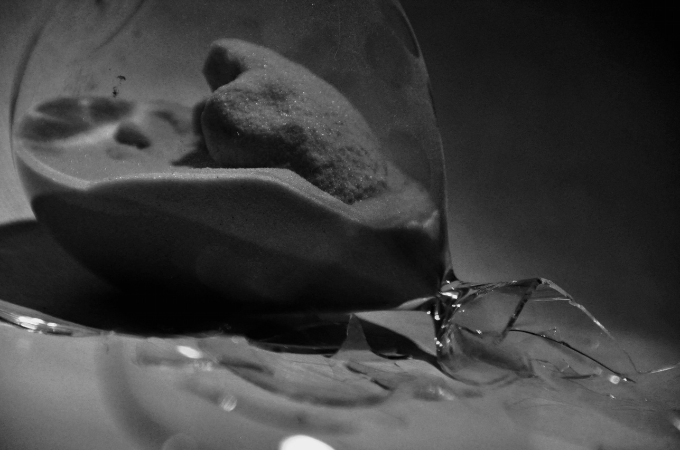
The poem opens with the projection of memories as “specters” of moments — of life — “lost in time.” Here, specters conjure a threatening mental image, an unpleasant prospect, a blemish on the possibilities of life. Memories, to the poet, are not gentle recollections but scars: burning, tormenting, and leaving indelible marks on the heart.
This country, the poet suggests, has undoubtedly etched many unspoken memories into his mind: of dreams rendered fleeting and unachievable; a father weakened by the toils and hullabaloos of survival; a mother sinking into the depths of sorrow, perhaps under the weight of hardship and misfortune. All these, he laments, are products of a failed system — “thanks to the airplane of this country.”
In the second stanza, sorrow appears again, this time as a draining weight — pain strong enough to kill, yet he insists that the sorrow of loved ones can be even more overwhelming. His lament culminates in a prayer: “May this country never happen to you.” That prayer translates as: may calamities and upheavals never strike you.
See how grief, in its persistence, changes a person. A “series of griefs” can harden the heart, turning it to stone, numbing one into forgetfulness. As the saying goes, when one gets used to pain, it becomes an integral part of the body.
Every hope is a rose, but roses bloom and wither — prosperity and loss walk hand in hand. Still, through his declarative tone, he counsels: “I do not wish to self-immolate.” He does not wish to kill himself. Not surrendering to despair. He is determined, strong-willed. Such is life.
To lighten the burden of these “specters of memories,” the poet seeks the art of sifting: a careful filtering through the debris of pain to recover purpose, to salvage the self. It is an abstract but necessary process — separating what must be carried forward from what must be let go.
The wounds the country inflicts are relentless. Escaping them is already difficult, and even when one tries to heal, another gash arrives, sudden and searing, like sunlight breaking through a chink. But the poet does not end in despair. He is wise, altruistic. He offers a solution: “if sifting fails, I will learn the art of s(h)ifting.” To shift is to change form, character, or position; to leave and live elsewhere; to move on in order to survive.
This country, he reminds us, is unfair to its people. It burns our hopes into cinders. It drives us into exile, scattering us into other spaces in search of a single good breath of life.
Photo by Lieselot. Dalle on Unsplash




COMMENTS -
Reader Interactions