

At first, nobody believed Nomzamo when she told them that fingers were sprouting from the soil. “Her mind’s not what it used to be,” one of the townspeople said, “Not since Katlego’s passing.”
The pointer finger and thumb were dark brown, blending in so smoothly with the soil clutching her potatoes that she would not have noticed them had they not floated to the surface of the water when she was washing her paltry harvest. She was too shocked to scream, so she did the next best thing: tell everyone, as any distressed but sensible woman living in a small town would do. And, in response, her small town did what all small towns do: attribute her “discovery” to her old age, jealousy over other people’s seasonal yields, sadness over the fact she’d recently broken her guitar and was too poor to get it fixed, and/or, of course, distress over her husband’s death. Naturally, Nomzamo suffered from all of the above, but she was also right.
“I also found a body part in my garden, where I grow my cabbage. It was a toe,” said Rosina. She looked ashen. “I-I think I might be seeing things.” She breathed a laugh at the irony of her words, looking no less shaken. “But the toe seemed to have my Lebo’s birthmark.” It was Tuesday, the day Nkateko, Nomzamo and Rosina gathered around Nomzamo’s kitchen table to chat, and the day after Nomzamo discovered the fingers. Normally, the women would be making a ruckus. Their discussions regarding Mma Phetoane’s inability to hide her onderrok properly, Ntate Chauke’s terrible spinach (they’d recently stopped ridiculing his spinach though, since Nomzamo’s was much worse) and the young girls in the community’s problematic affinity for shiny red lip gloss would be peppered with hearty laughs and haowa’s! that could be heard on the other side of the street.
But today, none of the women were in a jovial mood. Nkateko shook her head and sighed heavily. Her hand quivered as she lifted a cup of rooibos to her lips, spilling some of its contents on the saucer she held in her other (no less unsteady) hand. She drank it with milk – much to Rosina’s chagrin – and sugar – much to Dr Rossouw’s, the “expert in type 2 diabetes,” dismay. For the first time in more than fifty years of friendship, the three women sitting around Nomzamo’s kitchen table could not think of anything to say to each other. They sipped their teas in silence until Nomzamo bade each woman farewell.
Later that night, Nomzamo remembered Rosina’s son, Lebogang, who died when he was about six. He was a rambunctious boy who played in the red sand in his mother’s yard from dawn until dusk. For as long Lebo was alive, every child in the neighbourhood found their way to Rosina’s house after school and on the weekends, clouding her yard with red and giggles and tyre tracks of wire cars. Tyre tracks. Remembering Lebogang meant remembering Katlego, who used to fashion wire cars for the young boy.
He’d sit on a rickety wooden chair next to the door leading to the kitchen and meticulously bend the wires he got from work in order to make a boot and a roof and four doors (that could all open!). He liked to make the toys immediately after work because his fingers were still oily from working on real cars, and according to him, the oiliness made it easier to reshape the wires. By the time he was done, there would be a miniature luxury car in their garage, ready to be delivered to a child who had proven that they did well in school. When he was done, he’d walk into the kitchen and try to place his dirty hands on her clean skirt. Nomzamo would slap the hands off her body (almost always too late) and instruct him to wash them outside with a green bar of soap.
Remembering Katlego’s wire cars meant remembering how he used to smile when he came back from work – a crooked thing, his smile, all uneven teeth. It was also so cheeky, an ever-present reminder of his child-like playfulness. Remembering his smile meant remembering how he’d kiss her so gently and then so passionately and–
The first tear ran down her cheek.
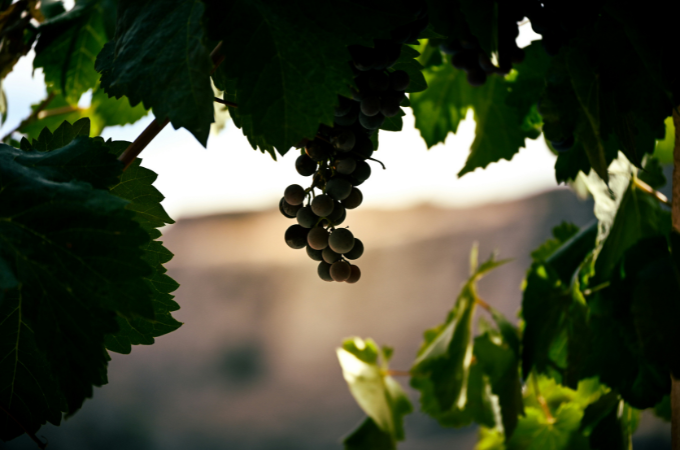
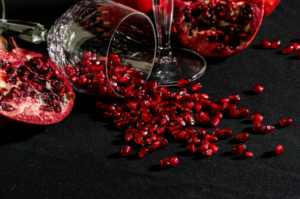
–so thoroughly that she forgot both her name and how to put on clothes, at least for a little while. And remembering that made her remember how proud he looked while gathering their farm’s annual grapes for Nomzamo (“I’ll keep growing sweet grapes in the North West for the diamond I found in Mpumalanga”). She’d only eaten a grape once before meeting Katlego, and it was in the form of a raisin wedged in a scone. The man decided to create a greenhouse to create the perfect conditions to grow grapes that didn’t taste like lemons after hearing how much she’d enjoyed that singular raisin. He grew grapes for her every year after that, without fail.
Remembering all the decades spent together made her remember that he had not been with her for two years, and that he would never come back, although the last thing he told her was “I’ll see you soon.” Remembering meant screaming until her throat was sore, her eyes swollen and itchy from a night spent crying instead of sleeping.
“His passing has been really hard on her,” one of her neighbours reminded the townspeople. “We shouldn’t be too hard on her for having these delusions. It’s probably the only way she can cope.”
It was a week later, when Ndalamo lost his thumb, that the town started to take Nomzamo seriously. “There was no blood, no pain, nothing,” he shared at the community meeting two days after his incident. He lifted his hand for everyone to see. The entire neighbourhood was crammed into the tiny primary school hall at the centre of town, straining to see Ndalamo’s missing digit. There was no sign of bleeding, no scabs, nothing. There was only smooth brown skin meeting the pale flesh of his palm, from pointer to wrist. “It just disappeared, and the next day I woke up to an eyeball in my rose garden.”
For her part, Nomzamo could feel no joy at having been vindicated. She wished she were just crazy. There was a rising sense of panic in the room. A few more people shared the oddities they found – an ear amongst merogo, a nose in between the roots of a sweet potato plant, and fingers growing alongside carrots. Some of the people spared her panicked looks. Many more looked at her with blame in the depths of their eyes. As the feeling of dread began to settle, one brave soul asked the question everyone seemed too frightened to ask: “What could this mean?”
Nothing. So far, Nomzamo had lost nothing. She looked at her naked body in the mirror once more and found that it was still completely intact. In the month since Nomzamo first found the finger in her potatoes, every single person in the neighbourhood had lost one body part or another and found another one nestled amongst whichever green thing they grew – except Nomzamo. The ward councillor sent out a circular instructing all community members to report to the primary school hall. From there, she would compile a document indicating how many people had lost and/or found limbs, as well as which limbs were lost and/or found, so that the municipality could conduct a thorough investigation.
Nomzamo could feel the weight of all the eyes that watched her fullness after she exited the makeshift inspection room (three white sheets hung over metal frames) in the hall. She immediately fled, ignoring all the eyes that dutifully followed her as she walked past the people standing in line – all in various states and degrees of incomplete – and the figures that had been inspected but hung around the halls hoping to hear some sort of news.
Nobody had knocked on Nomzamo’s door in so long that when she heard the confident rapping coming from the kitchen, she thought it was someone taking her to what comes after life. She screamed when she opened the door and found the two blue eyes of a white man with slightly pink skin and yellow hair instead of an angel. He caught sight of her uncovered head and cotton nightdress before she unceremoniously slammed the door in his face. Of course, him seeing these things was not a disaster, it just made the conversation that ensued after she (now decent) poured him a cup of tea somewhat awkward.
“So, you discovered the Breaking Body Syndrome but have not suffered any of the symptoms.” He had a notepad in one hand, a pen poised to write her words in the other. It wasn’t really a question, but she said yes anyway. Nomzamo had no reason to speak English in years, so the words coming out of his mouth sounded foreign to her ears. The next thing he asked her was whether a lot of people had caught the ailment, to which she said yet another “Yes.” Johan hummed, jotting down her response. The tea she gave him remained untouched. “This disaster has grabbed the attention of many people across the world. There is a fear that the disease might spread to people outside of the community, so the government has issued a lockdown for this town. How do you think this will impact people’s livelihoods?”
Nomzamo thought about the last time she had seen a truck come to deliver food to the community or when she last saw someone new move into the neighbourhood, and found that both had last happened in a year beginning with “19.” Food moved within the community in markets and donations. There were people who sewed clothes and taught children in their small primary and high schools. The vast majority of the people who lived here were of retirement age. What livelihood is there to impact, least of all of a forgotten people?
“I don’t think it will.” He seemed satisfied that she said more than one word, which seemed to give him some added confidence when he asked his next question.
“Do you think that this disease only impacts black people?” he let his unease slip for the first time since he arrived.
“I’m not sure.” The confidence disappeared and, after a few more questions, so did he.
After he left, Nomzamo poured his rooibos in the sink and walked to her living room. She preferred listening to dikgang on the radio but she decided to sit on her sofa and watch the news. She went to the English news channel and waited for Johan’s conversation with her to air. “The Evening Digest with Johan Viljoen” played at 18:00, after she had bathed, eaten breakfast and lunch, and briefly played the radio so she could listen to some music. She’d pick up her guitar at some point, intent on playing it, before she remembered that she broke it months ago in a fit of rage. She decided to just settle on singing instead. She was in the middle of making dinner when she heard Johan’s nasal voice blaring from the TV. The meat in the pot briefly forgotten, Nomzamo went to listen to his broadcast. He said nothing about the Breaking Body Syndrome.
Nomzamo took to watching the English news every day. It was two weeks after her interview with Johan that Breaking Body Syndrome made an appearance – not from Johan’s mouth but in the text at the bottom of the screen. “Scientists assure the public that Breaking Body Syndrome is not an issue.”
At the meeting that followed the town-wide inspection, Nomzamo expected a referendum to be held on whether she should be hanged or burned at the stake. What else is there to be done to an old woman who was the harbinger of doom but upon whom doom had not befallen? Instead, once everyone had settled into their seats, the ward councillor announced: “We found a full body.”
The body was uncovered in Rosina’s garden. It was small, missing a leg, its neck, both arms and most of its face. The body’s chest did not move but it lacked the putrid stench of death. For her part, Rosina had lost so much of herself that she could no longer leave her bed. The three friends’ weekly visits had migrated to Rosina’s bedroom because of this. They still didn’t make a ruckus, but they could at least manage to discuss Mma Phetoane’s disastrous state. (“Honestly, can’t she see it?” The woman laughed until Rosina began coughing uncontrollably. They were quiet, but happy, after that.) The body was discovered by Rosina’s eldest daughter, who had taken leave from work to take care of her mother while they looked for an at-home nurse. Everyone was so shocked that they forgot to look at Nomzamo, as they always did whenever she dared leave her home.
The ward councillor’s face had a green pallor. It was the first time in the many years since Nomzamo had met her writhing body when she was a baby, and the four years since she became ward councillor, that she lacked her calm self-assurance. She grasped her braids in a fist and gritted her teeth. “We have reason to believe that it is Lebo–” the rest of her words were swallowed by screams.
How life continued to bring death to Nomzamo’s door despite all that was going on around her was a mystery. She half-listened and fully cried as the pastor read the eulogy. He was from out of town, possessing all of his body and none of his wits. He was clearly anxious to finish the ceremony so that he could leave. The town was still under lockdown and people could only come in for funerals and to deliver food. There had been much of the former and none of the latter.
She watched Nkateko’s husband clutch his son’s hand with what remained of his. Tears flowed freely from his remaining eye, and she could hear him moaning a soft “Why would you leave me?” in between the pastor’s rapid-fire reading.
“Diabetes is a terrible thing,” he said, speaking so quickly that he stumbled over some of his words. He shifted his face mask so that he could take a sip of his water. Nomzamo managed to marvel at the sheer amount of sweat beading his upper lip in between hiccups.
“Why would you leave me?”
“But I want to remind you, people of God, that sickness can ravage the body, but it can never ravage the soul.”
“Why would you leave me?”
“And so, I want us to close our eyes and pray for the safe passage of Mme Nkateko Ngubane into the hands of the father.”
“Please. Don’t leave me.”
Katlego, unlike Nomzamo, had fair skin. Hours spent in the sun meant that he looked darker in the summertime, but his chest and thighs remained light brown throughout the year. Katlego was a hairy man. All over his body were coarse, black hairs. Katlego had short nails. He developed the nasty habit of chewing his nails when he was a child and never quite stopped. Katlego was stocky and short, even by South African standards, which was emphasised by Nomzamo’s own slight, tall build. Nomzamo reminded herself of all these things as she inspected the pointer finger she found in her potatoes all those months ago. It was dark brown with long, elegant fingers, like those of a musician. It was neither weathered by age nor calloused by years of farming. It had no hair and too-long nails and did not belong to her husband. In any event, it was only a finger. Other than the thumb that it came with, nothing else had shown up in her garden.
She gingerly placed the two fingers in a ceramic container and made her way to the television to watch the news. More than four months had passed since her meeting with Johan and nothing else had been said about the Breaking Body Syndrome. It was three minutes into his live broadcast when he suddenly froze and informed the viewers that there was breaking news, which required him to stop reporting on the murder trial of a beloved rugby star. South Africa had reported its first Breaking Body Syndrome patient outside of the tiny town in North West. A groundskeeper had found a toe in the corn fields of Orania mere hours ago and a man in that town had lost a pinkie.
A secret part of her wished something else would appear in her garden, something that resembled Katlego. Even as she heard more and more accounts of people wasting away in their homes, as more limbs appeared in their soil. Following the reports of Breaking Body Syndrome patients rising in Orania, the disease had been declared a national disaster as it went on to ravage the inhabitants of Stellenbosch, Camp’s Bay and Groenkloof before finding its way to Europe and America and becoming an international disaster of unprecedented proportions.
“The disease did not only impact black people,” declared scientists across the world. “This issue will continue to negatively impact the human race for decades to come.”
She still wished she could find a piece of Katlego when she visited Rosina’s home to bid her final goodbyes to the pinkie and earlobe that constituted all that was left of her closest friend. She couldn’t find it in her to cry at her funeral, having mourned her long before she was lowered into the ground. All she could do was tightly grasp Lebogang’s hand as big sobs wracked his tiny body. The boy had taken a laboured breath and blinked his eyes open, and asked where he was mere seconds after the last of his mother had disappeared. He was confused over why Mane Nomzamo’s giant black afro had been tucked inside a silk doek that sported pink flowers and brown birds, and why all that remained were grey patches of hair when she removed the doek. He didn’t understand why all of his friends had children older than him. The baby sister who used to steal his sweets held him in her arms as he cried himself to sleep.
She still wished she could find a piece of Katlego until Nkateko came back – first as an ear and then a leg until she was finally all of herself again – and spent months crying over her husband’s ear before leaving once more, of her own accord. After that, she wished only for the thumb and pointer finger nestled in the ceramic container in her garage to disappear. They didn’t.
The world around her became populated with the breathing dead. Khensani, a woman who had died nearly 30 years ago in an accident, greeted people from her stoep every day. She would visit Nomzamo every now and then and, depending on the season, deliver naartjies or peaches. Charmaine melted back into her old role as ward councillor when the old one perished a few months after she resurrected. She announced, nearly a year after her return, that Breaking Body Syndrome was steadily decreasing in the town for the first time since it made an appearance. Lebogang filled her yard with laughter on Saturdays as he played with his rusty wire cars. The dead were once again living, and all she had were the two fingers of a person who was not her husband.
Until one day, when Lebo was over to visit and Nomzamo was taking a nap, she heard him scream. She woke up and walked over to the garden as quickly as she could, expecting to find the eleven-year-old with yet another scraped knee. Instead, she found him looking up at her shrivelled-up grapevine with palpable fear in his eyes. Breaking Body Syndrome was still rife in the rest of the world, but as of late it was so rare in the town that the young boy had little exposure to it.
The tree bore only a single cluster of grapes. None of them was purple or green in colour. Each globe seemed to be covered in dark brown skin – slightly calloused, with signs of ageing and faded scars. When Lebogang moved to crush one of the grapes between his fingers, she felt a stinging sensation in her hand. She slapped his hand off the grape cluster and moved closer to it. Nestled between two of the grapes was a worn piece of paper. It read: “I’ll see you soon.” She reached out to grab it and saw her weathered, dark brown hand. A tear ran down her cheek.
Photo by Miguel Angel Moya Perona on Unsplash


COMMENTS -
Reader Interactions