
I have always liked to imagine myself as a writer who resists the neat fences of form and genre, though the truth beneath that declaration often feels less heroic than I would prefer.
The image I present to the world suggests freedom, but the reality is a desk crowded with unfinished ambitions and doubts. I have written a short story collection whose pieces have met rejection with a persistence that rivals heartbreak. I am working on a nonfiction manuscript about my life with sickle cell, nonetheless I approach it with a fatigue that embarrasses me. I have completed a full-length play that no theatre company has agreed to stage, and there is a poetry manuscript sitting in my folders that I suspect may never see publication. These facts sit with me as evidence of a long argument between desire and discipline.
I began writing poetry because my feelings demanded some form of release. I was sad, angry, in love, and often in pain. The page became the first surface that did not interrupt me. In those early years I was what I now recognize as a shallow poet. I wrote whatever entered my head, any emotion that arrived without warning. My chief craft practice involved searching online for metaphors to replace the words I feared were too plain. Instead of speaking clearly, I dressed my thoughts in borrowed garments, hoping the performance would resemble poetry. Looking back, I see the velour fragility of those early lines, plush but lacking structure, pleasant to touch and unable to withstand scrutiny.
An editor once told me, “Your poem is too direct and that’s not what poetry is supposed to be. This is a sign of bad poetry.” Another responded to the same poem with the complaint that he could not detect any fragrance in the work. I remember staring at the screen after reading that note, wondering how language could be both too exposed and insufficiently textured at the same time. For years I wrote rhyming poems because that was what childhood instruction had offered. In primary school and through general literature classes, rhyme stood in as the visible badge of poetry. No one explained that music in language could take other shapes, that silence within a line could perform its own work.
My attempt to publish began in earnest in 2023, after I completed my master’s degree at 22. I applied to MA Creative Writing and MFA programs and received a series of rejections. One rejection from a university in the United Kingdom informed me that I lacked a publishing and writing background. The sentence irritated me enough to provoke action. I opened Twitter and began searching. I discovered that people were placing their poems in journals. It sounds obvious now, almost embarrassingly so, but at the time the realization felt like stepping into a room I had somehow overlooked.
With the urgency of someone late to a gathering, I began submitting work. In retrospect, the poems I sent out were not fully aligned with the journals I chose. Still, one publication, Kalahari Review, accepted three of my poems. I owe that magazine more than I have publicly admitted. And for that, I always include their name in the dedication page of my manuscript.
If I am honest, I still struggle to answer a simple question.
What is poetry to me?
I do not have a stable definition because I often suspect I do not fully understand what I write. One of my poems, “Tempus,” appeared in African Writer Magazine, where it explored the drowning of time and the slow loss of focus through a constructed persona. I wrote that piece during a period of low mood, though I hesitate to blame the tone on sadness alone. By then I had collected 24 rejections, and each one made me feel that I had written a “bad poem.” Still, I refuse to attribute my entire development as a writer to rejection. Failure can instruct, but it does not automatically refine.
My education in poetry forms came late. I did not know the variety of structures until I encountered a literary magazine post discussing the villanelle. That discovery disturbed me. I learned there were narrative poems, hybrid works, and experimental pieces that moved language beyond the tidy boxes I had inherited. I began to suspect that my manuscript contained more weeds than I had the skill to remove. It would require deliberate cultivation to bring the collection even halfway toward the precision I admire in Bestiary, one of the three poetry books I own. In the opening line of the first poem in that collection, Donika Kelly writes:
Out West
Refuse the old means of measurement.
Rely instead on the thrumming
wilderness of self.
I have spent an unreasonable amount of time studying those lines. I can recognize the image of the self-rendered as something untamed, but I still question the exact movement within the language. Is she announcing transformation, or is she mapping a departure from inherited systems? These are the technical puzzles that continue to elude me. My reading often feels like standing at the edge of a conversation conducted in a dialect I almost understand.
I have long admired Romeo Oriogun’s work, even when comprehension slips from my grasp. His language moves through me before I can fully interpret it. So, when Oriogun shared a poem titled “O Cicade” by Marvellous Igwe, I took the recommendation as gospel. Igwe’s poem offered a vivid rendering of Nigerian cities. While reading, I could see the market rising into view, hear the restless activity of the streets, and trace the long roads winding through the scene. The poem pulled me toward my own memories of visiting Lagos and Ibadan to see my grandmother. The restless energy of those places stood in contrast to the quieter life I had known after moving from Accra to Cape Town. This brought a sense of recognition to me. Poetry, at its best, initiates a private reckoning. It invites the reader to stand inside a memory that had not previously demanded attention. This is what literature should accomplish. It should begin conversations that continue long after the page closes.
However, I remain unsettled by the language surrounding poetry criticism. I once saw someone describe the piece as “a place poem that demonstrates art as a modern lens.” (I may be paraphrasing.) I remember pausing over that sentence with mild irritation. Why must clarity be sacrificed in the name of sophistication? There is a distance that sometimes forms between poets, critics, and readers. We speak in codes and then wonder why fewer people feel invited into the room.
Still, literary language continues to expand my vocabulary. After the praise surrounding “O Cicade,” I followed Igwe’s Linktree and read more of his work. His talent appears instinctive, almost inevitable. I have often suspected that part of his creativity grows from his admiration for Lana Del Rey. Her music has long affected me in ways I struggle to articulate. I do not smoke, but listening to albums such as Norman Fucking Rockwell, Lust for Life, or Did You Know There’s a Tunnel Under Ocean Blvd produces a drifting introspection that resembles intoxication. Perhaps she is not a direct influence on his poetry. And admiration alone can sharpen a writer’s ear.
Another poet who entered my reading life is Timi Sanni, whom I discovered through Only Poems when he appeared as poet of the week. His piece, “In Memoriam,” examines grief through an experimental structure that closes with a series of questions. When I first encountered the poem, my thoughts moved toward my father’s death and the anxious arithmetic of hospital bills that followed. Our experiences differ in many ways, and I recognized a thin line of shared human vulnerability, and this recognition often determines whether a poem catches my attention. If asked to explain the poem using formal terminology, I would struggle. My response tends to remain intuitive rather than technical.
Nigeria has produced an impressive generation of poets, and the more I read their work, the more conscious I become of the distance between my current abilities and the level I hope to reach. I am continually surprised by my LinkedIn acquaintance Edwardson Ukata, who trained in the sciences and is now pursuing an MFA in poetry. Their writing forces me to question my own academic path. Did I truly study literature, or did I merely pass through its corridors without full attention?
I have learned that artistic development demands sustained reading, deliberate consumption of diverse work, and the difficult discipline of making time. Time, however, rarely presents itself without resistance. My mornings often begin with job applications. The afternoon shifts toward writing my MFA thesis and revisions. Evenings dissolve into submission deadlines and open calls. The structure of my days leaves little room for the slow, attentive reading that poetry demands. Recent debates about reading habits have intensified the pressure. Even in fiction, writers are expected to read widely while mastering rules, forms, and evolving standards of language. I often read fiction primarily to expand vocabulary, a habit that feels both practical and slightly reductive. Still, this uneven path forms part of my larger journey.
My studies in MFA playwriting and screenwriting have placed me within a community that values strong language and structural discipline. In theory, this training should strengthen my poetry. In practice, I still chase a certain rarity in language, a polish that draws the reader downward into the deep well of a poem. I want lines that hold their own gravity without strain. I also want language that reveals rather than performs.
At times, I worry about my own frailty in the face of this ambition: an artistic fragility that surfaces whenever I compare my drafts to the work of poets I admire. Perhaps I will never “look at a building eating termites & not talk about its dance into woodrot” (from Necropolia by Marvellous Igwe). For now, I exist in the middle ground between aspiration and mastery. I write, revise, submit, read and question my instincts, the distance between intention and what lies on the page.
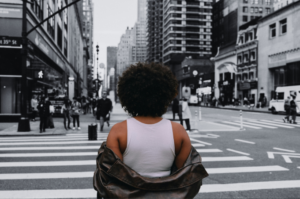
Photo by Ralfs Eglitis from Pexels




Ijeoma May 27, 2026 06:20
You write so well. Not only did you convey your feelings towards poetry, you conveyed mine. I hope you get all the support and inspiration you need to become the writer you aspire. Good luck Bright.