

Ma chérie Ndeye,
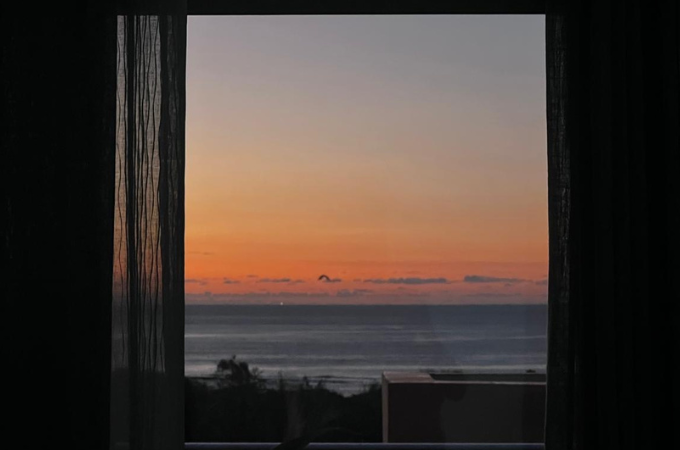
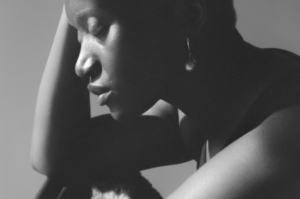
I am at the kitchen table again. The one by the window that doesn’t quite close, the one that lets in dust and dusk in equal measure. The table bears its old scars, rings from glasses and the faint cut of a knife I never sanded down, as if leaving it there might help me remember what it was for. I’ve rolled my hair the way you used to, with pink and blue plastic moons wrapping black strands mixed with grey, clinging to my scalp like a promise I haven’t kept. A cigarette burns between my fingers. I don’t even like smoking anymore, but I like the way it slows my hands, gives me something to do while I remember how to breathe and how to write again. I ash the cigarette and watch it fall apart, a small, grey collapse that feels like it should have meaning.
Outside, the light tilts toward dawn; it is fajr already, and I can hear the mosques around the city echoing that familiar call to prayer, one after the other. “Come to success, prayer is better than sleep, prayer is better than sleep.” It feels like they are calling to me, calling me with empathy and grace, for the mess I didn’t clean and the words I didn’t say. I listen to the hum of the house, the refrigerator clearing its throat, the walls settling into themselves like they also know this hour well. They’re like the muezzins and the calls to prayer, keeping time I’m not sure I believe in anymore, steady and full of promise. A promise akin to Ndakarou’s usual appetite.
Akin to my social media’s appetite, I’m bombarded with posts, messages and comments that bleed into each other. Painfully. All demanding more stories of me, always something new, any kind of true-life experience I can provide. And less and less of who I used to be. I sit here anyway, letting the smoke thin and the memories thicken, waiting for the moment when the page stops feeling like a ravenous beast and starts feeling like a door.
You know how it is now. Stories are no longer being told, they’re just harvested. People don’t read, they consume. They scroll with their mouths open, waiting to be fed a wound they can poke at later in the comments. Pain is currency. Trauma is proof of authenticity. If you don’t cry on a stage, they ask you what you’re hiding. If you do, they ask you to bleed more. Slower. Louder. With better lighting, costumes, and makeup. They want access, a backstage pass to your worst moments, framed as generosity. Nuance doesn’t trend. Silence doesn’t sell. Healing is boring unless it looks like a relapse. There’s a rhythm to it, almost like the calls to prayer, a call and response of confession and acceptance. Unlike prayer, though, they don’t come with grace or empathy.
And still, we line up, rehearsing our fractures, sanding them down into something shareable. Just like at the mosque, we stand shoulder to shoulder, foot to foot, in straight and compact lines. We know where to pause, where to choke up, how long to hold the ache before it curdles into spectacle. Somewhere beneath all that performance, the meaning goes quiet, waiting to see if anyone remembers how we began, and why we listen in the first place.
Sometimes I think it’s not just the meanings we lost. The whole world ended quietly the day stories stopped being held and started being unwrapped. That was around the same time people stopped writing letters, preferring the ease of voice notes and video and audio messages. Preferring words that vanished as soon as they were played, leaving nothing to return to, nothing to sit with, nothing to process, nothing to hold. I often think about our tutor, Mme. Paulin, who was obsessed with Mariama Bâ and Maryse Condé, was holding on to words written in clean lines, all the accents in the right places. Do you remember how she made us write weekly, in that same style? I hated it so much back then, and now the only place you can find them is in the archives of the Musée des Civilisations Noires, where they are gathering dust. How ironic that it is the same style I’ve chosen to write to you in. Or maybe not so ironic after all.
Maybe the irony is the suit I wear every week. Do you remember it? The fancy one, shiny shoulders and a voice modulator that flattens me into something smooth and unfeeling. It’s cosplay, really. A costume for survival. I wear it to host my award-winning podcast, the one that dissects stories, ranking vulnerability like it’s a sport. I am somehow trusted to do this because I am the queen of writing about pain, or so they say. My podcast character has a weave of flowing locks, not a single strand of grey in it. She has clear eyes, with white teeth and lips that have not been stained by nicotine. Her makeup is perfect under the ring light. She nods, she clasps her hands, she says words like brave and raw and vulnerable. She quotes Brené Brown and Mel Robbins, like she lives across the ocean, and not here on this side, in Ndakarou. Inside, something heavy presses against my ribs, as deep inside and I want to shout, but what about Awa Thiam, Fatou Sow, and Frantz Fanon? It is like my grief is speaking another language.
I used to be a journalist, remember? Or maybe I was an author. Or maybe those were the same thing before everything blurred. I believed in writing what I like, like Steve Biko and Binyavanga Wainaina. I believed in witnessing. I believed in truth with context. I believed that stories were meant to be held and honoured. I believed stories were not surgical. But somewhere along the line, I became very good at writing pain. At undressing wounds, efficiently, and life-saving, like an emergency response surgeon, in 1000 to 1500 words using all the acceptable terms. Pre-packaged just right, for social media content and mass consumption. I learned where to cut and where to linger, how to make the hurt legible without making it dangerous. I learned the language that editors nod at, the kind that sounds brave, yet vulnerable, and never asks for too much. I learned how to turn lived experience into something smooth enough to slide past discomfort, sharp enough to still draw tears.
At first, it felt important. Necessary. We were surrounded by so much silence, so much erasure. I thought if I named our pain, spelt it out in acceptable ways for a worldly audience, others might understand, others might care, and we might heal. So, I wrote about women breaking. About child brides. About hidden boyfriends from other castes. About lightening creams. About painful periods, and diagnoses contained in long words, ending with miosis. About endless and expensive injections and still no babies. About the second, third, and fourth wives. About amulets, jealousy, witchcraft, and waist beads. About landlords who refused to sign leases without a husband, father or brother as a guarantor. About chauffeurs and chefs who would only accept direction from monsieurs. About hands that did not ask permission. About bodies marked by history. About cousins, and uncles, and brothers, who left on pirogues, and never came back. About mothers and fathers hollowed out. About how they cried with Soprano, Amadou, and Mariam “Pourquoi tu quittes la maison, là-bas les hommes oublient l’essentiel, pourquoi tu quittes la maison, ne crois pas que tout est mieux là-bas.” I wrote about muuñal and sutura.
And ma chérie Ndeye, it paid, sometimes in my bank account, and most times in attention, which felt like currency back then. Editors loved it. Audiences loved it. Agents sold it. They said it made them feel. And my ego loved it, was fed by it.
Then everyone started expecting me to only write like that. Pain became my signature style. Joy was suspicious. Softness was naïve. If I smiled too long on the page, they asked who I was trying to protect. If I held onto laughter, they called it frivolous. If I paused on pleasure, they wondered if I was pretending. If I wrote about love, they said I was oversharing. If I lingered too long on the light, they wondered what I was hiding behind it. If I remembered moments of wonder too clearly, and with many adjectives, they asked why I wasn’t focusing on loss. I think that’s when I lost my spirit. Not all at once, but piece by piece. Sentence by sentence. Word by word. Ah ma chérie Ndeye, les regrets viennent toujours tard, but how I wish I had written about us instead.
About the way we used to pile into the back of Baay’s Citroen, going to the village, knees knocking, dust in our braids, Youssou Ndour and Neneh Cherry crackling through blown speakers. About the rainy season that caught us mid-crossing, the bridge slick under our feet, our hearts racing faster than our legs. About Maam chasing us with a stick, curses flying, laughter peeling off us. About jostling to eat the last maad, you with so much salt, and me just plain and sticky, the kind that forgives everything. About how cow udders felt warm and icky and alive. We pretended we knew how to milk them into calabashes, laughing until Nijaay shouted at us to be serious. About singing along to Les Nubians, Diams and Teri Moïse late at night, at the top of our lungs “dans les poèmes de Michelle, les enfants ont des ailes pour voler.”
I wish I had written about the day Salifou told you you couldn’t play football because you were a girl, and how his face collapsed when you scored every single goal. Or when we skipped school to go on the ferry to Gorée, spending the day jumping in the warm sea instead. Until Coumba’s mother caught us, and the fear sat in our bellies like a stone because we were sure she would tell Yaay. Or when we were teenagers, split between boarding schools, me on Gorée, and you with the Catholic sisters in Plateau. How we wrote letters to each other in English so the teachers couldn’t read them. We had learned from watching Friends on TV. We barely knew the language, just enough to hide. Hide stories of bullies, chores we loathed, and crushes. And later, much later, stories of lovers whose cars we sat in on the Corniche, who we danced with, and who gave us pleasure. Yaay would be scandalised if she could read them. Do you remember how she always shook her head at these daughters of hers, and how she used to eavesdrop on our calls?
Do you remember the holiday I fell from that tree and sprained my ankle? How you stayed with me, reading out loud even though you wanted to be outside. Instead, we travelled to Kouroussa, Douala, Bamako, Algiers, and Paris with your voice, as you mimicked the voices and actions of the characters in those pages. I watched your face more than I watched the room, memorising the way your mouth shaped each place, each name, as if you were tasting them for the first time. Remember how you’d pause to ask if I was comfortable, if the pain had shifted, if I needed water? You’d slip right back into the story without waiting for an answer. The world outside kept moving without us, to the steady rhythm of the calls to prayer ringing across the city, but inside that room, time followed stories. That might have been the first time I understood that stories are journeys. They are adventures stretched across sentences and paragraphs. Even now, when I think about why I started writing, I trace it back to that afternoon, your voice carrying me farther than my body could go. You never told me you resented it, even though the sun was doing something special outside that day. You just turned the pages and kept the adventure going.
I know why you don’t call me anymore. I hear your voice still, sharp with hurt, the day we fought. You said I wear costumes too easily. Switching masks so often that I no longer knew my own face. That I had turned our family’s pain into content. That I let strangers pass our grief around like something bite-sized and clever. You asked me who I was writing for, really.
I told myself I was being brave, that discomfort was the price of honesty, that the ache in your voice would soften with time. I mistook your anger for shame, instead of recognition, a mirror I didn’t want to look into. It was easier to call it a misunderstanding than to admit I had crossed a line I could feel but refused to name. Stepping out of those neat prayer rows at the mosque.
I didn’t have an answer then. I hid behind my fancy costume. Behind the idea that exposure was the same as liberation. I remember you asked me one last thing. It’s been echoing ever since, louder than any podcast intro. It follows me, quieter but heavier. It sits beside me when I write, taps at the edge of each sentence, waits for me to answer.
What would you write about if you couldn’t write about pain?
I am finally brave enough to answer. I am learning to hold my memories gently, letting the bright ones breathe alongside the dark. It feels a little like those evenings in Soumbedioune, when we raced through the tunnel. Remember how we were trying to outrun the air that smelled like fish? It also feels a little heady, like the evenings we would sit on the beach in Mamelles, inhaling the weed the rastas loved to smoke, pretending we were just sitting there for the sea breeze. I am beginning to finally see the mosaic, the complex, intricate patterns woven in threads like those in mosque carpets and architecture. Each joy and sorrow is a piece that makes the whole richer. Each piece has a meaning waiting to be unveiled when the light catches just right, like when the sun rises and sets by the Mosquée de la Divinité in Ouakam. These are the stories I want to write now, messy, alive, uncurated.
Ah ma chérie Ndeye, what would I write about if I couldn’t write about pain? I would write about you and me. I would write about growing up and growing old with a sister. About joy that refuses to be efficient. About light that doesn’t explain itself. About rich, spicy food, and all the oil and Maggi cubes. About Baay’s jokes, and Yaay’s tickles. About Maam’s boisterous laughter and Nijaay’s stories. About Salifou teaching us how to ride motorbikes and rapping to MC Solaar. “Le temps passe alors Carpe Diem, parce qu’il faut du temps pour les gens qui s’aiment.” I would write about how we laughed and played and danced, the way we remembered and stayed, the way we loved each other fiercely.
Ah ma chérie Ndeye, I would honour our messy stories, full of tangents, contradictions, and big, luminous moments that we shared. I would honour the laughter that was always there, in the middle of our sorrow. I would honour the love we had for each other, which doesn’t fit neatly into arcs. I would honour the quiet triumphs that didn’t come with fanfare, just a pat on the back from Baay, and Yaay’s timid smile. I would write us back into the world.
But you see, our stories don’t fit into sixty second reels. They would not survive a twenty-minute episode with ad breaks. They would barely get a view, let alone a like. They need time. They need tenderness. They need an audience that’s not trying to fit us in, as they drive or run errands. They need readers who are not sharpening knives. They need spaces that breathe, that allow the pauses, the silences, the glances that say more than any caption ever could. They need the kind of attention that lingers, that returns to the same sentence because it wants to taste it again, to feel it resonate against its own memories. They need curiosity without judgment, without the constant pressure to react, to comment, to perform empathy as if it were a trend. They demand patience, because only with patience can the full weight, the full joy, the full heartbreak, and the full wonder be held all at once, without being broken down for consumption in bite-sized pieces fed to a toddler. All on a plate where no piece of food touches the other. They need an honouring we’ve all forgotten.
So, this letter is not for them. It is for you, and mostly, it is for me. It is my morning prayer, my answer to the daily call to success. I am trying to write instead of pitching. Instead of performing. Instead of crying on a stage. I am trying to remember who I was when we were still writing like Mariama and Maryse.
I am writing about the journeys we took in car rapides, and in taxis driven by old, rude men, without knowing the destination, but trusting that we would be okay because we were together. I am writing to remember the smell of thiouraye in every household, filling my lungs with something alive. I am writing to remember the colours of every boubou and fragrant oud and musk from Dubai and Saudi Arabia that fill offices, homes, and mosques on Fridays. I am writing to capture the texture of hands slipping in and out of trays of thieb, and holding on to paper cups carrying café Touba, and attaya. I am writing to feel the comfort of prayer and worship, the joyous zikrs, shared without expectation during the magals. All the moments when everything ordinary felt miraculous. I am writing to honour the joy that comes and goes, like the waves the surfers on Plage des Almadies ride. I am writing to honour our shadows and our light, not only the parts that are edited for my costumes and performances.
I am writing because I don’t want to forget that stories are homes and journeys, not exhibitions, and certainly not content. And I am writing because you have always been my first home and my longest journey. The one I am trying, slowly and clumsily, to find my way back to.
I suppose it is only fitting that I am ending this just as the mosques are wrapping up the morning prayer. I hope you will hear these words, my prayer, in the same way that we hear their call ringing across the city. “Come home to me, my sister. I will write us back into the world. I will write us back into the world.”
Namm naa la,
Always your rakk,
Madji
Photo by Nadia Ahidjo



COMMENTS -
Reader Interactions