
Day 5
We arrived at Noé in a little huff because we were afraid we’d arrive late. We made it just a few minutes before the border closed. Imagine our relief! I crossed in a few minutes and without any fuss. I spoke enough French to answer the officials’ monotone questions and to follow their directives to take off my cap, put my fingers on the scanner, produce my yellow fever card, etc., etc.
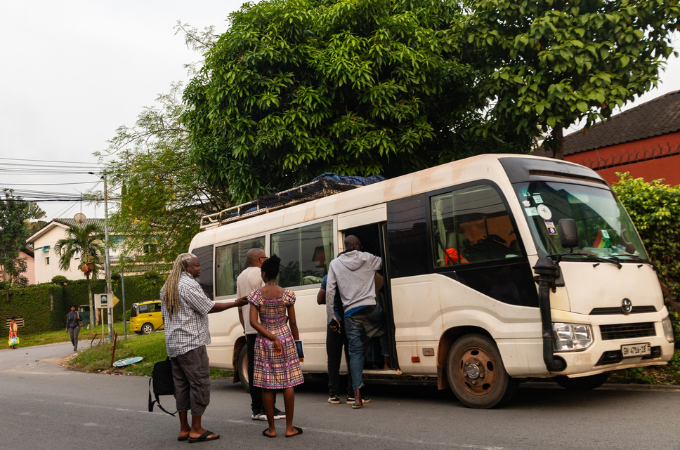
We were waved through quite quickly, even though there were multiple checkpoints in the same building, and so we assumed that crossing the border wasn’t a hassle. Later in the bus, I would learn that the officials had demanded money from SethGPT, especially for the Nigerians and Ghanaians (which is a majority of us), because there was a “problem” with our yellow fever cards. I am still quite unclear on what the problem was. That was only one of the “payments” we had to make.
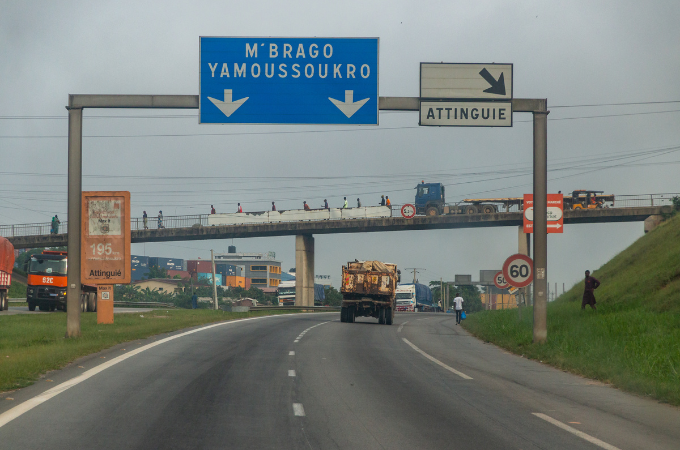
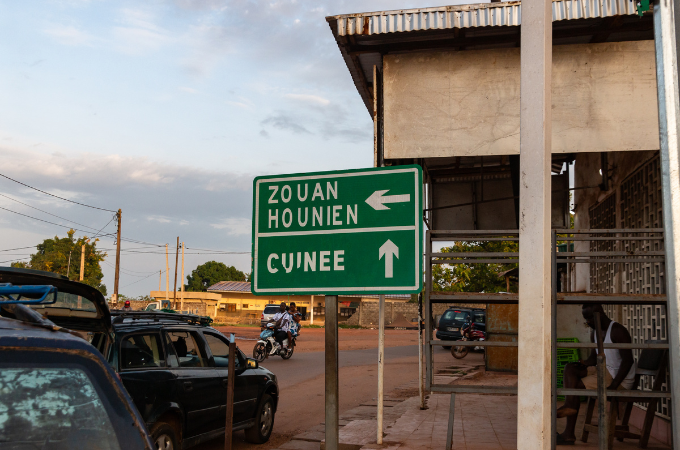
It felt like the officials were just a bit impatient with us because we were unable to speak French. Unfortunately, as would be expected, all the signs were in French, and all the communications were in French.
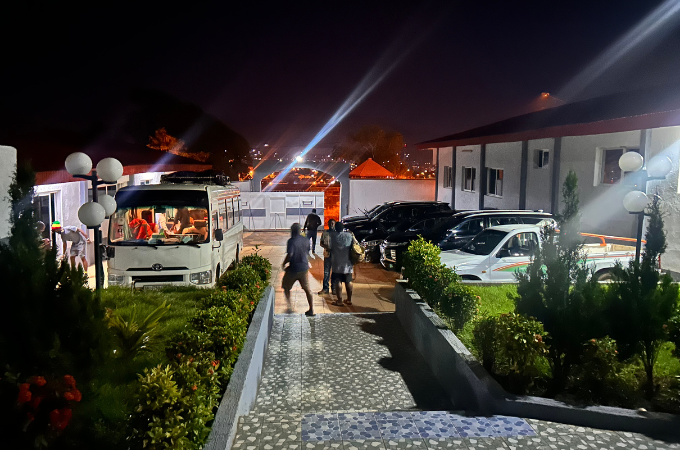
We drove for some four hours and arrived at our hotel in Cocody past midnight. Almost none of us had reliable internet connectivity. SethGPT had bought a router in Accra with the intention of switching SIM cards in each country along the journey. It was a good idea in theory, but the router’s battery life proved unreliable, and purchasing enough data for fourteen people quickly became more expensive than expected. In the end, we survived mostly on intermittent hotspots from his phone.
The first thing my roommate and I tried to do was charge our phones and power banks, Seth’s power bank especially, because we couldn’t afford to have his phone die on the road. We realised that none of the sockets in the room were compatible with any of our chargers. We didn’t have any adapters, and so we went to the reception to ask for help in my broken French. In the end, we gave him the power bank to charge and used my laptop to charge ours.
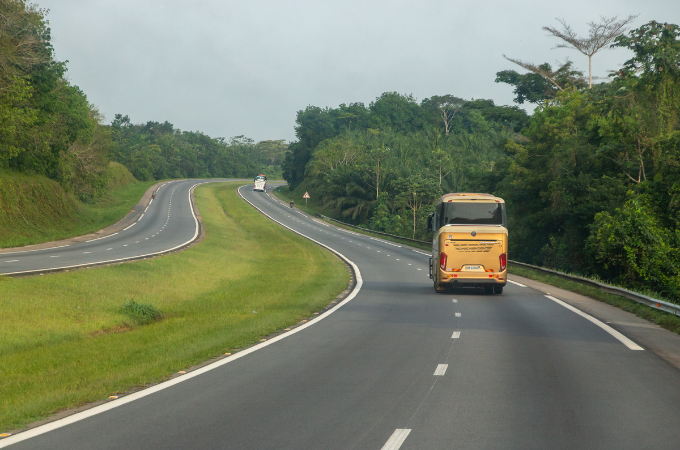
By six thirty the following day, we were back on our way north towards Man. Every West African nation must have highways as they do in la Côte d’Ivoire. I appreciated the smoothness of their roads all the way to our destination. What I didn’t like was the number of stops along the way. I counted 24 in all, some less than two minutes’ drive apart. I can’t make this up. And at every stop, they extorted, or attempted to extort! The endless stops made the journey needlessly longer and a lot more tiring.
When we reached the Ivorian capital, Yamoussoukro, we stopped at the Basilique Notre-Dame de la Paix (Our Lady of Peace Basilica). I was surprised to learn that it holds the Guinness World Record for the largest church in the world, surpassing St. Peter’s Basilica in physical size. (St. Peter’s can hold more people, but Notre-Dame de la Paix occupies more land.)
I privately snickered at the irony: the largest monument to the oppressor’s God standing proudly on African soil. Badji joked that the crucifix should be replaced with more African symbolism. The thought amused me. Born and raised Catholic, I know Catholics do not play with their symbols. What exactly were we going to replace the cross with? An ankh? Adinkra? Nsibidi? Which African symbol could substitute the wooden cross on which hung ‘the Saviour of the world’ and still remain recognizably Catholic?
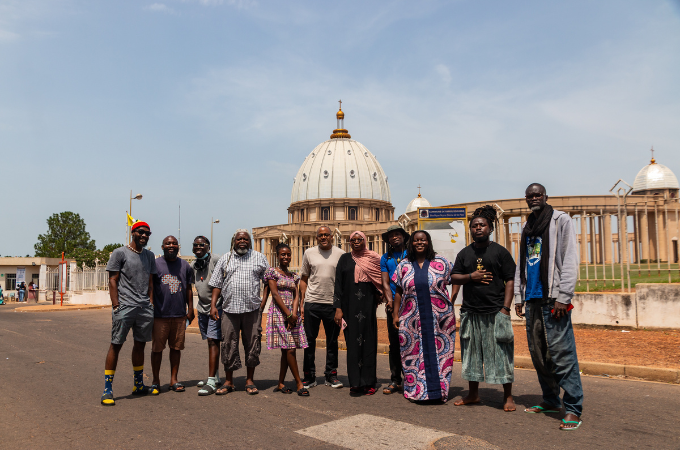
The whole place felt strangely surreal, as though I had wandered into a ghost town preserved in amber. Perhaps it was because the capital felt too empty to be a capital city. Having grown up in the relentless noise and movement of Accra, my mind expects capitals to pulse with chaos, traffic, and human urgency. Usually, I am not disappointed. Before this trip, I had visited two other African capitals -Addis Ababa and Nairobi – both alive with motion. Yamoussoukro, by contrast, felt haunted by something I could not name.
Outside the Basilica, beneath the shade of the trees, I noticed a boy-man crouching quietly. One of my friends thought he looked dangerous and warned me to be careful. We did not share a spoken language, but somehow we communicated easily enough. Language is not always verbal. When speech fails, people still find ways to speak to one another. I eventually learned that he was a Liberian “refugee” living on the streets around the church. I asked if I could photograph him. He agreed immediately and even posed for me. I will always remember his smile.
Pink magnolias bloomed across the Basilica grounds, and Orake asked if she could go closer to collect some sand.
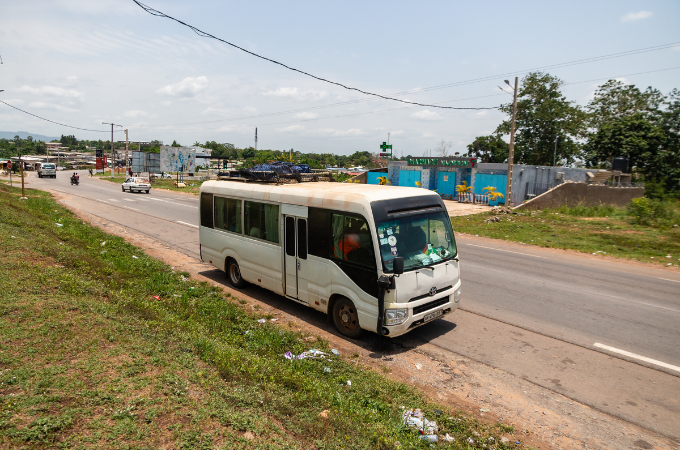
When we resumed our journey, Seth and I went to get first aid in a pharmacy somewhere in Bouaflé. The whole process took perhaps three times as long because no one in the pharmacy spoke fluent English, and neither Seth nor I speak fluent French. Buying medicines turned into a game of charades and guess the drug for the symptom I’m trying to express. It took us a minute, but we finally got all the medicines everyone had requested.
The Nigerians among us converted the cost of their medicines into naira and were verily scandalised. In CFA, the prices seemed reasonable. Basira’s meds cost a little over CFA 7500, which was around NGN 27,000 at the time, when we converted. Apparently, all those drugs would’ve cost her not up to NGN3000 back home. Were the medicines too expensive or is the exchange rate just in the gutter? I don’t know, but the disparity seemed too large. Personally, my timolol maleate drops cost less than thirty cedis when I converted to cedis, which is actually cheaper than I buy them for in Ghana. I retrospectively regretted not buying in bulk. I would have saved a lot of money, if I could create the space to cart them.
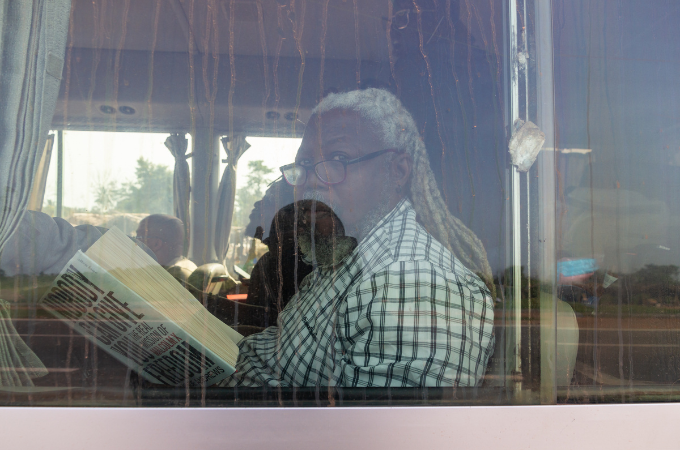
Who Taught You to Hate Yourself was the chapter we read from Kehinde’s book Nobody Can Give You Freedom: The Real Mission of Malcolm X while we travelled through La Côte d’Ivoire. We talked about decentering whiteness, and the white man’s intentional creation of the “negro”. Deconstructing this process was enlightening, and everyone readily made contributions during our discussions.
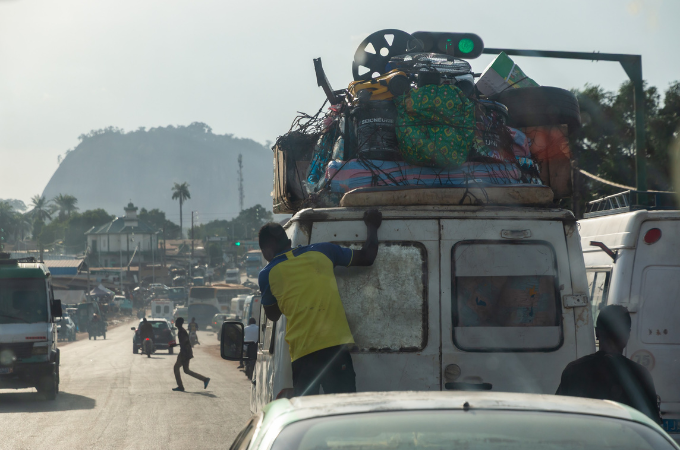
We reached Man, where we would lodge for the night. We were generally in high spirits, even though the fatigue had slowly begun to seep into our bones. A hotel staff member provided us with an adapter and told us about how the area we were in had beautiful waterfalls. He could take us in the morning if we liked. Of course, we liked it, except we were part of a larger group of people who were traveling together on a schedule.
That night, Seth took us out to La Cave Belle to eat attiéké and chicken. The owner gave us a first round of chicken for free, and we were all in love at first bite. The scrumptiousness of the chicken quickly made us forget how hard it was to order our preferred drinks because we didn’t speak French.
We were off again at dawn towards Liberia’s eastern border.
The city of Danané is 25 kilometres east of the border, and it became a destination for refugees during the Liberian civil war from 1989 to 2003. When we got there, we were stopped yet again. In total, in la Cote d’Ivoire alone, we were stopped 28 times at various roadblocks and checkpoints by the police, gendarmerie (military-style national security force), soldiers, customs officers, or forestry officials on certain routes. At these checkpoints, officers usually ask for ID or passport, laissez-passer, vehicle papers, driver’s license, and travel destination. The dance with immigration, and customs, and police and soldiers was now quite familiar.
The road from Danané to the Liberian border was terrible — shockingly so, especially compared to the quality of roads we had encountered elsewhere in Côte d’Ivoire. It felt completely out of character for a country that clearly takes pride in its road network. Why would the Ivorians allow a major border route to deteriorate like this?
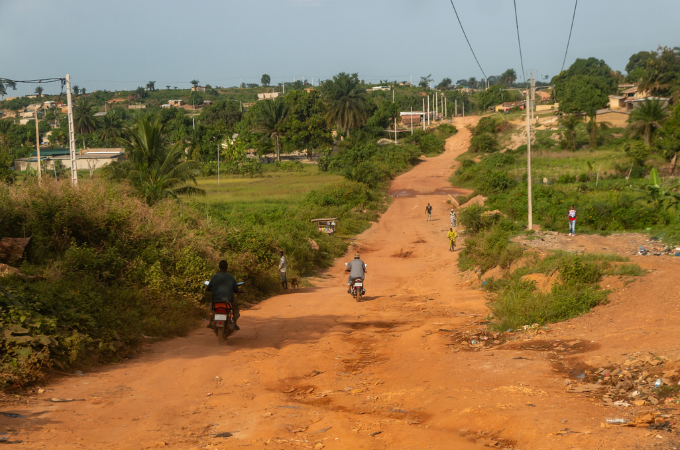
As the vehicle lurched through potholes and uneven stretches of road, I found myself hoping the state of the road was not a prophecy of what awaited us at the border itself. The Ivorians had already stressed us thoroughly. Make the Liberians no come add, abeg.

COMMENTS -
Reader Interactions