

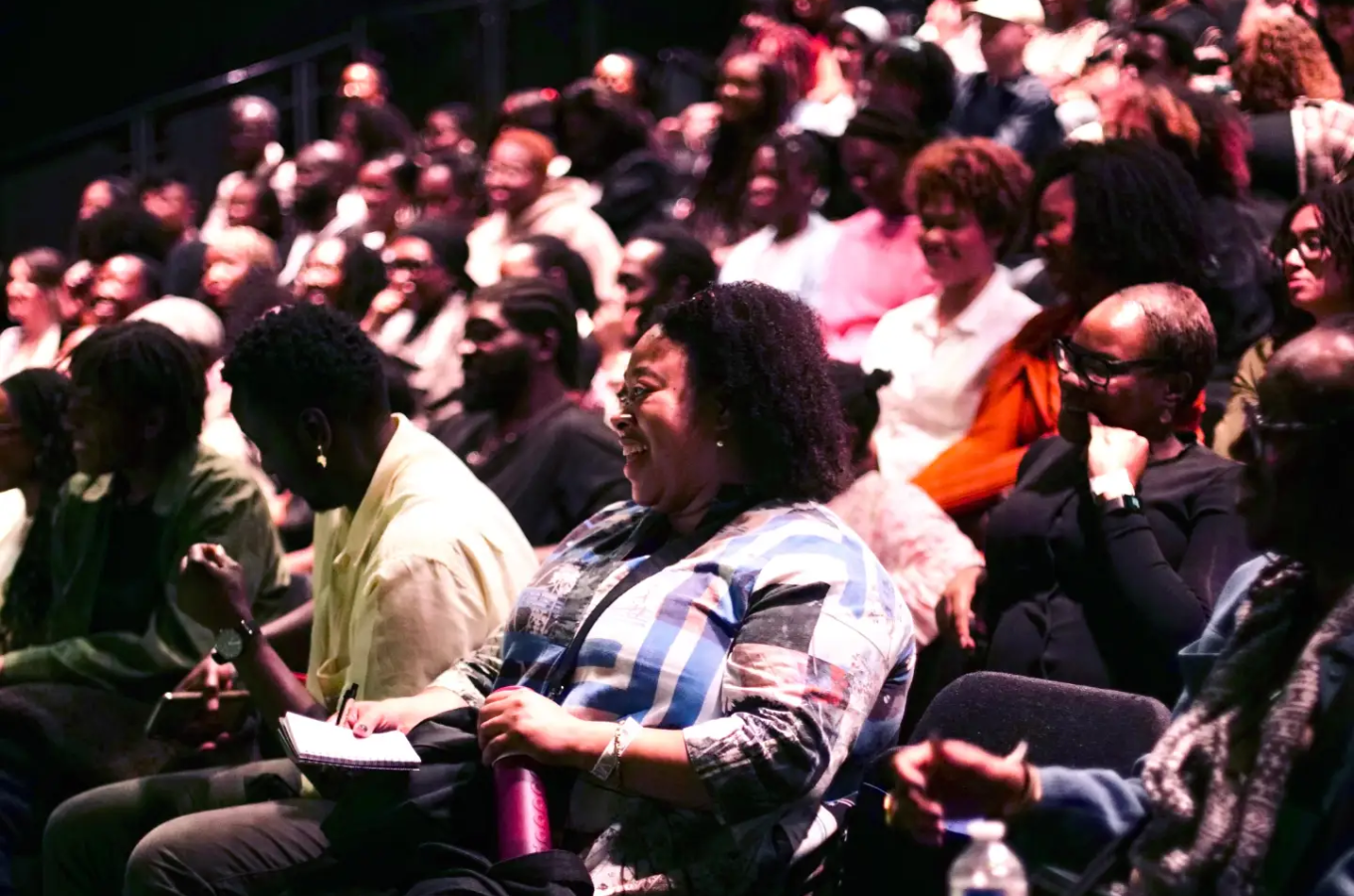
Rolling Stone Africa has published a feature built around Cassava Republic Press founder Bibi Bakare-Yusuf’s remarks at the Black British Book Festival, held on October 4, 2026, at London’s Barbican Centre. Written by Alexis Onestas, the piece centers on a panel called “Giving Flowers: The Women Who Built Black Publishing” and is laid out as a Q&A assembled from what Bakare-Yusuf said during the session. You can read the full feature here.
The panel took place at the festival’s fifth edition, which organizers bill as Europe’s largest festival dedicated to Black literature. Chaired by Jasmine Richards, it paired Bakare-Yusuf with Verna Wilkins, the founder of Tamarind Books. Valerie Brandes of Jacaranda Books was scheduled to join but couldn’t attend, so the conversation became, in Onestas’s telling, an exchange between two generations of women who built Black publishing infrastructure at a time when there was no roadmap and no guarantee the wider industry would follow.
What Onestas puts at the center of the feature is Bakare-Yusuf’s argument that telling our own stories, vital as it is, is not enough on its own. In her view, Black writers and readers also need to own the means of producing and circulating those stories, because a publishing landscape that only rewards Blackness while it’s in vogue will move on when the attention does. That is why she says she would rather hold power than chase representation; with the former, she can make all the representation she wants. It’s the same thread that ran through Al Jazeera’s recent feature marking Cassava’s twentieth anniversary, where she made the case that representation without control is fragile.
The feature gives that argument a concrete example in The Mercy Step. Bakare-Yusuf recalls knowing within the first few pages that she wanted Marcia Hutchinson’s novel, and learning later, when it was shortlisted for the Women’s Prize for Fiction, that 54 other publishers had passed on it. She doesn’t read that number as a sign of 54 blind editors. For her, it’s the reason houses like Cassava have to exist.
“We can be the 55th publisher that won’t reject us.”
The novel’s trajectory since has been remarkable. Its Women’s Prize shortlisting made Cassava the first African-owned, Black- and woman-led independent press on that list, and it went on to win the Discover Prize at the 2026 British Book Awards. It now sits on the longlist for the 2026 CANEX Prize for Publishing alongside Cassava’s The World Was in Our Hands, an award that weighs a publisher’s editorial, design, and distribution work alongside the book itself.
The rest of the feature ranges widely. Bakare-Yusuf talks about the early years when the business plan was a sea of red, the value of building a community of Black publishers across continents, and her idea of an “Archive of the Future” that shouldn’t be filled only by the Big Five. She also makes a practical case for sharing credit for a book among the many people who make it, urges Black authors to look beyond the largest houses, and says plainly that what Cassava needs most is for people to buy books. She closes on a note of optimism about books surviving the age of AI.
There’s more in the piece than we can cover here, and it’s worth reading in full on Rolling Stone Africa.




COMMENTS -
Reader Interactions