
Grief often sits at my mother’s doorstep, an unwelcomed guest, hanging by the door, begging to be let in. It comes in different shapes and sizes, yet I never fail to recognize it for what it truly is — my mother’s addiction to her past life and a withdrawal from the beauty of the now. A juxtaposition of what was, what must be and all that was allowed to happen in between.
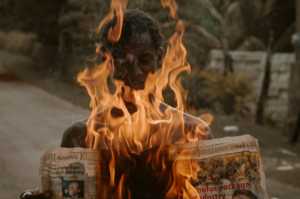
Sometimes it screams at me, unmasking my inability to understand it. Other times it just stands and stares, caught in a trance, surrounded and captivated by a silence of its own making. On some days, it flares like wildfire, and I am forced to hide behind the curtains, praying to go unnoticed. On other days, it dulls into a stony ice, and I speak faster, talk louder, in hopes of dispelling the hardened silence.
Mama does not know how to cry, so she makes me do it on her behalf. With words that cut sharper than daggers and whips that lash out more often than the grief she cannot voice, she draws tears from my eyes until I have none left to give. Then she stares at me in disgust as though my tears remind her of something repulsive, something best left forgotten.
On those days, she rarely says my name, and when she does, it is laced with disdain, almost like a curse. Only when her temper quells, and her grief no longer rages within her, does she look at me with softened eyes.
“Arunna,” my name uttered lovingly from her lips is all the apology I will ever need.
Ifediora once asked why my mother’s frown is set in stone. I wish I had an answer. More than an answer, I wish I could tell her that she was wrong. That Mama smiles sometimes. That she is only courteous, wary of those who are not family. But that would be untrue.
My mother is unlike other mothers. Her lips do not curve into a smile when she sees me. Her arms never stretch to receive me, and her heart is too tired, the pieces papa left when he ran, too broken to accommodate me.
Ifediora’s mother smiles often. She cooks meat and offers pieces to all the children who come to visit. She can afford to. Ifediora’s father is always in the parlour. His face buried in a newspaper, only lifting to extend a warm smile to anyone in sight.
My mother has no such luxury. She raised me to be an unhappy child because she herself is an unhappy child. Her father’s ghost often screams over her shoulder while her mother’s sings beside her. And although she refuses to call them by name, at night, when she embraces the sweet relief of the night’s caress, they badge into her dreams and forcefully pry screams of horror from her lips until she succumbs, giving in and calling them all the names she had once known them by.
If I get another shot at life, my mother won’t be my mother. She’ll be my sister. An elder sibling eager to call me by name, not as a curse, not as a plea. And when she forgets to call my name, she will call me “nwannem oo,” opening her arms to me in a warm embrace. She’ll walk me to school and help me with assignments at home. I’ll meet her parents who will then be my parents. I’ll love them too. And when they pass, I’ll stay up all night with her in tears, understanding without being told what such grief entails.
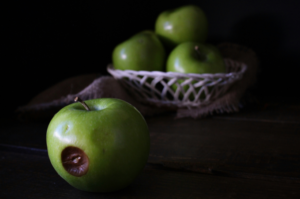
When that life fades, we’ll be reborn into another. There she’ll be my best friend. A childhood friend invested in knowing my favourite colour and picking my best fruits. Her lips will curl into a smile when she spots me from a mile away. And we’ll play by the river side, collecting seashells together. We’ll visit different boats and steal isam from unsuspecting fishermen. For once, she’ll have fun with me.
In another life, my father never leaves us. The big man boots left abandoned under the cupboard are never bought. And the lady with the big buttocks he ran after is never born. Instead, he holds mama’s hand and never lets go. He sits in the parlour with an old chewing stick, reminiscing on past lives while planning the future. In the evenings, he discusses the news with Ifediora’s father. And my mother’s heart makes room for me, because his has space for her.
In my favourite life, mama wears a suit to work. She stays in school and graduates. And she never marries my father. She doesn’t have to check the price of vegetables before going for the cheapest one. She is friends with Aunty Ada, and they meet up after work to speak big grammar and mourn the crumbling economy. In that life, she often embraces me, her skin scented with sweet smelling cologne.
When I was seven and had just begun dreaming of other lives, a man visited my mother. A childhood friend. I had never seen her smile as much as she did when he was around. He was an artist from Nsukka, he said. He called her his muse, and she laughed at his jokes. He stayed for weeks and he kept the grief away. But only for a while. When it came knocking again, it stole him away.
I often think of him — of his warm hands wrapped around mama’s shoulders as she walked me to school, just hours before I returned and found his slippers gone while his scent lingered.
And I wonder what it would have been like to have him with us while growing up. Would he have softened my mother’s grief or been swallowed by it? Would he have loved me the way Ife’s father loves her, or would his tenderness have morphed into rage?
Of all the lives we’d never live, that is the one that haunts me the most.
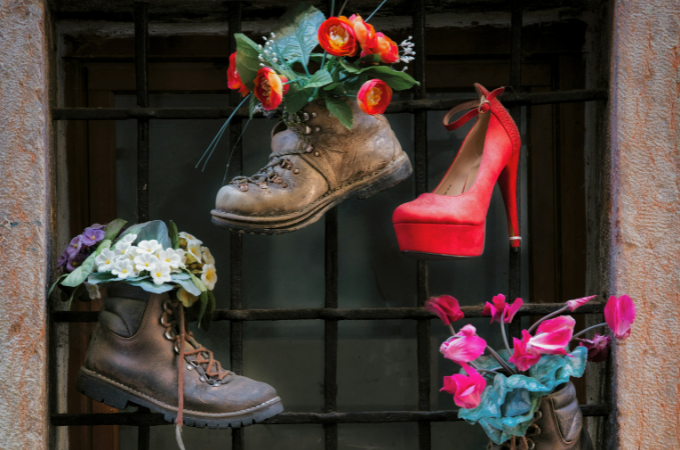
Photo by quentin touvard on Unsplash


COMMENTS -
Reader Interactions