


You are washing a dress. A white dress.
You wore white the day your husband died. You have been wearing white ever since.
Around you, the first signs of rain. The sun, eclipsed by thick darkening clouds. A lone raindrop on your arm. The rapid pitter-patter of water against mud. The slam of a door. The bang of an already cracked window. Trees in a passionate waltz with vagrant breeze. The sudden kpa of a transformer. The collective groan of children who had been huddled in front of a TV. The shuffling of hurried feet, dragging heavy bodies outside. The urgency of hands pulling still-damp clothes from a three-ply line.
You, unmoved. In your hands, the dress. A singular dress. Free-fitting. Impeccable. Bereft of a single stain. You, washing that dress. Soaking. Scrubbing. Rinsing. Over and over again. You, washing that dress to remove a stain and dispel a stench. The stench, the stain — they do not exist. Or had they ever existed, they are long gone. Still, you, saying, you must wash.
You, hunched over a stool. Your neighbours, stopping their washing, carrying their clothes, fleeing inside to avoid the rain, side-eyeing your unusual behaviour.
You, your hand, wearing your wedding ring even now, even after; the jewellery seemingly brighter, mocking, almost accusatory. You, your hands, red, wrinkly, first, from the harsh detergent, from your repeated washing, then the markings of your age, an age that shows in your legs and your hips and your breasts, an age that feels, to you, unbelievable — far too old, yet not nearly old enough. The beatings of rain against your head. Your hands, dancing an urgent dance against unsullied cloth. You, shaken from the dream that roused you this morning. You, telling yourself again that you must wash — soak and scrub and rinse — to remove the stain and the stench. You, telling yourself that you must bathe before he arrives.
Around your waist, a tattered wrapper. It is not white. This is a mistake. Your upper body, clothed by a singlet. It is white. This is a coincidence. The wind whistles against your skin, fanning your head. Your hands reach up to rub your head, soap suds specking your scalp. You are met with skin. It feels weird, even now. You feel the tufts of hair that have begun forming again — streaks of black and grey. You must shave.
Later, you will call your son. And he will come to your house with little feet trailing behind him, your granddaughter. Little hands, wrapping themselves around your body with awkward uncertainty, the looseness of their embrace asking if it’s okay to hug you, how hard they can hug you. Your granddaughter, quiet, sitting away from you, as though your grief were a disease she could catch.
Under the low buzz of the clippers, your son will hesitate as he brings the blade to your scalp. Him, asking you if you are sure you want to do this. Him, reminding you that you don’t have to. Him, asking you if you’re okay. You, saying yes, I want to, yes. Three lies. He will sigh as he shaves your head. He will ask why you keep punishing yourself. Still, he will leave, the little feet following behind him. You, alone again. But you like being alone.
You, still washing. Soon, you will not be alone. The rain is heavy. But you know he will come. He always comes. You, lifting the dress, bringing it to your framed eyes, to your wet nose. The stain and the stench are still there. To you, they are worse than before. You, telling yourself, you must wash faster, wash harder. The skin around your fingers is starting to redden. Your palms are rough. You, telling yourself you still need to bathe, you still need to fetch water to bathe before he arrives.
You, looking at the ring around your finger again. It, still bright, still accusatory. The dream still lingers. It clings like soap suds under your nails. You tell yourself: atone. Wash harder. Wash it all away. Your body does not cooperate. Flashes of heat. Your legs, between your thighs, dampening at the reminder of the dream that roused you. You, thinking of him, then your husband. You, pressing your legs together, close, tight, so your knees touch.
You, thinking about last night. You thinking about the dream. You, thinking about most nights. You, thinking about what you think about most nights. You, scared to think about what you are thinking about. It is damning, disgraceful, the most sinful thing. Your mind, not cooperating. You, thinking about it either way. You, fighting against it.
You, directing your thoughts back to your husband, away from him. You, alone at night, with your thoughts and your body. Your husband’s face, sharp in your mind. His face, gentle, soft, smiling, without the marks and lines that littered his body when he fell sick — a track mark here, a dark patch there, visible veins. Your husband, not sick, not dying. Your husband, smiling. Your husband, his hand reaching for yours. Your hand, inching to take his. Your hands, meeting air, nothing. You, recoiling, bringing your hands back to yourself. You, awakening. Your fingers, touching your lips, trailing down the hem of your night dress. You, stopping yourself from reaching underneath. You, thinking about last night. A smile. A hand. A face that was not your husband’s. Between your legs, a stickiness, announcing your body’s betrayal.
The rain picks up again. Lightning strikes. Thunder cackles. You resume your washing. You, reminding yourself that you must bathe before he arrives. You, finally rinsing the dress, wringing out the patterned cotton. The stain and stench, stubborn, ever-present.
You, making to get up when you feel his presence. You know he has arrived before you see him. You still have not bathed.
You, turning to look at him. Him, standing by the gate of your compound, floor-length robe brushing against the wet ground. Him, battling with the umbrella in his hand, fighting against the turbulent currents, trying to pass through the narrow gate. You, hurrying to get up, before he sees you. Him, looking at you. Your eyes, meeting his. Him, raising his hands to wave.
You run.
The rain splashes against the lens of your glasses until your sight is a dizzying blur. The cold water, like a belt whipping against your skin. You, still running. You, not realizing that you are running until you find yourself lying on the floor, your wrapper fallen and pooling at your feet. Your back, aching. Your head, throbbing. Your legs, covered in mud. Your newly washed dress is stained brown; it is a stain you are sure everyone can see.
You, looking up. There is a hand stretched in front of you. This, you are sure, is also real. Him, looking at you, not your naked breasts or wet bare legs, you. He clothes you wordlessly. It is very unlike your dream. His eyes, gentle, the same gentleness that cajoled you to accept help from him, the same gentleness that aroused your current feelings.
You remember the first time he came, when you couldn’t speak your grief, only wear it, in stained white dresses, wrinkled hands and red eyes. He brought prayers, said kind words, didn’t rush to leave. Maybe that was all. But it meant more to you then, a hesitant, loaded lingering, a feeling of being seen. You are looking at his face, so you know now those feelings are not reciprocated. His eyes are sympathetic, pitying, the look a priest gives a widow like you, a grieving old widow he is counselling.
He takes your hand and pulls you up. You, still thinking about your dream, thinking about how this is real — his hands on a part of your body, his eyes peering into yours. You, knowing it is not the same. Your body, refusing to cooperate. You caution yourself. It has been too long. You, removing your hand from his.
You are both drenched. And if he is annoyed by your lack of urgency, he does not show it. The rain continues to fall. Doors continue to bang. Windows continue to shake. And raindrops pelt your skin. Still, you decide to begin today’s session.
“Forgive me father, for I have sinned.”
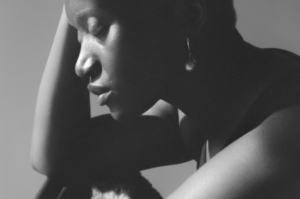
Photo by Alexander Jawfox on Unsplash







Haské July 15, 2025 05:23
Wow. Didn't see that coming