

A few months ago, one of the writers I hold in the highest esteem—CNA, Chimamanda Ngozi Adichie—made a press release leading up to her new book that has me giggling and at the edge of my seat, Dream Count. In her sonorous voice, I picture her looking out of the window stills in her home in New York or wherever she may be, saying the words written in The New Yorker or The Guardian—words that have sparked debates and conversations in the social media marketplace.
“There were many times I was short with my mother when I didn’t need to be. There’s a tendency for girls to do that. I wish we would stop.”
You see, I agree with her—somewhat—but I’m a prophet of balance. Like every conversation, her words have been torn apart on Twitter, shredded like meat by cannibalistic animals—the lions, tigers, and hyenas of the internet.
I believe we should accord our mothers grace, but our feelings are just as valid. However, you have to understand that the typical African mother and daughter have a deep chasm in communication. Most African mothers, like many adults, are burdened with taboo tattoos—unspoken experiences, unshared truths—yet they expect us to bare our souls?
It’s difficult to share when you know the other person won’t relate, or worse, will tear you apart with sarcastic, insulting words. They’ll exaggerate scenarios that haven’t happened and ultimately place blame on you.
Teenagers around the world go through a lot, but teenagers in Africa—particularly Nigeria—suffer from a lack of proper communication and the vagueness of information. Society preaches abstinence in a warped, fear-inducing manner: “Don’t let a boy touch you.” But what do you mean by touch? The average 10-year-old doesn’t understand what hormones are, let alone articulate what they feel. And if she dares to ask? Three possibilities:
1. Her feelings are reduced to nothing, dismissed as childish nonsense.
2. Her parents fabricate an elaborate lie, spoken with dramatic flair.
3. She is accused of trying to delve into prostitution.
As a major participant in this discussion, I confess: I’ve been short with Jewel many times. Our story, however, is woven into complex layers of tapestries—a vast difference in perception and mentality. How did that happen? Only God knows.
But I’ve always been different.
Religion plays a major role in why children become short with their parents. The average African parent presents themselves as a saint. They attach shame and dirt to sex, yet they have three to five children. Why participate in the act if it’s that dirty and then proceed to get pregnant?
An average teenager is dealing with puberty, lust, sexual attraction, hormones, academics, the allure of adulthood (for freedom, of course), and parental expectations. Let’s not forget societal expectations and peer pressure. As a prophet of balance, parents and mothers are blinded and can’t or don’t have the space to understand as they are expected to adult well, have a good marriage, provide basic needs, have a career, a social life, and be grounded in religion with a dash of cinnamon called societal expectations.
A major problem is the fact that all parents want a mirror image of themselves. DNA and RNA doesn’t mean an exact copy of yourself. Wouldn’t that be boring? A child is a mix of parents, their influence, the society, their educational institution, internet, religion, random things absorbed from God knows where, random words from random people. Your child is not an excuse to make right what you couldn’t for yourself. I’m tempted to think that most parents when they see us, see themselves and not a whole person they birthed. Your child cannot and should not be you.
I believe it’s unconscious. Children are not a pet project for a do over of the past. Why should they like books because you like books? Why should they like classics because you like classics?
In many African households, the chain of command is a military regime. And with no other outlet, most teenagers learn to express themselves through defiance—being short, lashing out. I agree—it hurts. But in that hurt, there are two hurt people. Trust me, I would know.
As I peruse Adichie’s words in The Guardian, I glance at the yellow roses on my window sill, their stalks wilting, placed neatly in a milk carton. A barrage of memories floods my mind—memories of Jewel.
What a woman. What a force to be reckoned with. Jewel is a ferocious fire that refuses to blow out. She glows in fumes of orange and seals of blue. She would cluck her tongue at me and wonder where my bullheadedness comes from. And I would always think, From you and your husband, of course. My father is an ideologist—unshakable, unless my mother convinces him otherwise. But I digress.
Jewel had no handbook for raising a child. When I came into the world—after the sexual intercourse between her and my father (she would cringe reading this, and I know she’d call me immediately)—there wasn’t the flamboyance and accessibility of information that we have now. You see, Nigerians are proud peacocks—hard-headed believers in traditions passed down through generations.
The consensus?
“Why read books about parenting when we have our own parents as examples?” There was a conscious wielding down of will and want in the older generations. It was difficult for them to think independently or imagine possibilities outside their reality. The typical mother believes that as long as Maslow’s hierarchy of needs are met, her duty is fulfilled. They believe their parents were perfect examples of how things should be. Sad, I know, they had their will shaved down like ice and are unwilling to see their parents as anything other than the best or perhaps that was better for them instead.
She births a child, repeats the cycle of toxicity, brandished lies, and expects the child to turn out well. In the corners of her heart, a unique blend of wickedness is already lodged—ready to unleash mechanisms for every scenario before the child is even born.
Every Nigerian child can tell you, the abstinence mantra from over 400 million households is, “Don’t let a boy touch you.” Most parents—especially mothers—were raised to believe that their child’s future is their sole responsibility, along with the intensity and success of their marriage, all while balancing a career.
It’s a war of ignorance, I believe. Let me praise her, at the age of 16 or 17 my body tricked me. I made out and a few days later I started feeling nauseous and I thought I was pregnant. I then started asking my mom a barrage of questions because I wasn’t still sure of the dynamics of sex. She bought me a book on women’s bodies and told me to hide it from my dad. Kudos, mama.
Jewel was most likely settling into marriage with my very introverted father—a pastor, often absent. They hit the ground running, chasing God’s calling, balancing their careers, and raising the brown-eyed, chubby, babbling me. (Yes, that chubbiness disappeared faster than the lingering trace of an inoffensive fart.) Christianity, when I was growing up, was almost paramilitary and non-contextual.
The problem? I am a questioner.
And in a Nigerian household, there is a golden rule: Do not question your parents. That never made sense to me. Now, in my twenties, I understand. Children exhaust you with questions. But still, I am a prophet of balance.
How do we create this balance?
I hand this question over to the upcoming Gen Z mothers.
Jewel would go to work, come home, and cook deep into the night, while I babbled on about how the world could be better. I’ve tried to broach conversations about my feelings, but she never understands. She likely never will. And that’s okay. Maybe I will never fully understand her either.
Her parenting was harsh, authoritative. My brother cannot relate to my memories of childhood because he never experienced the slippers, tiny pestles, long wooden canes, resetting slaps, harsh back slaps, and belts that corrected me.
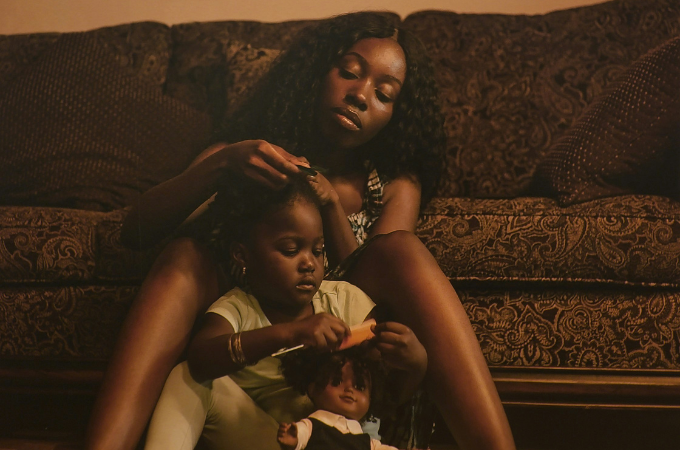
I remember a scorching morning at my school junction. She had been absent the night before. Her swollen belly was the main attraction of people’s glances, and tears caressed her cheeks as she took in my appearance. She pulled out a comb, fixed my curly hair, and gave me hot rice from our favorite street vendor. She kissed me and crossed the road, disappearing from my sight. I never understood the depth of that moment—nor the other throes of life I witnessed as a firstborn. A dance takes two people in synchrony. But synchrony in perception, emotions, and life? That’s much harder. All I ever wanted was to be understood.
Years later, I told Jewel about my first heartbreak. She looked me dead in the eye and said, “What kind of child are you? What is a 14-year-old doing with love?” I blamed myself bitterly. But she may never understand, and that’s okay. She wondered why I would have the guts to try and produce emotions like love after the tighter bubble-like shield they doused me in. She would wonder why I’d allow myself to be attracted to a man and then wonder years later why I’m single. She’d then blame me for being heartbroken simply because I embraced the natural laws of life. Sex, love, attraction are a part of life, sadly.
I’d remember her prancing on and on about virginity as a gift and would glance at me to ask if I was still a virgin. We are somewhat better now, at least I tell her about sexual styles but she’d grimace as if she were in pain. I then wonder, woman, how did you birth me?
Still, I love her. I believe what I’m saying is to be short when needed. Arguments are not a bad thing. What makes anything bad? Their usage and manner of approach. Express yourself in the groundedness of self and understanding, and balance it with love. It may be hard but let us try. I however will remain firm in my beliefs, upfront but more tender to my lovely hibiscus. God, I love her. Love, like every totem of life’s roots, is complicated by layers of vestiture. I’ll communicate better, and I’ve started. I told the woman yesterday that I couldn’t call her because I was at work for hours. Her upturned nose turned into a pout as she hung up. However, she sent me a text begging me to go and sleep around 12 am because I was ill.
Lastly, understanding comes with experience, and the same is said for survival. These are not magically inherited. You cannot understand that which you haven’t graced or worn.








COMMENTS -
Reader Interactions