

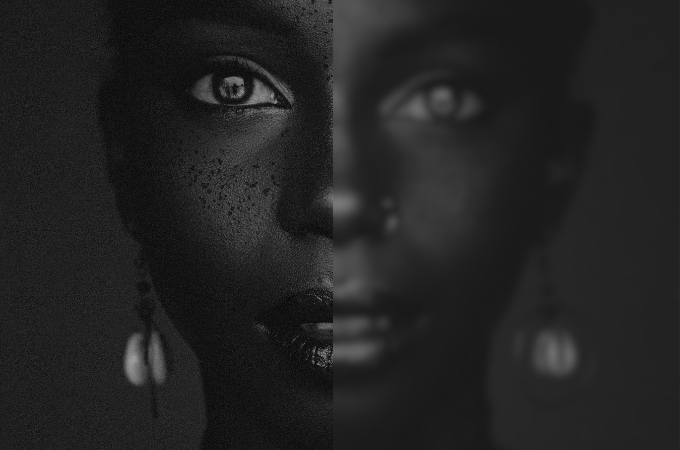
I had a sister once…
I had a sister once. Her name was Malomo.
Let me tell you about Malomo, the way my Yeye told me.
In Yoruba cosmology, there is something called Abiku. Abiku is not just a name, it refers to a spirit child who repeatedly dies and is reborn to the same mother. It means “born to die,” a label for children who come into the world only to leave again, and again. Abiku children are believed to belong to a spiritual society (egbe), a band of spirits that vow to torment their earthly mothers by dying young, only to return and repeat the cycle.
Birth. Death. Return. Grief.
Before I was born, my mother gave birth to Malomo. But before Malomo, there were five miscarriages. Each one was a scar that words couldn’t name. My mother stopped naming them after the third. She just wept, cleaned the blood, and moved on. But when Malomo came, she came like light. She was the girl they had waited for. Prayed for. She was the one who would stay.
They told my mother, “This one is different. This one will not be flushed away like the others. This one will dirun and digba. She will live to see the morning.” My mother believed them. She held her belly like a sacred calabash. She picked the finest names, names that danced on her tongue: Adedunni. Ewatomi. Morounkeji. She looked forward to the tiny shoes, the pink wrappers, and the smell of baby powder. She pictured her daughter stealing her whole face—forehead to chin.
And then the day came.
Malomo came like a miracle. Her hair was thick and full, like she had already seen the world and come back. Her eyes sparkled like water meeting the sun. Her cry filled the room, bold and clear. My mother looked at Yeye as she smiled and said, “This one has come to stay.”
If only she stayed.
For weeks, everything was perfect. Malomo slept and cried and cooed. Her grip around my father’s finger was firm. Neighbours brought gifts. My mother’s friends came to see the baby who beat the odds. There was laughter in our home for the first time in years.
Then the sickness came.
It didn’t knock.
One morning, Malomo wouldn’t stop crying. Her body felt too warm. By evening, her eyes were dull and her breathing was shallow. My mother ran to the hospital barefoot, her wrapper barely tied. She cried in prayer, groaned in fact, and begged the nurses.
But by midnight, Malomo was gone.
Gone.
My mother broke. Her body broke, so did her soul. She didn’t eat for days. She sat in silence, rocking nothing in her arms. Her breasts leaked milk, but there was no mouth to receive it. She cursed God. She begged God. She paced the compound, barefoot and lost. She refused to speak to anyone, not even my father. When she finally did, all she said was, “It was a lie. She didn’t come to stay.” She stopped attending church. She refused to visit friends. She covered all the mirrors in the house. For months, it was as though light had been shut out of her. And when she bled again, when her period returned, she wept like it was a betrayal.
Years later, she tried again. She gave motherhood one more chance. And then I came.
But something in her had died with Malomo. The smile she wore the day Malomo was born never returned. She did not name me with joy. I was more my father’s child than hers. She barely touched me, except when it was time to feed me, but there was no love. Not the way mothers are meant to love their daughters. Her eyes never lit up when I entered the room. Her hands never lingered on my hair. And she never for once looked me in the eye.
It was Yeye who loved me. Yeye, my grandmother, who told me stories of Orun and Aiye, of spirits and gods, of how some children choose to return. It was Yeye who whispered the truth when my mother stayed silent.
She never said Malomo’s name until that day.
The day I confronted my mother.
I was fifteen, angry and hurting. Someone had done something despicable to me and I tried to find comfort with her, but I was met with distance. I was untouched by her hands. I stood in front of her and asked, “Why don’t you love me? What did I ever do wrong?” She looked at me, eyes heavy. But I didn’t stop. I told her I wished I had died as a baby so she could be free of me.
My words triggered something in her. Buried stories, dried tears and festered wounds. Her eyes flared. For a moment, I did not see my mother, I saw a wounded woman fighting ghosts. “Has death ever taken a piece of you?” she asked, her voice low and trembling. “Has death ever looked you in the eye and said, ‘again, and again’?” She turned away. And never uttered anything else after that.
Later that night, Yeye came to my room. She sat on the edge of my bed and told me about Malomo. About the miscarriages. About the promises. About the sickness that stole the light from our home. She told me how my mother used to laugh loudly, like thunder on a dry day. How she danced at parties and sang while cooking. She told me that part of my mother died the day Malomo died, and the part that remained was never whole again.
She also told me something else.
She took my face in her palm and looked into my eyes. “You came back,” she said. “You came back. You fought to return. But sometimes, when spirits return, they return into a home still burning. And they carry that fire.”
So, when people ask me, “Do you have a sister?” I say no. I say I am the only daughter of Adun. Because how do you tell a story like this? Of a grief so deep, it swallowed your name before you were born? What I do not tell them is that I had a sister. And I am my sister. I am the child who came back. The child who held death by the throat and said, “Not this time.” I am the one who returned to comfort a mother who no longer believed in comfort. The one my mother resents. She resents the spirit that came back when she wanted silence.
Sometimes I think I was not born, I was summoned. Summoned to make up for the absence. To fill a space that could never be filled. But I am not Malomo, not truly. I am just an echo. I am the reminder. I am the ghost who stayed. And still, I love my mother. I love her in the way shadows love the light—close, but never fully embraced. I watch her from the doorway sometimes, humming while washing plates, and I wonder if she ever hums for me. I wonder if, when she looks at me, she sees her daughter or her grief.
I had a sister once.
Her name was Malomo.
She came like light.
And I, the one who stayed,
live in the space she left behind.
Maybe one day, my mother will look me in the eye
and call me by my name.
Not hers. Not my father’s. Not Malomo’s. Mine.
My name is Rotimi. And I had a sister once.
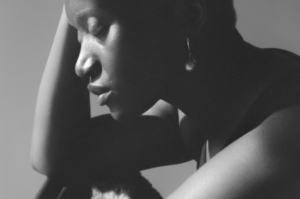
Photo by Nick Owuor (astro.nic.portraits) on Unsplash



Sidikat Bishi September 19, 2025 10:36
Such a short yet powerful piece, woven with unpredictable but uniquely captivating content.