

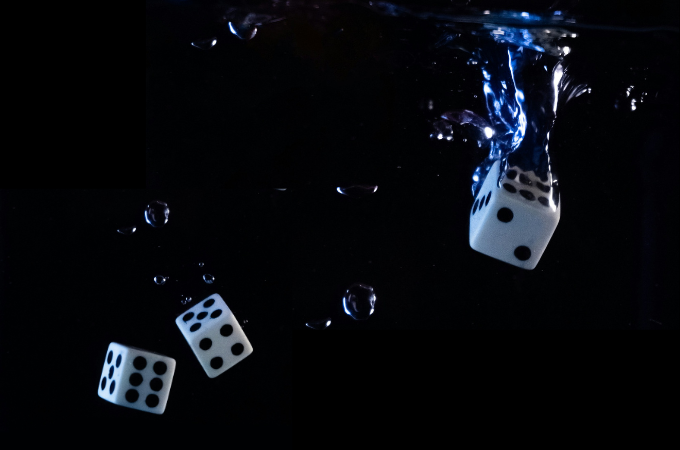
“The only man who makes money following the races
is one who does it with a broom and shovel.”
— Elbert Hubbard
ONE
We trudged down the middle of the church behind the six pallbearers who were holding the brass handles firmly with white gloves. The casket was a masterpiece of craftsmanship; the mahogany polished to perfection. On either side of the aisle was a parted sea of wide-eyed onlookers, all clothed in various tones of creams, beiges and muted whites. This was the only request that my aunt had ever made about her funeral.
My mother, who rarely respected anyone’s wishes, which was partly why we were even gathered in this place to begin with, was the only one who dressed herself in black. “I couldn’t be caught dead wearing white at a funeral. Yes, even at my own. And I will haunt any of you who go against what I’m requesting.” Ironically and selfishly, she stated this as we were making the arrangements for this service. I took in her words and angrily vowed to myself in that moment that I would go against all of her wishes and demands for her funeral one day.
As we slowly walked past each pew, I tried to keep my eyes on my cream brogues to prevent myself from tripping over my feet. I was so overcome with grief that I couldn’t even trust my steps. I was snapped out of my dazed trance by the sound of the church benches creaking, and I felt the atmosphere quiver as the congregation was prompted to stand upon our nearing to the front. Then I had no choice but to look up and really comprehend the numbers that had come out to support us. Or were they more interested in finding out the ghastly details of what had brought us here today? I’ve always known humans to be vultures of mourning. It’s as though we find satisfaction in other people’s tragedies, in an effort to make ourselves feel better about our own calamities. I could sense it in the room as all these vultures stared at us. To me, their sadness felt exaggerated, considering that they didn’t know my Aunt Adah all that well and hardly respected her when she was alive.
It felt strangely nostalgic to be walking into a cathedral in single file, like a Monday morning assembly in primary school with an organ playing an old Catholic hymn, as teachers and learners occupied these redundant gatherings. Except that the melody on this particular day was filled with the kind of pathos fitting for the devastation of this event.
My family and I were nestled closely to each other, and I could feel my mother gripping my arm tightly to the left and Benji clasping the hem of my blazer on my right. Only I could read the quiet ruin behind my mother’s eyes, while to everyone else she stood radiant and unbroken, the very image of resilience. In her true nature, she kept her rigid posture, and her hair was so tightly pulled back that not even the sudden jolt of her cousin’s hug could have moved a single strand on her head out of place.
“Oh, Rosa, I overslept and didn’t make it to the viewing this morning! Is it really her? I don’t actually believe that this is happening to us,” the cousin, whom I had only met for the first time three days before, said to my mother in between quiet sobs and whimpers.
My mother replied coldly, “I’m so sorry, Amina, but you need to get it together. The service is about to start, and we need to keep moving. People are waiting.”
I read the dull shock on Amina’s face as someone who isn’t used to her theatrics being responded to with such nonchalance, but it took her less than an instant to remember that this distant cousin of hers rarely showed anyone in the family any emotion and decided not to take it personally. She dried the wetness from her cheek and shuffled back into one of the pews.
We were finally approaching the front row, and as I prepared to take my seat, my eyes wandered several rows behind and there he was — Khai. His gaze caught me as though it had been waiting for mine the entire time. He gave me his disarming, sheepish and impossibly sweet smile, the very smile that had etched itself into my heart the day I met him. For the first time within the weight of sorrow that I found myself in, this subtle exchange between us stirred some hope in me.
The congregants began taking their seats as the organ began to fade out in a sombre decrescendo.
***
February 1st, 2016.
I was awake a little before 5 o’clock in the morning and had a newfound hope that my life was about to take a turn for the better. I practised a short self-care routine, meditated, prayed and journaled my desires for the upcoming month and the remainder of the year. It was a calm and sunny morning. The first day of a new month beginning on a Monday always feels like it symbolises a fresh beginning. I was ready, oblivious of the information I was about to receive.
I usually skip early meals, but I had been awake for several hours by 11 o’clock and began feeling pangs of hunger. I stood up and headed for the kitchen to get started on a nutritious breakfast. As the mushrooms and scrambled eggs sizzled over the warm oil and the entirety of the kitchen filled with the aroma of slightly burnt toast, I heard an unpleasant banging on the front door. After several short seconds of these inconsiderate knocks, I was startled by another banging sound on the back kitchen door.
“Hello? Ma’am, open up, please. I can see you,” a man called out on the other side of the door in a thick Afrikaans accent.
Through the kitchen blinds, I saw a large-looking, pale white man glancing through the window. His eyes were sunken into his face, and he had bushy eyebrows that shaded over them. Peering through the blinds, his eyes locked with mine, but they surprisingly did not match the aggression in his voice. My heart was beating uncontrollably at this point, but seeing his eyes gave me a sense of calm, and I felt safe enough to open the door.
“What’s going on? Why are you knocking like a crazy person?” I asked sternly. I was frowning and keeping eye contact with him so he wouldn’t read the fear from my expression. I was determined not to let this man, who was almost triple my size, intimidate me in my own home.
His demeanour and tone had completely shifted from the aggression that came with his knocks. “I’m so sorry if the knock frightened you, but I’m on the clock, and I know you were expecting this visit.”
“I don’t know what you mean. Who are you and what do you need?”
“I’m looking for Mrs Jonas.”
My fear turned into annoyance. “It’s Jonas-Qwabe. That’s my mother, she’s not here at the moment.”
Letting out an exhausted breath, “Of course…” he muttered, almost inaudibly.
He reached for his back pocket and pulled out a roughly folded piece of paper, and I managed to get a glimpse of a logo printed in the folds. In an instant, I came to terms with the motive behind the visit and the reality of what was happening… again.
Wary of our neighbour’s prying teenage daughter, I imagined how embarrassing it would be for them to learn of my mother’s unscrupulous pursuits. I stepped away from the door and scanned the small kitchen for the keys.
“Please spare me a few minutes and come inside. I have some good coffee,” smiling wryly as if I was selling premium imported beans. I read the pity in his eyes as his large body stepped through the frame, and I closed the door behind him.
TWO
April 11, 1999.
A South African mid-Autumn night mirrors the final days of England’s attempt at summertime — with barely temperate weather, you may need to leave the house in the morning with several extra layers of clothing on your back.
Liya was perched on a small, wooden bench and although she was indoors, she wore warm brown Uggs and she sported her favourite yellow puffer jacket with the hood covering her head, which gave her the illusion that if her face was mostly tucked away, then no one would really notice her. She never went anywhere without some form of reading media in her hand, whether it was a book, a magazine or a textbook from school. Sometimes, she would even have a pamphlet with her that she would have retrieved from their mailbox on her way out of their home if her mother had rushed her. On that day, the only book within her reach during their hasty departure was Leo Tolstoy’s Anna Karenina, which belonged to one of her older cousins. And although the contents of the book were too mature for her to even remotely understand, she naively felt like it made her look smarter to a passerby. “What a big book for such a young girl, she must be brilliant,” she imagined they thought. The copy she had was thick and bulky, with over 800 pages. This would be enough to distract her for the next six hours, which, in her mind, due to repetitive reinforcement, she believed to be only one hour.
For years, her mother, Rosa, would trick her into believing that there were still many more hours in the day than there actually were, and this was because of how the ceilings presented.
“Look, Nana. Look up,” her mom would point towards the painted, makeshift clouds and blue sky on the ceiling. “Remember, it’s only time to sleep when the stars are out. What do clouds mean?”
“It’s still morning, Mama.”
“Good girl. Mama will come back soon, and we’ll go home. This gives you time to catch up on your reading.”
A younger, impressionable Liya believed anything that her mother told her. And of course, the belief stuck because her mom would indeed eventually return, and they would go home. An eight-year-old could not have a clear understanding of what was really going on around her, but as long as she was comforted by her book and the hope that they would leave — as they always did — she felt safe enough to wait for her mom to come back. By the time Liya grew weary and felt like her ribs were starting to show, she would see Rosa emerging through the turnstile gates at the casino entrance, shuffling quickly towards her daughter.
“Jeez, Mama, finally,” she said as she hopped off the bench and placed her book inside her bag.
Rosa gave her a piercing, reprimanding stare to assert her authority before responding to Liya. “You’re being ungrateful again. I told you that I need to do this, and I’m only doing it for you, so what’s the problem? Are you not hungry?”
“Very.” Liya’s expression was a combination of irritation and feeling ashamed that she couldn’t stretch her patience a bit longer.
“Exactly. Come, I have a special surprise today. Then you will understand why you need to be patient and grateful.”
Rosa always walked like she was in a rush to get to the next destination faster than anyone else, and as depleted as Liya was, she scurried behind her mother, struggling to keep up with her pace. They didn’t seem to be leaving the building yet, as they were approaching the food court.
“You see? We’re eating out! You can choose from any of these places for us to have dinner tonight. Just you and Mama.”
This was not a regular occurrence for them, and Rosa knew that this would pacify Liya’s questions and complaints for a while. The last thing she needed was a grouchy and upset child who would complain about their day’s activities to the next adult who had an ear to listen. Without saying a word, Liya excitedly skipped towards her favourite grill house. Rosa followed, and they waited at the door to be attended to by one of the waiters.
Once they were seated in a cosy nook towards the back of the restaurant, Liya ordered a large dish of sticky barbecue ribs that were much too many for her to eat even half of the plate. She drenched her fries in the restaurant’s speciality French fry sauce and dug right in. Nothing else mattered in that moment — she was indulging in her favourite meal, and her mom was in a better mood than most days, so she was eager to listen to her senseless ramblings about Anna Karenina without scolding her for reading a book that was well beyond her years.
As soon as they had finished their meals, Rosa paid the bill, and they were on their way. Upon leaving the building through the glass automatic doors, to Liya’s dismay, it was nighttime. She didn’t dare make any remarks lest her mother accuse her of not showing gratitude again. Before she even had a chance to question just how long she had really been waiting for her mom, she smiled at her takeaway bag of food and found peace in the thought that “Mama promised we would go home, and we finally are. She even threw in eating out. Yes!”
If casino days would always look like they did that day, then Liya would pack an extra piece of patience in anticipation for the reward on the other side.
THREE
Liya would grow up feeling inclined to tell a story of self-pity, detailing a tragic, lonely and impoverished life filled with loss and despair, but that simply wouldn’t feel truthful enough. Favour presented itself in unconventional ways, but she was never capable of fully embracing it because it was concealed by depressive thoughts and the curse of possessing all the complexities and intricacies of being completely human. The confidence and belief that her mind was masterful were there. The results of her academic efforts proved it at times. Other times, she would fail so dismally, but she wouldn’t be in complete disbelief because she was aware of the absolute vitriol that she put down on paper that made her deserving of failure. We’re only taught how to navigate life as black and white. There are two types of people: the haves and the have-nots. How will you navigate the tides when you identify with both abundant and lacking?
No one knew the truth about Liya. But neither did she, so she couldn’t sufficiently defend herself from the harsh accusations or agree with the reassurance from her friends, because perhaps every perception was valid and correct. She could have been the witty, talented and crafty genius. She could have been the hideous, cruel and gormless reprobate with no prospects of a life beyond what she had planned this weekend. They didn’t have to be mutually exclusive either. It didn’t help that the only semblance she had of a trusted confidante was the codependent relationship that she had with her mother, Rosa.
Rosa Jonas-Qwabe. Liya’s entire being depicts what happens when an untreated, contaminated mother-wound becomes septic. The formation of a physically full-grown woman whose soul has been injured by a quarter-life’s worth of scolding and reprimanding. And praise. Adoration. Envy. Love. Indifference. Devotion. Pity. Love. Doubt. Correction. And love. Rosa loved her daughter unequivocally. That’s what she felt and believed in her heart, and she didn’t care if any action contradicted that. Liya was the only girl that Rosa had ever loved. She never loved her own mother, and she didn’t even remotely love herself.
It was always apparent to those around her that Rosa had some resentment towards her blackness. She was never outright about her feelings, so it wasn’t distinguishable whether she hated the colour of her skin or resented the position that said colour placed her in the system, and all the opportunities she believed she was deprived of. She took great pride and care of her appearance and never outwardly presented as a dysfunctional or insecure woman. Liya knew that her mother had stopped using her African name before she had given birth to her and was very insistent on being referred to simply as Rosa Jonas, despite the fact that she married into a family that descended from rich African history with a deeply complicated story. She was always fixated on the idea of being palatable.
She was even given a new traditional name upon marrying Liya’s dad, which she wholeheartedly rejected, along with every other tradition that her in-laws tried to impose on her. She believed that she was marrying their son, the absolute love of her life, and had no intention of being an active member of the family whose last name she had now inherited. There was a running joke within their close and immediate family that her traditional marital name was ‘Nokuphuma,’ which translates to ‘the one who departs,’ because she visited her husband’s childhood home once upon marrying him and never returned until the day he left her. Liya never found that joke amusing.
FOUR
The Sunday escapades became tradition and persisted for weeks. Weeks became months. Months in which every Sunday, Liya was dragged by her mother to one of two places: Golden Oaks Casino or Stake Out Betting & Entertainment Centre. She was never given a choice, but she was coaxed by the sweet memories of the rewards that sometimes came with being an accessory-after-the-fact: eating out, mini-shopping sprees and the most enticing of them all: dropping by the bookstore. As Liya got older, she became wise enough to discern that she was simply being used as an alibi to fend off curiosity and questioning from her father.
“You know I have church on Sundays, and then I meet with the ladies. Sometimes we get carried away, but Liya enjoys spending time with the younger girls. I wouldn’t want to take that away from her since she struggles with making friends at school. Would you?” Bringing up his daughter would form the essence of his guilt because he was never able to make time for her anyway. Rosa became her most cunning and deceitful self when she needed to protect her secret the most. Liya observed this behaviour for years and became adept at the lies too. She usually didn’t put much care into how she looked when she left the house, but on some warmer Sundays, she would put on her best floral dress and sandals, and have a backup outfit in her bag because she knew that she couldn’t ever predict how long and cold the day could turn out.
Nothing ever raised any concrete suspicions because church was a part of their regular routine, and Rosa had been part of a community of women in faith who supported and uplifted one another. Putting on her Sunday’s best wasn’t unusual at all. Rosa dressed exquisitely all the time. She was very particular about presenting well — her lips were never dry, her hands couldn’t have been any softer from how much she kept them moisturised, her scent was warm and inviting, and she would be frazzled if she so much as saw a crease on her collar in the mirror in the entryway of her house. Her outfits were modest and lavish. It’s not that she wore expensive clothes, but she enjoyed thrifting antique clothing items and wore a lot of her grandmother’s hand-me-downs, which were still in pristine condition. She also had a regular, stable job working as a bookkeeper for a small local branch of a larger, reputable accounting firm, so while she could afford to dress close enough in the price range of her colleagues, she chose not to.
She would tell Liya how much she hated shopping for new clothes the older she got.
“Nothing is good quality anymore. Everyone wants to produce things quickly and then sell them for unethically high prices. Clothes, food, cars, even music. Nothing works for our generation anymore.” She grumbled on and on whenever she had an issue with customer service or product quality. She wasn’t even that old, but she complained as if she came from the most ancient times. Nevertheless, Rosa was a serious, sharp-looking wife and mother who appeared to always have it all together.
The Stake Out centre was Liya’s least favourite place to wait for her mother because they had a childcare service where some of the guests would drop their children off. She hated it because the area was too loud; there was a television that looped the same child-appropriate shows, which Liya felt she was far too mature to even care to watch. There was a row of arcade game machines which all seemed to be rigged to make everyone lose and this created a lot of angry outbursts from the boys. The lights were always too bright, and someone would interrupt Liya every ten minutes in an attempt to form a friendship. All she wanted was silence so she could read her books.
That one winter’s day at the Stake Out was particularly grim. Liya can usually anticipate how many pages she would be able to cover on days that she’d spend waiting for her mother, and she had brought a 300-page book with her that day. She got so lost in the pages that she was stunned when she flipped over to realise that she was on page 288 and most of the room was clear of any children. She paced her eyes around the room and then stood on her toes to try and peer through the glass where, on the far side of the building, her mom would be.
“Forget about it,” a voice came from behind which startled Liya into almost twisting her ankle. It was the voice of another girl. Liya hadn’t seen her there earlier, and she looked older, possibly fifteen. “Just sleep. She hasn’t left yet; I would’ve seen if she did. But don’t bother trying to go there, they won’t let you in, and by this time, she’s not coming to you. She’ll come back when she’s totally dry. And the way things are done here, that’ll be in the morning.”
Liya felt frightened by these remarks, but the teenage girl didn’t look like she could harm anyone. She also struggled to believe what the girl was saying because her mom always came back. They always went home.
“Mama said she’d be back. We’re going home,” Liya responded smugly, but didn’t believe herself either.
“Suit yourself. Just turn the light off when you’re ready. If you’re scared of the dark, don’t worry. The neon sign shines brightly enough to act as a nightlight.”
By now, she had only taken one restroom break, and she was completely ravenous. Unlike the casino, the Stake Out was a standalone building in a morbidly quiet neighbourhood, and it wasn’t part of any kind of shopping centre. There were several vending machines, some with lousy snacks and others with cigarettes. The food vending machines were hardly touched but you’d never miss seeing a fidgety patron storming towards the cigarette machine. They wouldn’t be two steps away after making the purchase, and they’d be desperately tearing into the packet, patting themselves down for a lighter. The only thing that Liya had in her bag was the container of headache tablets that her mother had asked her to carry because she didn’t have space for them in her clutch purse. She didn’t want to ruin the combinations of her outfit by choosing a bigger bag to carry to “church” that day.
Liya dug through her bag and found the container. She held it tightly in her hand and zoned out onto the south wall, almost imagining every scenario of what could happen if she ate them. “I can’t overdose on Paracetamol, can I?” she thought. Quickly dismissing this ridiculous thought, she closed her bag and stood up and walked towards the toilets. There was a small booth in the childcare centre where a slender coloured woman sat, supposedly to watch over the children, but she never looked up from her phone. In the moment that Liya saw her, she had reclined her seat back and slept with a thick throw covering her body up to her neck.
It would only be in later years when Liya recalled this incident that she would realise that no one at these places cared about you or your children. And if you were careless enough to leave your child in a place with strangers, why should anyone else care about your child?
Once Liya had washed her hands, her thoughts about the pills in her bag became aggressively more intrusive. She had gone beyond her usual hunger limit while waiting for her mom. She looked outside the window, and it was dark. No cloud-painted ceilings here to mislead her, and she had read over 200 pages in her book, so she was certain that it was late by then. She walked back into the main room of the children’s centre and saw that the teenager was asleep.
“This is probably normal if someone else’s mom also did it.”
“She seems super chilled, so I have nothing to panic about.”
“Yho, I am so hungry.”
“It’s surprisingly warm and clean in here.”
“Did Mama tell Daddy that we’d be gone this long? Isn’t he worried?”
Her thoughts were echoing louder than the strong punch that one of the boys threw earlier into the arcade machine after losing for the sixth time in a row.
Without giving it a second thought, Liya poured the pills into the palm of her hand and realised there were only seven of them. Her logic knew that they weren’t a substitute for food, and she also knew that she wouldn’t overdose. But what she wasn’t certain of was when her mother would be back, so she felt that putting anything in her stomach would suffice. She had an adequate amount of water left in her bottle, so she removed the cap and prepared herself. “I suppose this will be more effective if I break them down so that there’s more to eat. What? Liya, does this even make sense? Okay, shh. One, two, three.” She tossed all seven pills into the back of her throat and chewed them with haste, in an effort to avoid focusing on the taste. Her face squinted in disgust as they tasted awfully bitter, and some of the crumbs fell from her lips. She quickly took a swig of her water to swish around her mouth, then slugged down the rest of the bottle.
She had seen many days that were better than this. This felt like a relatively new low point for Liya, and she would have words for her mother, whether a hard-headed Rosa would listen or not. She found her own spot in a corner across from where the other girl slept and fixed up a comfortable space for her to rest.
“I’m resting. I’m not actually sleeping. Mama will be here soon. I just need to rest my eyes.” She tried to convince herself so that she could feel a little less demoralised. These internal monologues were her only comfort; she couldn’t read any more than she had read that day. She used one of her thicker books as a pillow, wrapping it with a scarf she was carrying. The room was sufficiently warm, so she took her big jacket and used it to cover the lower part of her legs and ankles.
During what felt like a ten-minute nap, Liya was startled by her mother’s voice calling out to her. As she adjusted her eyes to the light, her mom stood over her, still looking neat and put-together as when she left her. Liya knew that many hours had passed and that it may have even been morning time already, but Rosa still looked as fresh as she had the morning they left the house, except her eyes were mildly swollen.
“My head is killing me, where did you put the pills I gave you?”
“I ate them.”
Rosa chuckled sarcastically. “You ate them?”
“I ate them. I chewed them up and swallowed them.”
Rosa froze in what seemed like a frenzy of rage in her expression which quickly shifted to confusion and finally, when she realised the results of her actions and glassy tears began to well up on her lower eyelid, she was just distraught.
She knelt down on one knee and held onto Liya by her shoulders. “I’m so sorry, Nana. Please don’t tell your dad. I need to fix this, okay? I lost everything in there, and I took long trying to win it back. I have a plan. I’ve already asked Aunty Thabi, and she is waiting for us right now. Everything is fixed. I have the money. Soon.”
“Mama.”
She pitied her. Liya saw her mother in a hideous and untrustworthy light for the first time in her life. She could see that her lips were trembling, so she sensed her genuine fear but couldn’t ignore her incoherent sentences. That was the moment when she realised that she wasn’t exempt from her mother’s deceit. She wasn’t an accomplice; she had always been a victim.
“I’m cold. Let’s go home.”
FIVE
The man introduced himself as Gary, and he sat his plump body on the chair furthest from the open-plan kitchen. An uncomfortable silence fell onto the room before either of us was ready to begin what we knew to be the most unpleasant conversation we would both have that day. I’ve had similar conversations on my mother’s behalf one too many times before, but she had vowed that this would never happen again and yet, I was encountering another one of these painful visits.
By twenty-five years of age, I had never held a secure and permanent job before, but had somehow become the primary source of paying off my mother’s gambling debts. It occurred to me by the time I was fourteen that I had signed a lifelong contract of cleaning up her mess when I eagerly joined in on the lies of being at church all those Sundays. I also knew that we had some financial problems when I began piecing together the reasons behind why Mama would force me to go down the road to borrow money from Thabi’s mom, exactly on what I knew to be her payday. I was, however, too young then to understand why this would happen when my mom had a stable job.
It had been almost two years now since we last had a visit of this nature, so it was a major surprise. I was sure that we were finally in the clear. I couldn’t have been naiver and more wrong. At the time of the last visit, a different man appeared on our doorstep to deliver a summons for small claims court. The difference that time was that we were expecting it because of the events that led up to that moment, which included the most unpleasant confrontation and sharp-tongued exchanges between my mom and the members of the church society. The society was formed to build a small supportive community outside of one’s family. It involved monthly contributions to a fund that they had, which was used when any of the members needed assistance during difficult and unexpected circumstances, such as a sudden loss of income or a bereavement. The dissolution of the society came after we learned that my mother was helping herself to the funds over the years, and by the time someone was in dire need, there was nothing left. She was unable to recover the money because she had bet and lost it all. The demands from all these disgruntled women and my mother’s nonchalance are what also led to my parents’ unofficial separation, where my father left, without even informing me.
You’d think that if he believed my mother to be such an unfit parent, he would have taken me with him. But men don’t do that. He chose himself, and there was a dark, compassionate but senseless part of me that understood him and ultimately forgave him. Not that I would have agreed to leave with him, because the thing about being in this unsafe, co-dependent relationship with my mother was that I never saw myself choosing better. Despite how dysfunctional her parenting was, I knew that she needed me. When the society money-pinching debacle escalated to the point of these women taking rightful legal action, I gathered every last cent I had saved over the years from the small, part-time jobs that I took on to save up for my dream school. I paid Aunty Thabi, who was the chairwoman of the society and a close family friend of ours, and apologised for my mother’s deception. The relationship ties between our families were permanently severed following this disaster, and I was too ashamed to ever see her again.
My mother never thanked me and did not express any remorse for what she had put us through. “I gave birth to you, you would not exist without me, and any money that you ever made or saved is essentially mine,” she arrogantly stated after I settled the debt. She made it very clear that we were never to speak of the incident again, but it was in that moment where I made a decision that I desperately needed to get out from under her oppressive thumb. Sadly, I never did.
Gary blew the steam away from the top of the cup of coffee I made him, took a short sip and cleared his throat before he began to address me. “Judging by the look on your face, you know why I’m here.”
“I have an idea. Who does she owe now?”
He frowned as though he had worse news than I had anticipated. “I’m not here on behalf of the collections division. I don’t think that any accredited lender would give your mom money with the history that she has. It seems that she reached out to some other not-so-licit options. They usually get their business from some of our collectors. We would know that if a certain number of their accounts have been handed over to us, then they don’t have any borrowing power from accredited lenders and would be desperate to get approved elsewhere. Anywhere, really.”
“This doesn’t sound moral. Or even legal.”
“It hardly is. And your mom has gotten into a bit of a, what can I call it? A fiscal dispute with some not-so-licit, not-so-nice people. I’m here as a buffer first because if they take matters into their own hands, it can turn out badly. And to be honest with you, I’m not really here to discuss much because your mom is aware of everything and has now gone quiet. I just didn’t expect that you’d be here. I’m really here to seize some items until she settles this outstanding payment. We really don’t enjoy it when the person’s family gets involved.”
My mind began to race, trying to calculate possible ways to figure this out, but I quickly went from being solution-driven to questioning. How is any of this even my problem or responsibility? I took a deep breath and smiled at Gary, who seemed to be trying to remain composed despite the intensity of what he was explaining to me.
“Gary, would you give me a second, please?” Before he could acknowledge the request, I had already sprung to my feet and hurried to my bedroom to find my phone and returned to the living room, where Gary was waiting. The last dialled number was my mother’s, and I pressed on it again. It half-rang before going to voicemail. She was expecting my call and hung up. Without hesitating, I found the number for her office and dialled it.
Keno, the firm’s receptionist, answered the phone. “It is so wonderful to hear from you, Liya. How have you been holding up?” she asked in her sweet, velvety voice, which carried a subtle concern.
“Uhm, I’m doing fine, Keno. I’m just looking for my mom, could you please put me through?”
The pause from the other end of the line made me assume that she was putting me through, but then, “Liya, she resigned with immediate effect two months ago. No one understood what happened. I’m so sorry, I never would have imagined that this would be something you weren’t aware of.”
I was too embarrassed to continue listening to her speak, and by that time, Gary could tell from my body language that this call was not going in the direction that we had anticipated. I abruptly ended the call with Keno and stood motionless for what felt like five minutes. I could feel Gary’s eyes still burning on me as he waited for me to acknowledge and accept what needed to happen. I looked up at him and slowly nodded in an act of surrender. He walked out of the house the same way he came in and returned, accompanied by two additional men wearing blue tattered overalls. They completely avoided making eye contact with me in a way I believed to be out of sheer pity. I watched them as they disconnected every valuable appliance and electronic that we owned and carried it out the door.
I couldn’t make sense of what angered me more. Was it the addiction itself that she knew was the cause of tearing our family apart for all those years? What kind of person would it make me to hate her over something she supposedly had no mental control or restraint over? Was I angered by the action of how she consciously and deliberately left me to deal with her colossal mess every single time? Or am I partly to blame because I enabled, aided and abetted all those Sundays to begin with?
Photo by Denes Kozma on Unsplash






COMMENTS -
Reader Interactions