
The letter arrived on paper so thin the typewritten words pressed faintly through to the back. Musa left it on the table beside his tea, which cooled while he studied the council seal, the familiar crest impressed without ceremony. The request was phrased carefully, full of official courtesy and the language of correction. Rectification. Harmonization of old records.
It did not say that the current surveyor was too young to remember where the stones had once been set, anything about the fires, or the way the maps had changed afterward because there had been no other way for them to change.
He folded the paper along the crease already worn into it and reached for his coat. The wool was heavy, bought years earlier when travel still took him to Kaduna for conferences and workshops, but Kagoro mornings had a way of settling into the body, especially now. The cold slid down from the rocks and lingered, indifferent to movement. Outside, the mist still clung to the lower slopes of the mountain, softening the outline of the peaks and drawing the town inward. The red earth held moisture underfoot, darkened by the night.
Musa walked steadily, his steps unhurried, the road familiar enough that he did not need to watch it closely. Shops were beginning to open as he passed. Metal shutters lifted with a sound like clearing throats. Men arranging goods paused to greet him, voices lowered in the manner reserved for someone older, someone who had once held a government post and left it without scandal. He returned the greetings and continued on. No one tried to stop him. Over the years he had learned how to carry himself in a way that discouraged conversation, a presence that suggested numbers and measurements rather than opinion. It was a reputation that had served him well.
He found himself watching the buildings as he walked, a habit he had never shaken. To him, a town was never only what stood on the surface. It was angles and allowances, old decisions embedded in concrete and dust. Near the railway line he passed the block of shops painted blue, the color already flaking. The foundation there was new. Five years, perhaps less. Before that there had been weeds, burned back so often they never rose above the ankle. Before the weeds there had been a tailor’s workshop, low and narrow, owned by a man named Yakubu. Musa could still see the corner peg in his mind, the slight deviation in the line where the soil dipped. He had measured that plot in nineteen eighty-four, careful even then. The shop stood there now, solid enough, and the two versions of the place overlapped in his vision without settling into one.
The secretariat came into view. The building’s paint had dulled to the color of neglect. Inside, the air was thick with the smell of paper and dust that had not been disturbed in years. Bitrus, the clerk, rose from his chair when Musa entered. He looked worn down, his desk buried beneath files stacked without much logic, disputes waiting their turn. He spoke quickly, relieved to hand the explanation over. The sector by the stream needed to be formalized. There were complaints about access. The existing maps were incomplete, their authority uncertain. Musa listened without interruption. His eyes drifted to the large map pinned behind the desk, newly drawn, its lines thick and decisive. Marker ink had erased hesitation, smoothing the edges where the past had been less clean.
When Bitrus asked if he would take the contract, Musa looked again at the map, at how easily the present had been made to look orderly. If he refused, someone else would be brought in from the city, someone without memory of where the stones had been, someone who would measure only what stood and record it as truth.
“I will do it,” he said.
He did not ask about the pay. He took the clipboard and signed where Bitrus indicated. The pen scratched more loudly than he expected in the quiet room. When he finished, he set it down, nudging it until it lay straight along the edge of the desk, then gathered the papers and turned toward the door.
***
Musa wiped the lens of the theodolite with the square of flannel he kept folded in his pocket, rubbing until the glass cleared and the brass caught the light. The instrument was old, heavier than the newer models, a remnant from a time when the department ordered British equipment without apology. Its weight pulled at his shoulder as he followed the narrow red path behind the market, the sun already high enough to thin the last of the morning mist and lay its heat along the back of his neck.
He stopped where the coordinates indicated and checked the number again against the clipboard. The plot belonged to Rebecca Gyang. The house stood plain and careful, cement blocks left unplastered but neatly pointed, the zinc roof bright in the open air. A low wall marked the boundary at the back, enclosing a small garden where vegetables grew in uneven rows and a washing line stretched between poles. Children’s clothes hung unmoving, as if the air had decided to rest.
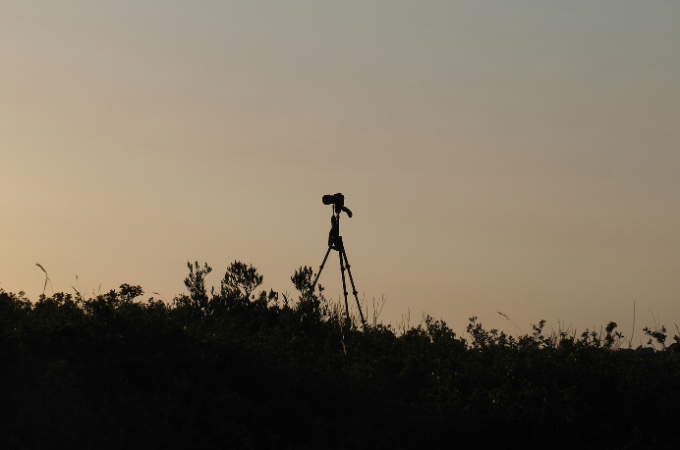
Musa set the tripod down and pressed the steel tips into the earth until they held. He adjusted the legs, watched the bubble settle, made small corrections with his fingers. His eyes stayed on the ground and the angles of the street rather than the house itself. He drew out the measuring tape and walked it toward the drainage ditch, careful to keep it straight.
The setback was supposed to be five meters. That much he did not need to check. He remembered the survey from nineteen ninety-six, before the trouble, before the markers disappeared or were shifted quietly in the night. There had been a concrete beacon then, stamped with a government number, set firmly where a pawpaw tree now rose, its leaves casting shade over the ditch.
The tape scraped softly over the dry soil as he pulled it taut. He read the number once, then again. Seven meters. He straightened and looked at the wall. It was solid, unremarkable, built with the assurance of someone who intended to stay. It reached two meters beyond where it should have been, into land that existed now only as a line remembered by a few men and no longer defended by anyone. Two meters was the width of a passage, the length of a body laid out. He wrote the figure into his field book, the pen moving slowly as if the page might resist it. The number sat there plainly as the wall stood where it stood. Between them was a discrepancy that refused to soften.
The back door opened, and a woman stepped into the yard, wiping her hands on her wrapper. She paused when she saw the tripod and the tape drawn across the ground, then looked at Musa with a steady expression shaped by years of necessity rather than surprise. After a moment, she turned back inside.
Musa continued measuring, checking angles, noting elevation, his movements careful in a way that acknowledged her presence without addressing it. He worked more slowly than the task required, aware of being watched.
She returned carrying a plastic tray. A cup of water beaded with condensation sat beside a small plate of groundnuts. She set it on a stool near the instrument.
“You are working in the hot sun,” she said.
He thanked her and drank. The water was cold, faintly earthen from the clay pot it had come from. He ate a few of the nuts. The gesture settled between them, neither kindness nor obligation alone, something that placed him inside the yard rather than at its edge. When he finished, he folded the tripod, drawing the legs in against the column, snapping the fittings closed.
The woman stood by the wall, her hand resting on the rough surface of the blocks, her shoulders held tight.
“Will it move?” she asked. Her voice was low and even. She was asking whether the wall she had built, the roof that held at night, would be judged temporary by a number that had survived longer than the people it once belonged to.
Musa closed the instrument case and lifted it, adjusting the strap across his shoulder. He looked from the wall to the ditch and back again, then at the woman waiting without turning. He knew what was correct, and he knew what was possible. He said nothing. He turned toward the road and walked away, his shoes lifting small clouds of red dust that hung briefly in the air before settling back onto the ground.
***
The ceiling fan in the records office turned with a dry, uneven click, the sound marking time in a way that felt slower than the afternoon outside. The air was stagnant, layered with the smell of paper that had been handled too often and the sharp, chemical trace of correction fluid that never quite faded.
Musa cleared a space on the wide wooden table, shifting aside loose files until the surface emerged. He unrolled the old survey sheet carefully. The paper was yellowed and fragile along the edges, but the ink held, drawn in nineteen sixty-two with a steadiness that had survived the decades. The lines were thin, confident, untroubled by doubt. He laid the new transparency over it. The plastic sheet caught the light from the window, a digital print pulled from satellite imagery and the improvised boundaries the council used now for taxation. It settled imperfectly, the corners lifting slightly before he pressed them down. They did not align.
He adjusted the overlay, bringing the reference points together. The railway crossing. The concrete bridge over the stream. The old post office. These still agreed with each other. But as his eye moved outward, the agreement dissolved. The old grid lost its shape beneath the newer forms, the straight lines giving way to bulges and encroachments that followed need rather than plan.
“It is a mess,” Bitrus said from behind him. He leaned close, peppermint and sweat mixing in the warm room. “The previous administration let people build anywhere. No planning.”
Musa traced the sector he had measured that morning with his finger. On the old sheet, Rebecca Gyang’s house sat within a larger designation, Plot 44-B. The name written there was not hers. Suleiman. The ink was firm, the letters formed with care. On the transparency, the parcel no longer existed as a whole. A new boundary cut through it cleanly, following the line of the block wall Musa had stood beside earlier that day.
“The coordinates drift here,” Musa said, indicating the point where the two maps refused each other. “The angle shifts. The area shrinks.”
Bitrus waved it off, “Those surveys were done with chains and compasses, Baba. Mistakes were normal. We have GPS now. The satellite shows what is actually there. We just need to harmonize the records so people can get their Certificates of Occupancy.” He spoke lightly, as if the problem were one of clarity, a matter of cleaning glass.
What existed should be recorded. What was recorded should match the ground. Musa kept looking at the overlapping lines. He saw something less clean in the way they failed to meet. Correcting the map would not only tidy a file. It would finish a process that had begun without ceremony years earlier. Plot 44-B would disappear, along with the name attached to it. Suleiman would remain only as a faint trace beneath plastic and ink, while the wall built across his garden would acquire permanence.
Memory pressed in as he stood there. The weeks after the crisis, when the office had been closed and then reopened to a building that felt hollow. Desks left empty. Cabinets pried open, files stacked on the floor where they had been dragged out and not returned. The District Head had gathered them then. He had spoken carefully, avoiding certain words. Stabilization. Registration of the current situation. Musa remembered the ledger, the way a junior clerk had drawn a red line through a column of names with a steady hand, neither angry nor hesitant. A new list had been stapled over the old one. Provisional, they said. For tax purposes. Until things settled. Things had settled.
“Baba?” Bitrus tapped the table lightly. “It is simple. We mark the new boundary as primary. The old lines go.”
Musa lifted the edge of the transparency. The plastic hovered over the yellowed paper, casting a faint shadow. The new town floated there, insistent, trying to press the older one flat. “It is not simple,” he said.
Bitrus frowned. “The wall is there. The woman is there. What do you want, to pull it down?”
Musa rolled the old map carefully, supporting the brittle edge with his palm. He did not want the wall pulled down and be the one to declare that it had always stood where it stood. “I will verify the next sector,” he said.
He took his cap from the table. The room felt colder than it should have, the air conditioned by paper and ink. Outside, at least, the heat made no pretence.
***
The tarred road ended without warning near the old mission school. Beyond it, the town thinned and loosened, breaking into footpaths and red tracks that wound toward the base of the hills. The plan that governed the lower streets lost its hold here. The land rose and dipped unevenly, interrupted by slabs of dark granite and the broad canopies of locust bean trees.
Musa left his motorcycle beneath a mango tree where the shade held and checked his map. The control points he was looking for had been set in nineteen seventy-nine, marking the edge of the residential layout and the beginning of land once kept open for grazing. On paper, the division was clean.
He walked into the grass. It brushed against his legs and released the smell of dry soil and animals. The sun was directly overhead, pressing down until shadows collapsed inward and the world seemed flattened and exposed. The first point was easy enough to locate. It should have been a concrete pillar, square and flush with the ground. He scraped away the dirt with his boot. Beneath it there was only red earth, tangled with roots that resisted his foot. He moved west, counting his steps, and found a heap of stones stacked at a corner. They were uncut, dragged from the hillside and dropped where someone had decided the line should turn. Musa set the tripod over them and took a bearing.
“You are looking for the government cement,” a voice said.
He recognized the voice before he placed it. Mallam Haruna stood on the path a short distance away, leaning on a polished stick. His kaftan had faded to a soft grey, his cap worn thin. He had once taught school. Now he sat in the evenings with the other elders and carried the town’s memory without writing it down.
“I am checking the boundary,” Musa said.
Haruna nodded and stepped closer, his slippers stirring the dust. He studied the stones. “The cement is gone,” he said. “The boys pulled it out long ago. Maybe they used it under a pot. Maybe they threw it into the river. It was in the way.”
Musa adjusted the focus. Through the lens, the world turned upside down, heat shimmering above the rocks.
In the distance he caught the edge of a zinc roof that his map placed inside a cattle route. “These stones,” Musa said, nudging them lightly with his boot. “They are not the line.”
“They are the line now,” Haruna said.
“A pile of rocks moves,” Musa replied. “A child can scatter it. Rain can shift it. A beacon is fixed. That is the law.”
Haruna let out a short laugh, dry and uneven. “The law left this place, Musa. When the fires came, where was your beacon? Did it stop anyone? Did it tell them where to cut and where not to?”
Musa said nothing.
He ran the tape from the stones to a fence post further downslope. The metal slid over the earth. Forty-eight meters. The record said fifty-two. Four meters had disappeared into use. They walked the line together. Haruna kept pace, his stick tapping lightly. At a small farm, a young man paused in his work, gripping his hoe as he watched them. When his eyes met Haruna’s, the elder lifted a hand, palm down. The man returned to his ridges, striking the ground harder than before.
“That one,” Haruna said, lowering his voice. “His father’s house was near the market. It burned. He came here with nothing. He cleared this place himself. Those stones, he carried them. He has lived here twenty years.”
Musa reeled in the tape. The sound carried in the still air. “It is an encroachment,” he said, after a moment.
“Technically,” Haruna echoed, lingering on the word. “You are a careful man, Musa. You measure straight.”
He stopped and pointed his stick toward the scattered farms, the crooked fences of cactus and wire, the rooms added wherever space allowed.
“Look at it,” he said. “It is not pretty. But it is quiet. People know where the stones are. They agreed to them. They swallowed what they had to swallow and said, ‘Let us sleep.’”
Musa followed the gesture. He saw how the lines bent to avoid a grave, how they curved to keep a well within reach. The land held the shape of compromise.
“If I sign,” Musa said, “I make it permanent.”
“And if you correct it?” Haruna asked. He turned fully now, his eyes clouded but steady. “If you push the line back and tell that boy to move because he stands on a memory? Where do people go?”
Musa looked down at his clipboard. The numbers did not waver. “There is nowhere,” he said.
Haruna nodded once. “Then ask yourself what you are measuring.” He turned and walked back toward the town without waiting.
Musa remained in the grass. The mountain rose behind him, dark and immense, taking half the sky. Its shadow was beginning to stretch across the fields, sliding over the stones and the uneven plots. The silence that settled was dense, held in place by what could not be said aloud. He lifted the tripod and felt its weight. He moved carefully as he walked back, stepping around the stones so they remained where they were.
***
The house was dark when Musa returned. The power company had taken the light again, leaving the street and the rooms pressed into a thick, airless black. He closed the door behind him and stood for a moment, listening, then moved through the space without reaching out, his body remembering the distances. From the door to the table. From the table to the stove.
He struck a match and lit the kerosene burner. The flame flared blue, unsteady at first, then settled into a low hiss. He filled a small pot with water. Hunger no longer asked for much. While the water heated, he sat at the table. The silence in the room had weight. It was narrow, shaped by walls and absence, by the things that used to happen here at this hour.
He opened the drawer for more matches and felt paper under his fingers. A notebook lay buried beneath receipts and loose rubber bands. He pulled it free. It was an exercise book, the cover bleached almost white with age. Sarah’s. He had not opened it in years. When he did, the faint smell of old paper rose, dry and familiar. Her handwriting filled the pages in careful columns. She had kept the household accounts the way some people keep prayers, regularly and without fuss.
Oct 4. Palm oil. Salt. Maggi.
Oct 11. Yams. Kerosene.
The figures marched down the page, neat and obedient. Every Sunday evening, she had sat at this same table and balanced them, pencil tapping lightly while she checked her sums. The numbers always came out right. There had been comfort in that, a sense that if you were attentive enough, nothing would slip away unnoticed.
He turned the pages slowly. Prices climbed. The order held. Then the entries thinned. On a page marked May, the line began and stopped halfway across.
Rice. Half bag.
No total. No correction beneath it. After that, nothing. Page after page left blank, the ruled lines stretching forward without interruption.
Musa rested his thumb on the paper. The memory came without effort. Smoke lifting above the market, people running past the gate, the sound of metal striking metal somewhere down the road. He remembered sliding the bolt into place, the ordinary certainty of the gesture. He remembered thinking that they had lived carefully, that careful living counted for something.
The water boiled over and hissed as it struck the burner. He set the notebook aside and turned down the flame, the kitchen briefly filled with steam. He poured the maize flour in and began to stir, slow circles with the wooden stick, the motion grounding him. The light from the flame flickered against the walls. He ate when it was ready, alone at the table. The food was warm and heavy, the texture familiar. Outside, the night held steady. Inside, the room remained quiet, the notebook lying where he had left it, open to the page that never continued.
***
The sun was already high when Musa returned to the plot behind the market. The light fell straight down, shortening the shadows until nothing could hide in them. He set the instrument into the shallow impressions left by the tripod the day before. The legs found their places without resistance. The ground had not forgotten.
Rebecca Gyang was in the yard, rinsing bitter leaf in a wide plastic bowl by the kitchen door. Her hands moved steadily through the water, the sound soft and repetitive. When she noticed him, the motion stopped. She rose and wiped her hands on her wrapper, then stood where she was. This time there was no water offered. The space between them held too much for that.
Musa went through the work as he always did. He did not need to check the measurements again, but the sequence mattered. He levelled the plate, adjusted the sight, brought the prism into focus. The gestures slowed his breathing, gave the moment its proper weight. The reading left no room for doubt. If the line were restored as it had been, it would cut through the corner of the house. The porch would go first, then the front wall. What stood there now would return to rubble.
He opened his field book as the page waited, its pale grid unmarked. He uncapped his pen and held it a moment, feeling the slight looseness in the plastic barrel. He looked at the wall. At the rough cement where the blocks met the ground. He lowered his gaze to the paper. The pen touched down. He wrote, lifted it, then wrote again, adjusting the figures so the line drifted just enough. Four degrees. A small correction, easy to overlook. The numbers settled into place as if they had always belonged there. Nothing happened. The yard remained quiet. He closed the book and set it aside. The sound of the cover snapping shut carried farther than he expected.
Musa walked to the wall and took the yellow lumber crayon from his pocket. He knelt and marked a cross where the cement met the soil, the wax bright against the grey dust. “This is the mark,” he said. His voice held. “The boundary is here.”
He heard Rebecca breathe out slowly, the release long and careful, as if her body were testing whether it was safe to let go. “It stays?” she asked.
“It stays,” Musa said. “I have recorded it.”
She nodded once and turned back to the bowl. Her hands went into the water again, lifting and pressing the leaves, the liquid darkening as the dirt worked loose.
Musa packed his equipment. The movements felt heavier than before, though nothing weighed more. When he lifted the tripod onto his shoulder, the balance was slightly off. As he walked away, the sound of the washing followed him, steady and unremarkable. It was the sound of an ordinary task continuing, the kind that did not pause for maps or lines on paper.
***
The following morning, the council office was loud with the steady churn of the generator. The power had gone again. The ceiling fans slowed, shuddered, then picked up their uneven rotation as the backup kicked in. The noise filled the room and flattened everything else.
Musa stood at Bitrus’s desk. His field book lay open between them. Bitrus traced the column of figures with the tip of his pen. He stopped at the entry for Plot 44-B and leaned closer, his brow tightening as he followed the line across the page.
“This vector,” he said. He tapped the paper once. “It does not close cleanly. If we follow this measurement, there is a gap between the plots.”
Musa kept his hands clasped behind his back, the way he had learned to stand during briefings years ago. He watched Bitrus’s pen hover, waiting. “The adjacent plot was surveyed in eighty-two,” Musa said. “They used the railway spike as a datum. That spike has shifted. I took a solar reading.”
Bitrus looked up from the book. He hesitated, then glanced at the computer screen beside him. He wanted the figures to agree with each other. He wanted the work to finish without complication.
“If I enter this,” he said, “the system will flag it.”
“Then mark it as a field correction,” Musa said. “The ground has settled.”
Bitrus sat back. He rubbed his face with one hand and looked at the files stacked on the corner of his desk. After a moment, he turned to the keyboard.
“Field correction,” he said, more to himself than to Musa. He typed. The screen refreshed. Nothing else happened. He reached for the stamp, pressed it into the ink, and brought it down on the file. APPROVED. The sound was flat and decisive.
“It is done,” he said.
Musa took his copy of the receipt and stepped outside. The light was sharp after the dim office. He paused long enough for his eyes to adjust, then walked toward the market. The town was moving the way it always did at that hour. Motorcycles slipped between cars, horns cutting through the air. Women sat under umbrellas with trays of corn and groundnuts. Exhaust, dust, and ripe fruit mingled in the heat. Nothing had shifted.
He bought a newspaper and folded it under his arm. As he turned away, a hand rested briefly on his shoulder. Mallam Haruna sat on a bench outside a chemist’s shop, his stick across his knees. He did not stand.
“The market is busy,” Haruna said, watching the road.
“Yes,” Musa said. “It is busy.”
Haruna nodded, his gaze following a group of women crossing with baskets balanced on their heads. “They are buying and selling,” he said. “No one is running.”
“No,” Musa said. “They are not.”
Haruna tapped the ground once with his stick. He did not look at Musa when he spoke. “That is enough,” he said.
Musa inclined his head.
“Go well,” Haruna said.
“Stay well,” Musa replied.
He walked on, the noise of the town rising around him. The generator’s hum faded behind him, replaced by voices, engines, footsteps. The wall behind the market stood where it had stood the day before. The street held. The morning continued.
***
The handover did not take long. Musa placed the certified plan on the counter. The paper was smooth and clean, still carrying the faint smell of the print shop. The council seal sat where it was meant to sit. His signature lay beneath it, dark and settled.
Bitrus glanced at the cover and nodded. He moved the file from the pending stack to the completed one and punched a hole through the corner, feeding the fastener through with practised speed. The paper tore softly, a brief sound that disappeared into the room. Musa took the voucher and stepped outside.
The afternoon had begun to cool. He turned away from the main road and followed a longer path, telling himself it was for the walk. Without thinking much about it, he drifted back toward the stream. From the rise near the road, he could see the settlement below him. The sun was lowering behind the rocks, stretching shadows across the roofs and yards.
In the open space behind Rebecca Gyang’s house, children were playing. Two stones marked a goal. A plastic ball slid across the dust, chased by bare feet that crossed the ground without hesitation. The wall held. The yard remained whole. The ball rolled up the slope and came to rest near Musa’s foot. He nudged it back with the side of his sandal. The children shouted and ran after it, never looking in his direction. He stood a moment longer, then turned away and continued home as the light thinned and the air filled with the smell of smoke and damp earth settling into the valley.
In his courtyard, he set a bucket beneath the tap and drew water. He unpacked his tools piece by piece. The tripod came apart easily. He wiped the legs, working the cloth into the grooves where red dust had hardened. He cleaned the casing of the theodolite, moving carefully around the glass. He unspooled the measuring tape and ran the damp rag along its length, the metal whispering as it passed through his hand. The work took time. He did not hurry it.
When he finished, he poured the darkened water into the drain and watched it sink away. He dried his hands and gathered the tools, placing them where they belonged.
Inside, the house was quiet. He closed the door behind him and stood for a moment before switching off the light, letting the stillness settle without naming it.
Photo by Rafael Garcin on Unsplash




Kolade Akintude Popson March 04, 2026 18:26
Sarah's notebook stopping mid-entry.... That's the whole story right there. Really enjoyed this, especially the restraint. The fcat that what happened is not named, but somehow that silence carries more weight than any explanation could. Kudos