

The Unravelling
Hospitals at night is the city without makeup. No canal views. No curated lighting. Just consequence
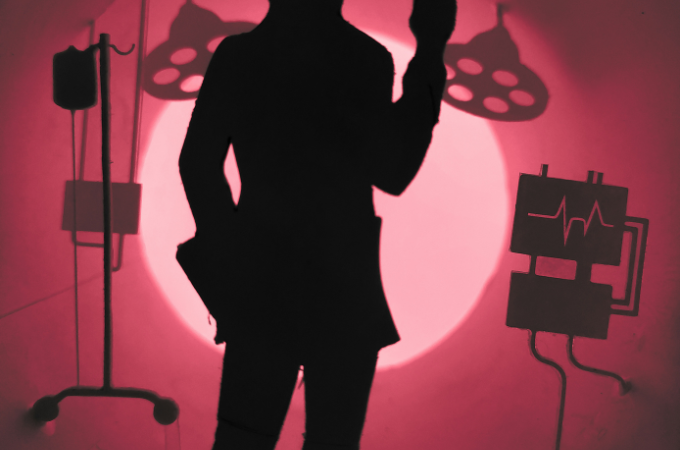
Saturday nights at Manchester Royal Infirmary are their own ecosystem; self-contained, fluorescent and faintly feral. Time mutates there. It stretches then snaps back, then pools in the corners beneath flickering lights that refuse to dim, as if exhaustion itself has been institutionalized
The building breathes. The automatic doors inhale and exhale emergencies in mechanical rhythm. Blue-eyed men shout at walls as though the plaster owes them money. Wheelchairs whoosh and scrape across tiled floors in restless choreography. Paramedics cut through corridors with clipboards pressed to their chests, moving with the brisk efficiency of people who cannot afford softness, whose compassion must be portion-controlled
Near the entrance, intoxicated regulars orbit like familiar moons belting out Sweet Caroline between expletives potent enough to scandalize the nuns huddled in the waiting lobby. Plastic chairs bend under the weight of exhaustion. Vending machines hum like bored witnesses. Somewhere, someone retches with theatrical commitment. Somewhere else, someone laughs too loudly at blank space, as if daring it to answer back
This was not the company I had imagined for my summer nights in Manny. Not the ecosystem I had mapped out for myself; Afro social clubs, R&B nights, soft launches and group selfies. And yet, there I was just another body under fluorescent scrutiny, tits drooping to my knees, hunched over, bargaining with my organs, waiting to be told whether what I was feeling was catastrophic or merely human
Just twelve hours earlier, I had been exactly where I believed I had deserved to be.
Sat on Alchemist’s balcony overlooking the night canal views in Media City, smoky cocktails sweating in my palms, braids lifting theatrically in the summer breeze; it was the epitome of black girl magic. We looked like we were auditioning for a diaspora reboot of Sex and the City. Women who had it figured out. Women who belonged precisely because we stuck out like sore thumbs.
It was one of those nights when speaking Swahili felt like rebellion and relief braided together. What I hadn’t appreciated prior to relocating was just how limited the English language can get. You can actually run out of words, certainly out of connotations. It is an efficient and functional language but emotionally stingy.
After watching the bloody Maandamano coverage back home, English offers commentary, but Swahili offers release. All you have to say is wah, you guys this man must go, aki – and we clink glasses in unanimous understanding with no footnotes or clarifications. We just get it
Belonging, I am learning, is sometimes just being able to rage in the correct language.
The bartender, his stubble curated to suggest effort without desperation, hovered long enough to feel charming. After three cocktails each, a bottle of merlot felt like destiny rather than excess. Midnight arrived politely. We were ushered out as the final guests, laughter spilling into separate Uber rides, the night clinging to our skin like proof of arrival.
That was the company I thought I deserved: canal views, curated chaos, the illusion of control.
Instead, mere hours later, I found myself cataloguing ceiling tiles in A&E, counting the seconds between waves of pain, wondering if my body had finally called my bluff.
I know there are universes where I made different choices; where I stopped at two drinks, where I went home early, where I listened to the quiet voice that sometimes whispers enough. Universes where I turned left instead of right, stayed instead of leaving, swallowed the words instead of letting them spill. Those choices led me somewhere else. Led me to someone else.
And my heart aches for every version of me that didn’t end up here though I’m no longer sure which “here” is the tragedy. The balcony or the hospital bed. The curated night or the fluorescent reckoning.
Until Dr Areyo.
He walks in like a man who has read far too many lab results and has no patience for theatrics. Calm. Measured. Annoyingly steady. The fluorescent lights flatten him, but he refuses to look distorted. He stands at the foot of my bed while I am half-folded into myself, dignity misplaced somewhere between triage and the third blood draw.
He scrolls through my results like he is reading a grocery list:
Normal.
Normal.
Normal.
He says the word the way a judge says “dismissed.”
I want drama. I want something Latin and incurable. I want a villain I can point to and say, there. That is why I collapsed at 6 am in my bathroom and had to ride in an ambulance. I want an organ to blame. A rogue cell. A cyst shaped like regret.
Instead, Dr Areyo gives me the most destabilizing diagnosis of all: nothing.
“You’re fine,” he says, in the tone of a man who has seen real emergencies tonight.
Fine.
My body had staged a coup. It had seized power, set off alarms, sent ambulances, summoned fruit-bearing friends. It had me bargaining with my intestines like a woman possessed. And he hands me fine.
There is something violently unhinging about being told you are healthy when you feel like you are unravelling at the molecular level. It forces a confrontation no scan can capture: if the bloodwork is pristine, where does the chaos live?
This, I suspect, is the true thesis of the unravelling; the brutal juxtaposition of emotional extremes in less than a day. Balcony euphoria and hospital fluorescence. Black girl magic and bile. Merlot and morphine-free discharge papers. It is the whiplash between “I have arrived” and “I am collapsing,” all within the same calendar day.
And somewhere in that violent contrast, I am always wondering: will someone rush in with needle and thread, cooing, it’s fine, it’s fine, we’ve got you?
Dr Areyo does not coo.
He does not stitch.
He discharges.
Under fluorescent lights, clutching paperwork that insists I am “normal,” I begin to understand that unravelling is rarely a cinematic collapse. It is administrative. It is procedural. It is a pattern dressed up as spontaneity. A flirtation with the edge that masquerades as personality.
It is the body staging a small coup when the mind refuses to slow down. It is drinking like you deserve softness and waking up interrogated by your own organs. It is craving catastrophe because catastrophe would at least validate the noise. It is the gorgeous, dizzy pleasure of tugging at the thread; and Dr Areyo handing you sterile paperwork and sending you back into the early morning fog to deal with the mess yourself.
Read previous chapter here.
Photo by Muhammed Nishal on Unsplash






COMMENTS -
Reader Interactions