

Day 6
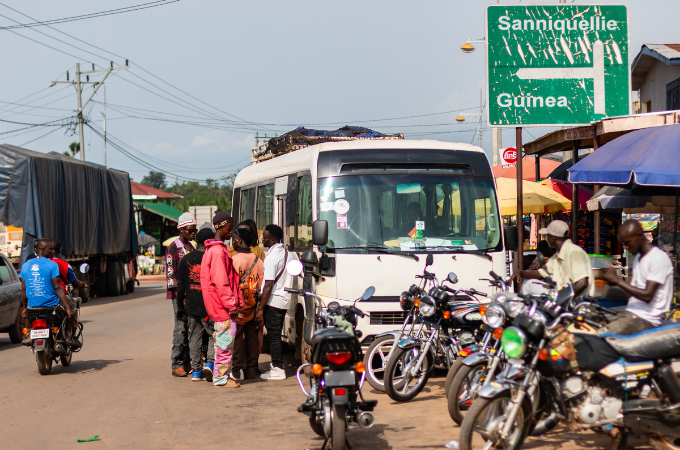
I believe I speak for all residents when I say there was a general sense of optimism on the bus as we entered Liberia. La Côte d’Ivoire had not been particularly kind to us. The countless checkpoints, language barriers, unfamiliar currency, and the many subtle but unfriendly nonverbal cues from road officials made the journey through the country especially tense and exhausting. It felt as if the people were just a little impatient with us because we couldn’t speak their language, and said so easily. Thank God for fellow resident Badjie from Senegal! That man really helped us through a lot of francophone shege, let me tell you something! Me, I always preceded with je ne comprends pas bien le français and proceeded to speak my halting French. Some people found it endearing, others amusing. I was just glad to be able to communicate.
And there were the damn French-style sockets. So to arrive at our hotel and realise we couldn’t charge any device? Bro! We had to find really creative ways to get around that. This may be the 5% of me that’s Gen Z talking, but there’s nothing more horrible than having devices with no juice on a long road trip, especially when you weren’t quite certain when your next stop was going to be.
Going into Liberia, we weren’t exactly excited, but we were very optimistic. Except for Sagou whose English operated mostly through instinct and optimism, we all expected to be able to communicate quite easily with these people, so it was quite hilarious and almost anti-orgasmic when we arrived at Loguatuo (in Nimba County) and had to ask people to repeat themselves several times before we could understand what they were saying. Is it not the same English that we’re all speaking? But let me not get ahead of myself.
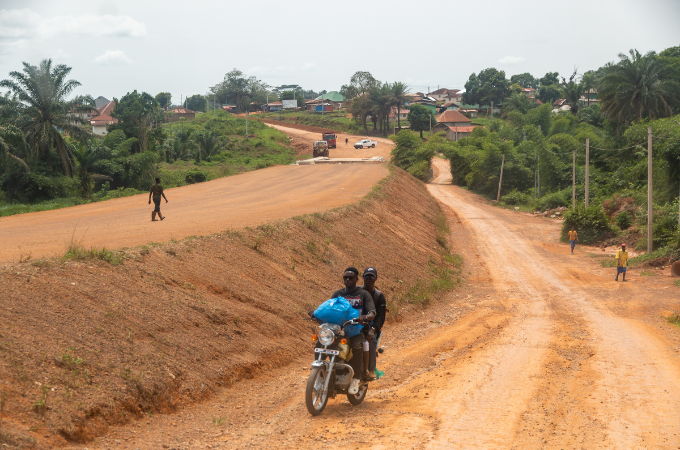
The border doesn’t at first glance strike you as a border between two countries. Your best and most immediate thought would be a security checkpoint. I remember a small, flimsy building to one side and a sturdier structure opposite that. The roads in the area weren’t very good either (though the roads would improve as we made our way further into the country)
We waited in the bus for instructions from SethGPT. A few minutes after he stepped out, he returned and said they wanted to bring everything out and search all the bags, but since we’re on a schedule, they’d reached a compromise. The immigration officers would search four of us, and they would choose which four.
The police officer looked into the bus and called me first, and three other people. I think it is important to mention that everyone he chose presented a little differently; I have eyebrow piercings, an almost bald head and tattoos on my arms. The other guys had locs, cornrows, and tattoos. Apparently, we looked like criminals. Seth later told us that they actually told him that only three out of the fourteen of us on the bus looked ‘normal’. Later, we would try to figure out who the normal ones were. But that’s beside the point.
This search took away a good chunk of our time. None of us was carrying anything illegal, of course, and so the search went smoothly. Except for when they found a fresh pack of rolling paper I had forgotten I had in an inner pocket of my backpack. Perhaps it was the reason why they decided that I could be carrying drugs and decided to cavity-search me. That didn’t happen because the officer who was supposed to search me tore the singular good glove they had while trying to put it on.
Back on the bus, I recounted how they’d been unnecessarily brusque with me, and how I had been told to drop my shorts, underwear, and squat so they could poke around in me. One of our two drivers was enraged by this and reported it to Seth.
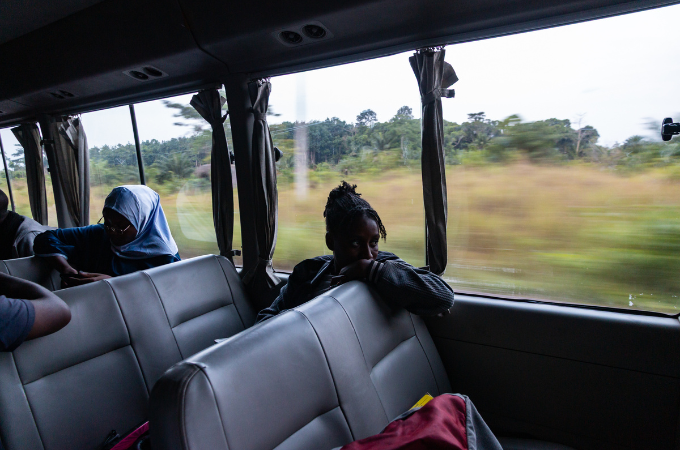
I was very shaken by the entire experience and would cry intermittently for hours after that. The general mood on the bus changed. Our optimism faded fast; many were upset because of the way I’d been treated, and some attempted to use humour to lift our spirits.
There were a gazillion more stops after we entered the country. At one of them, Kehinde and I dropped the trash from the bus in a bin, and a police officer called us back to open the two bags of trash we’d just dumped and show her the contents because we could be dumping drugs and other illegal things. At least I assume that’s what she said because I truly never understood a Liberian the first, second, or third time they spoke. It came up sometimes on the bus how some of us couldn’t understand them when they spoke, even though we all spoke English. We also wondered why there were so many stops and checkpoints.
At Ganta City, we stopped to fuel the bus and get some food.
Some of us also tried to withdraw local currency from ATMs. Imagine our utter bewilderment when the ATM dispensed actual US dollar bills. Ei? We had to find a currency exchange shop (of which there was an abundance) and change the US dollars into Liberian dollars. The US dollar and the Liberian dollar are spent concurrently in the country. This was news to me! The items in the malls were priced in dollars, and I had assumed it was the Liberian dollar. Nuh uh. Na US dollars be that.
That night, I went out to get drinking water. It was an arduous task getting the security person at the gate to show me where to get water. Recounting the whole experience here would be needlessly grueling. Just know that these men refused to be of any help to me for over ten minutes till a man from our group asked them on my behalf. It was only then that they showed me that the nearest open mart was two streets over.
On the way there, I saw a Ghanaian flag taped to a billboard. If I tell you that I nearly wept?
Somewhere in this country that had been generally unfriendly to me, there was a Ghanaian who loved their country enough to put up her flag. Maybe, this person would hug me and tell me everything would be alright. Of course, it’s entirely possible that the person who put up the flag wasn’t Ghanaian, and they did it for laughs. I didn’t care, though. The familiar red, gold, green, and black star gave me a certain comfort that I didn’t know I needed till I saw it.
The following day, we went to see a former senator and his wife.
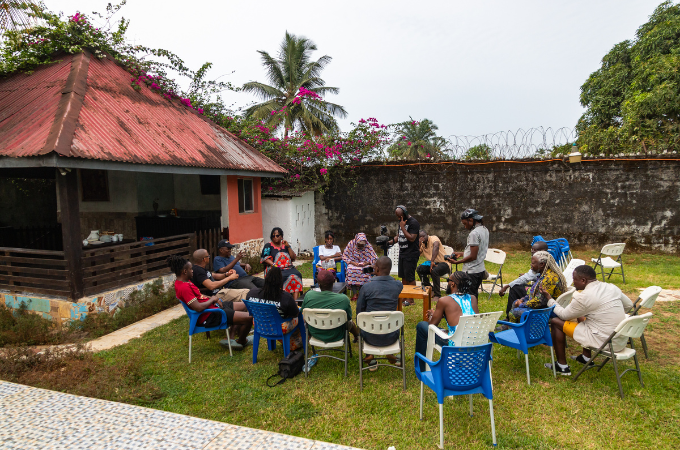
Conmany and Medina Wesseh were so good to us! The vibes were very different, entirely opposite to what we had been experiencing so far. They were friendly, laughed with us, made time for us, fed us breakfast (which was delicious, by the way) and even gave us gifts. We taught them Bodzo Badzaa, and they loved it. We learned that W.E.B. DuBois visited Liberia before he settled in Ghana because he thought it was a good example of governance by Africans.
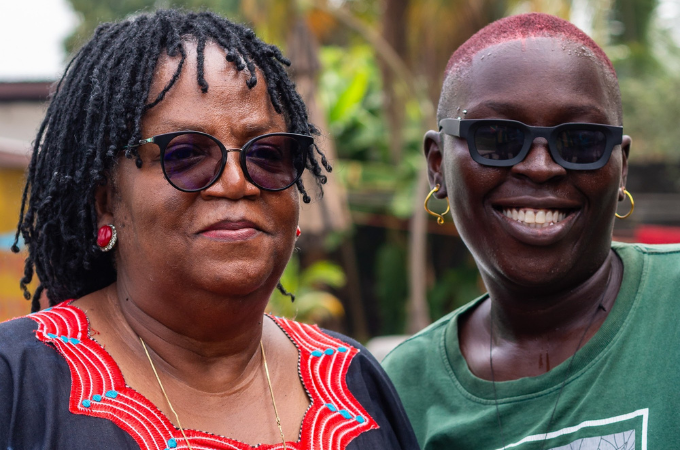
The former senator and his wife considered Ghana their second home. Let’s be serious: he attended the University of Ghana, and she, the Ghana Institute of Journalism and then School of Law. I found it a little cute that they were both Liberians but had their love blossom abroad. Who said Pan-Africanism is a pipe dream? This couple is a living example.
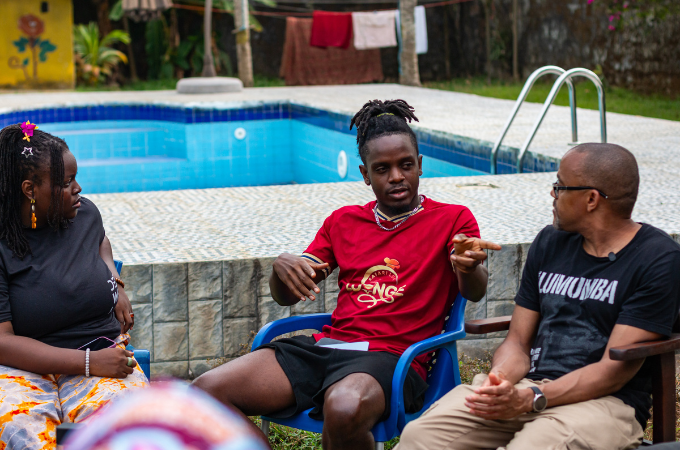
The best part for me? Their son had locs, a fade, and the odd tattoo. I genuinely found it interesting because were we not told at the border that we looked like criminals, for the simple reason that some of us had locs, tattoos, and piercings? I expressed this to him, telling him about our ordeal at the border. He told me not to be bothered by it, because some people have closed minds. Dwelling on it was letting them win, and I should feel free to express myself in any way I wished.
Did I mention that my short hair was dyed a beautiful shade of hot pink, and Medina complimented it? She said it looked good on me, and the sunlight brought out the colour nicely. I left Montserrado feeling very affirmed and with none of the angst from the previous day.
The reception at the Wessehs was in very stark contrast to how the country itself had generally received us. Of course, we brought it up, and someone asked why they thought this was. The Wessehs attributed this to the civil wars, of which there have been two, in Liberia. Conflict changes and traumatises people, especially conflict on the scale of Liberia’s first civil war. It remains one of Africa’s bloodiest conflicts, and has left a deep mistrust within the Liberian people.
Situations like this call for the radical optimism SethGPT preached about several times on the bus. It can be a little disheartening, as a young Pan-Africanist, to experience a people who would treat you so abysmally, on sight, even though you were all African people. To be honest, I understand trauma molding people in many irreversible ways for a long time. However, I also hope that we would consciously seek to be kinder to one another, especially because of the trauma, because we know how horrific it is to live in times where one always fears for their physical and mental safety.
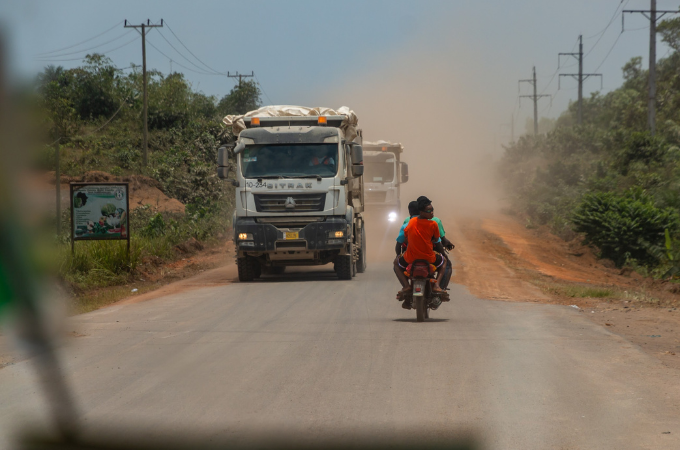
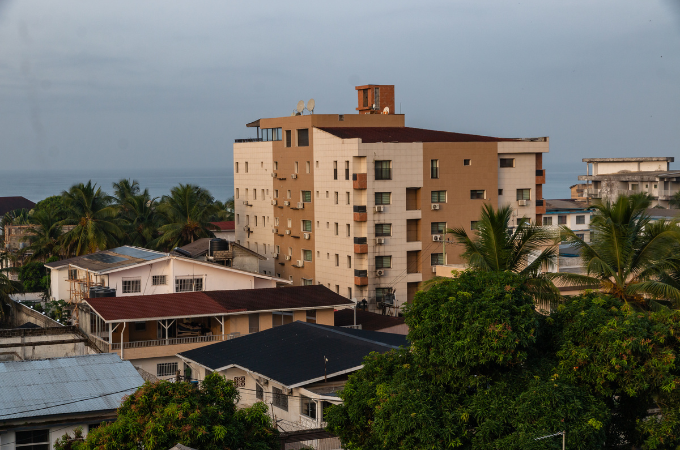
We continued our journey, onwards to Sierra Leone, with the fervent prayer that it would be a much better experience. The journey was different this time because we weren’t stopped a single time till we got to Jendema, the border between Liberia and Sierra Leone. The reason was simple: we had two uniformed police officers in the bus with us. We were waved through all their one-thousand-and-one checkpoints, and we reached Jendema in record time.
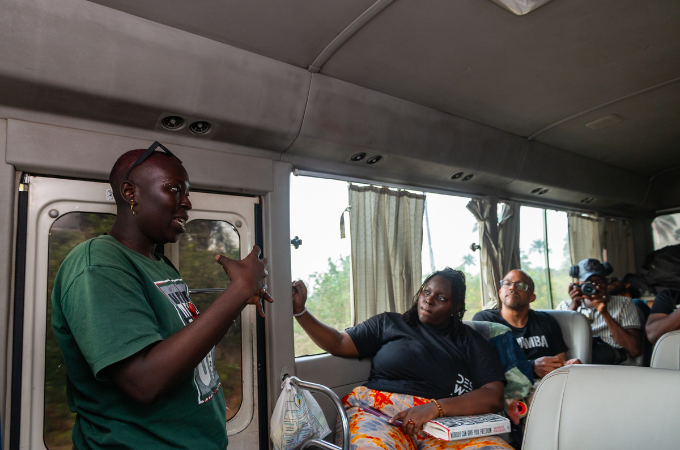
It took a minute, as it always does, to get through the border. It wasn’t much of a hassle, though. At the border, I was a little dramatic and shook the dust of Liberia off my feet, as per Matthew 10:14.
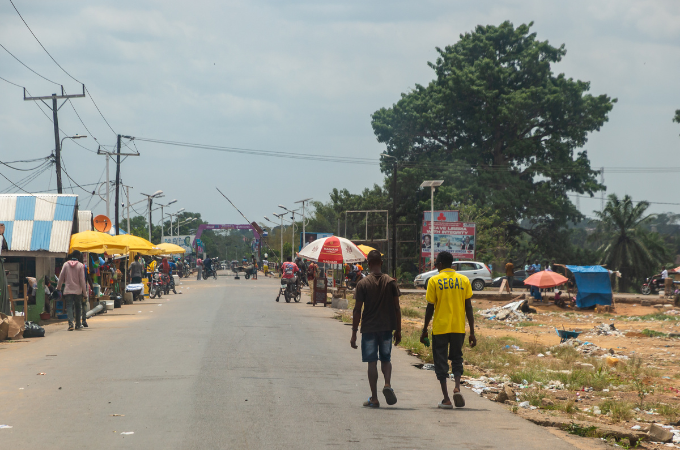
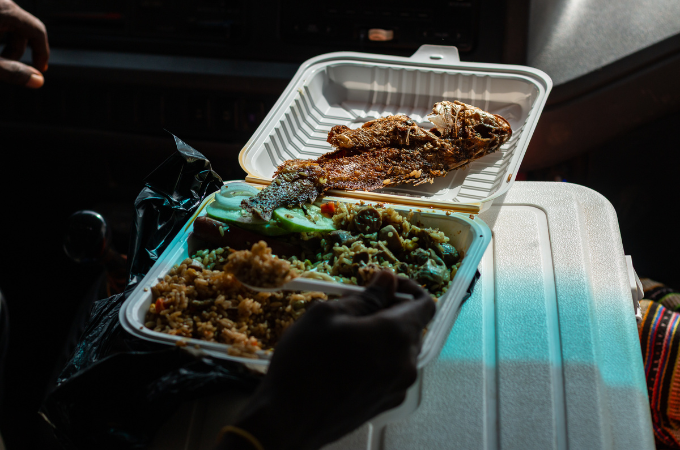
A uniformed Sierra Leonean police officer drove with us till we were safely inside the country, where we ate fried rice that looked like waakye. But that is not my story to tell. I leave it to whoever regales you with tales of our time in Salone.

COMMENTS -
Reader Interactions