

5 am, September 20, 1994
It was Founder’s Day at Capital Science Academy, our alma mater. It was also the second day of our first year in junior secondary school.
The seniors called us Raw Meat. Freshers. J-boys. Even boys barely a class ahead and mostly our age mates called us J-boys. But we didn’t mind the names, we were too excited to bother. We had finally crossed over. We belonged to the bigger boys’ world, the elite club of secondary school students.
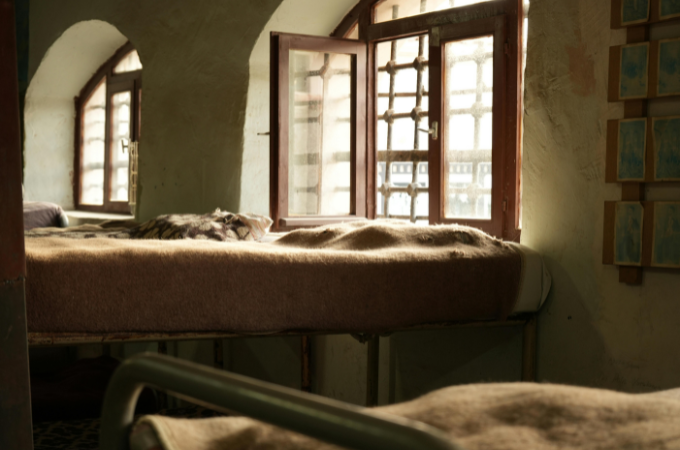
On a wet September morning, we were awakened when three prefects burst through our hostel doors, ringing a handheld bell and screaming, “Last J-boys to wake up! Fall in line or get eaten like the rotten raw meat you are!”
A short, stocky fourteen-year-old stood between them while the others struck the beds with their canes. He was slightly built, with a pinched nose and two short tribal marks etched on either side of his cheeks. When he spoke, it sounded as though his tongue sat permanently in his cheek—his voice hoarse, thick, impatient. His name was Wale Oshinlaja. He was our Blue House senior, a JS2 student. His father was a serving officer in the ruling military government. He was not a boy anyone wanted to mess with—though we did not know that yet.
You slept on the lower bunk. I slept above you. We climbed down hurriedly, almost in unison. I don’t remember who reached the floor first, only that we were the last two to join the line.
Wale pointed at you, then at me. “Face the bed. Touch.”
We stretched out our hands and turned our backs.
I still hear the crack of the bamboo cane as it landed on our bare backs, tearing pain through skin and bone. By the fourth lash, the pain was unbearable. You turned to face him, but his rage only sharpened. He abandoned me and rained the strokes down on you—wham, wham, wham—until I could no longer count them.
I was used to reporting to authority. I didn’t see why we should not report to the House Master. Our principal, S. J. Isa, had impressed it upon us during orientation: any senior who punished or flogged a junior unjustly was to be reported. I told you we had to speak up. You agreed—but admitted you didn’t have the courage. I reported to Mr. Akinfemi, our Blue House master. He summoned Wale and pleaded with him.
“We don’t want any trouble,” he said.
Trouble, it turned out, had already begun.
For the next month, we became Wale’s servants. We carried his books, washed his clothes, prepared his bathwater, and stood firmly beside him at all times until we were dismissed. We served this punishment daily for the entire year. By the end of JS1, we were known as the Wale boys.
He grew softer with us, and in time, we mistook his approval for kindness. He could be funny—dry-witted, sharp, often rib-cracking. His anger dissipated quickly, which made it easy to forgive his bullying, his control. “Once you wake up, come to my corner,” he shouted. “Do as I say until I say you can leave. Is that understood?” He only spoke softly when he talked about his father—about power, fear, about respect. “My papa na General,” he would say. “If you do anyhow, you go see anyhow.”
Wale talked too much. He talked about coups, about who was plotting what, about power plays behind curtains we did not understand. That year, the country itself felt like a barracks. People disappeared. Food was rationed. At school, meals were reduced. Outside, the annulled election hung over everything like a curse.
When the new military government emerged, Wale’s father was rewarded with an appointment. And Wale—already feared—became untouchable. Teachers deferred to him. The principal invited him over nearly every day to have tea in his office and discuss politics. He attained something close to godhood in Capital Science.
When he was accused of molesting a student, an investigation was announced. Silence was ordered so as not to taint ongoing investigations. The boy who spoke was withdrawn from school weeks later. Nothing more was ever said.
By the first term of JS2, Wale began coming to my bedside at night. I would wake unsure whether I was dreaming, aware only that something was wrong, someone hovering over me like a presence, a presence that was unwanted and did not belong. My body reacted before my mind could catch up, and the confusion was worse than fear. When he realized I was awake, he withdrew and disappeared into the darkness. He repeated these visits several times until he was whisked away suddenly from school one day and never returned.
I told you. You said it also happened to you. We did not know then that silence, once learned, became a habit. We did not become silent. It crept in, small and reasonable, disguised as survival.
At first, it was practical. We told ourselves there was nothing to report—nothing that could be proven; nothing that would be believed. Wale was powerful. The school had already taught us what happened to boys who spoke too loudly. Silence felt less like cowardice and more like common sense.
Then it became strategic. We learned how to avoid being alone. How to sleep lightly. How to pretend nothing had shifted while everything had. We learned to laugh at the right moments, to remain useful, to stay close enough to power that it did not turn its full weight on us again.
Over time, silence hardened into habit. What unsettled me most was not fear, but confusion. My body had betrayed me in ways I did not yet have language for. I did not know how to reconcile violation with sensation, how to acknowledge harm when what I felt was raw and throbbing. Nothing in our world prepared boys for that contradiction. There were no warnings about it. No instructions.
So, I carried it quietly, assuming the fault must be mine. You did the same thing.
We never spoke of it again, not because we had resolved it, but because naming it felt dangerous. Once something is named, it demands a response. And we had already learned that response came at a cost we could not afford.
Around us, life went on. Wale continued to rise. Teachers smiled when he passed. Juniors flinched and obeyed. Power confirmed itself daily, effortlessly. Watching him move through the school, untouched, I understood something fundamental: authority does not need to explain itself. It only needs silence to function.
That lesson stayed. Sometimes I wonder who we might have been if we had spoken up. I wonder how it would have impacted our lives; I wonder what became of Wale after he got removed so abruptly. We learned later that his father, the revered General, was implicated in a coup plot by the Abacha government. He would later be put on trial and sentenced to death, only to be spared from that certain fate by the sudden death of Abacha in 1998.
After school, life did what it always does. It expanded, demanded motion, created diversions. We were carried forward by exams, admissions, and new rules. New names replaced old ones. Capital Science receded into the distant past until it became a memory we barely recalled.
We did not make a pact to stay in touch. We simply did. Sometimes it was a call that lasted five minutes. Sometimes we exchanged messages on MySpace and later Facebook. Sometimes nothing at all. And yet, when we met it was never awkward. There was no need to reconstruct familiarity. We spoke easily about ordinary things. School fees. Work. Money. Women. The mild disappointments that come with adulthood.
But certain subjects always bent the air around us. Authority. Men who enjoyed obedience too much. Situations where power asked for trust without question. As we grew older, the world began to resemble the school in ways we could not unsee. The same hierarchies. The same quiet warnings disguised as advice: don’t be difficult; this is how things work, pick your battles.
Life requires navigation. Compromise. Silence. We became skilled at it. Too skilled. We understood how systems protected themselves, how they rewarded compliance and punished disruption without appearing to do either.
What unsettled me most was how familiar this all felt. We did not call this trauma. African Men do not experience trauma. We called it experience. Years passed like this. Enough time that the boys we had been, no longer seemed to exist, only referenced, like early drafts.
The coincidence was so ordinary, it almost failed to register.
I was running late that morning, irritated that my wife had failed to tell me about her mother’s unscheduled visit even though she knew how much I hated such surprises. On my way out, I snapped at my son who simply asked that I buy another bicycle for him and quickly regretted it. The Head of Service building was familiar, one of those places designed to look important, but time and dilapidation had caught up with it. I reached the reception desk and was about to head for the elevators when I heard him.
I noticed the voice before the face; calm, practiced, carrying without effort. It took less than a second for my body to react, long before memory caught up. He did not see me at first. He was laughing, one hand resting easily on the shoulder of a younger man beside him. The gesture was casual. Proprietary without appearing to be. Then his eyes lifted.
There was no dramatic recognition. No pause. No visible shift. If anyone had been watching closely, they would have seen nothing at all. Just a glance that moved on as though cataloguing furniture. But I knew.
The coincidence completed itself in that moment. He walked past without acknowledgment. No greeting. No lingering gaze. Yet the air he left behind felt altered, thinner somehow.
The elevator doors opened.
What unsettled me was not seeing him. It was where I had seen him. The ease with which he moved through that space. The way the receptionist and security guards hailed him expectantly. The younger man who had leaned in to hear him better, nodding, attentive. The pattern did not feel resurrected.
That night, I could not sleep.
Coincidence is only coincidence the first time. After that, it becomes information. A signal that the world is smaller than we imagine, and that certain paths, once crossed, run closer together than we are comfortable admitting.
I sent you a message just before dawn. I just saw him.
You replied minutes later. Where in this world?
Here in Abuja.
You paused, before asking, Do you remember how it felt?
It felt like conditioning. But I didn’t say anything.
There’s something wrong, you said finally. Then, after a moment, Or maybe there always was.
You described it carefully, as though precision might make it disappear. The way your body reacted without consent. The way the past slipped into the present not as memory, but as reflex. How it felt less like attraction and more like an echo; hollow, mechanical, unwanted.
I did not interrupt. When you finished, I told you the truth. That’s been happening to me too. There was relief in saying it aloud, followed almost immediately by shame. Not because of what we felt, but because of how easily the old confusion returned; the same one that had trapped us as boys. The fear that reaction implied permission. That sensation implied complicity.
We know better now. We began to see how carefully those early years trained us. How the body learned to respond under coercion. How confusion had been planted so deeply it survived distance, time, even understanding.
Between who we were trained to be, and who we were still becoming. The past had reached forward. And for the first time, we did not look away.
Photo by Kader Azra Namuslu from Pexels





COMMENTS -
Reader Interactions